


Written by Chris Jackson
Sitting in the patrol house at the top of Snowshoe Mountain Resort’s Western Territory, John Petrich looks out at the Western Express lift as skiers dismount and fly down the ramp for their next runs. The black leather couch, worn from years of patrollers lounging on it, exhales as Petrich stands up to respond to a call.
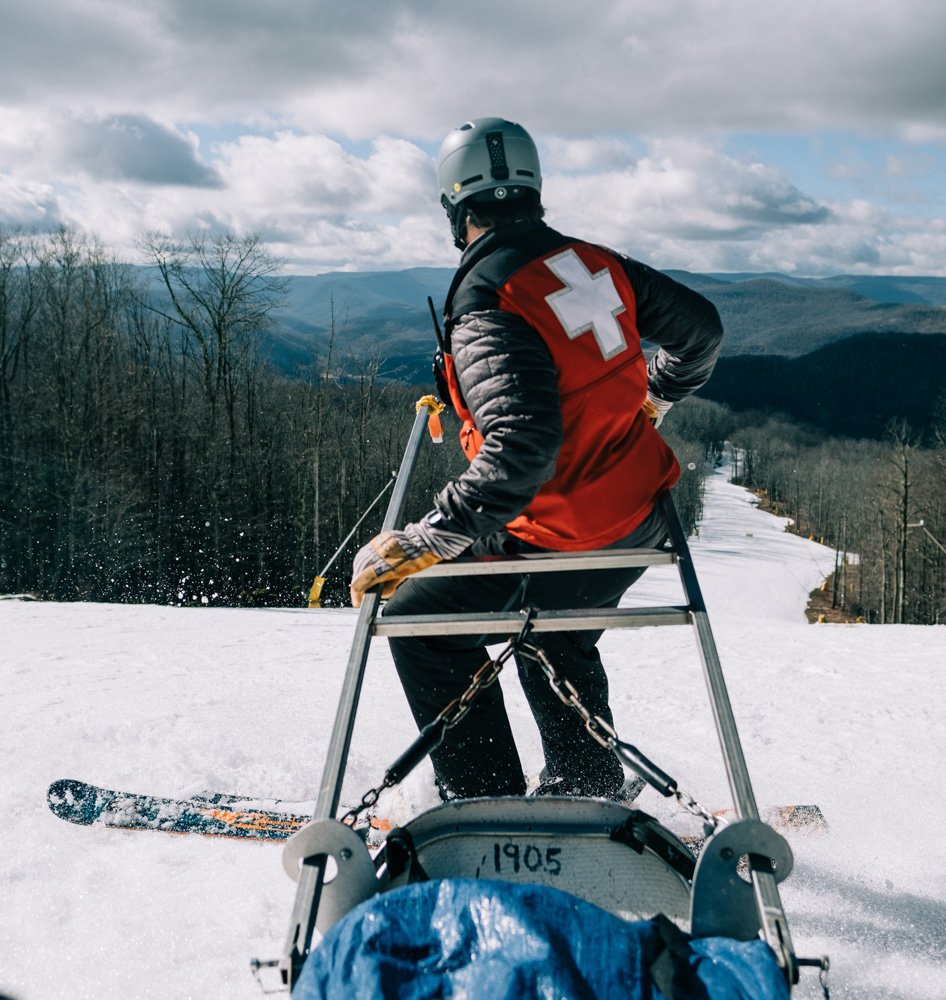
Snowshoe Ski Patroller John Petrich brings a toboggan down Shay’s Revenge. Photo by Chris Jackson
“There’s a report of someone injured on lower Shay’s,” says supervisor Patrick Morgan. “Wanna check it out, John?”
Petrich grabs his red patrol jacket and exits the timber-framed shack. It’s a bluebird day. He snaps into his skis and glides past snowboarders strapping into their bindings. He knows an injury on Lower Shay’s Revenge, the steepest in-bounds ski run in West Virginia, requires immediate assistance.
Petrich, who has been patrolling at Snowshoe for six seasons, arrives on the scene and immediately renders aid to the skier at the base of the slope. The skier complains about a shoulder issue, which Petrich assumes is a collarbone fracture given that it’s a common injury in snow sports. Petrich calls another patroller to request a toboggan and dispatch for an ambulance.
“What’s your name? Do you remember what happened?” Petrich asks the injured skier while assessing him for injuries as the second patroller arrives with a toboggan. They strap the skier into the toboggan and transport him down the trail and toward the ambulance at the bottom of the slope. After safely loading the skier into the ambulance, the two patrollers repack the toboggan with their first-aid supplies and take the lift back to the patrol shack to wait for the next call. It’s only noon.
The National Ski Patrol (NSP) is an organization that promotes safety and provides emergency services at alpine areas throughout the US. It was founded in 1938 by Charles Minot Dole (who is arguably more well-known for establishing the 10th Mountain Division of the U.S. Army) during a time when skiing was becoming a popular sport in the nation. Today, there are more than 650 patrol groups served by 30,000 members of the NSP.
In West Virginia, having an official ski patrol is essential for keeping every ski resort open, said Steve Ovechko, the West Virginia Region Director for NSP and a patroller at Timberline Mountain in Canaan Valley. “They rely on us because we are specially trained,” Ovechko added. Along with being CPR certified, every ski patroller is required to take the NPS’s Outdoor Emergency Care (OEC) course, which provides instruction on how to assess, treat, and comfort injured skiers and snowboarders. After completing the initial intensive training, ski patrollers must complete a refresher course every year to stay up to date on their first-aid knowledge. “We have a lot of special skills in skiing, using toboggans, first aid, and risk management. We’re constantly assessing risks on the hill and engaging with the patrons.”
As the sun’s first light peaks over the Mountain State in winter, patrollers are already working to ensure the ski resort is as safe as possible for every skier and snowboarder. “We ski every trail and look for hazards and report anything we see,” Ovechko said, including icy conditions, patchy terrain, downed trees, or unevenly groomed areas. “Then we report to the lift operators and open the mountain.”
Throughout the day, patrollers ski the trails, assist guests with questions, and look for hazards as well as terrain that needs to be remedied or closed. Responding to injuries is another critical part of the job. Without easily accessible ambulances, EMT services, and helicopters, patrollers are the lifeline for people who get injured and stuck on the mountain. Patrollers are also trained in methods for evacuating guests who get stuck on a lift in the unlikely event that it breaks or loses power.
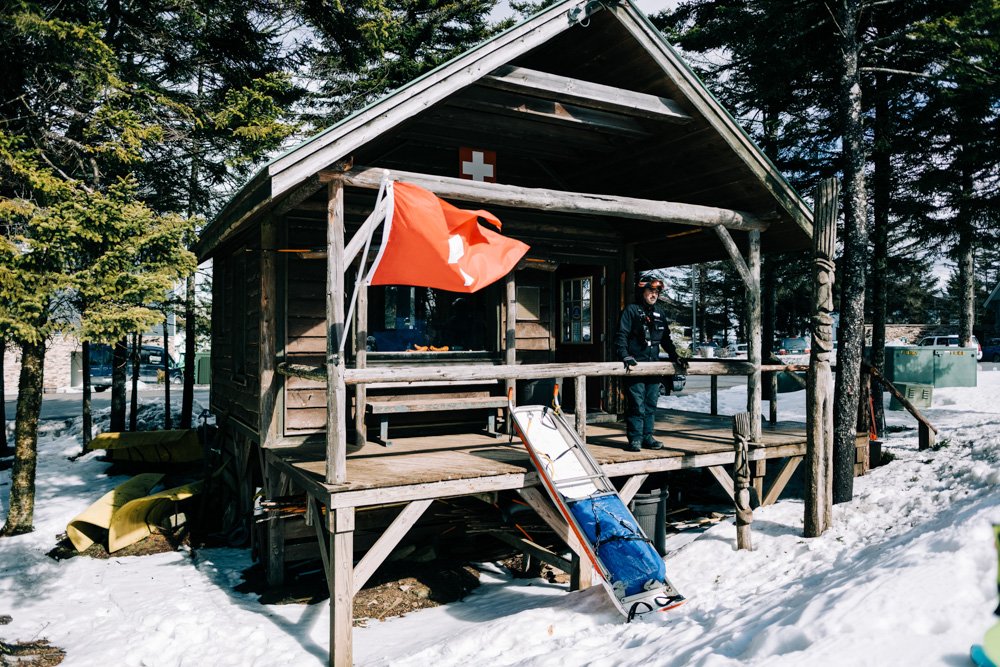
The Western Territory Patrol Shack at Snowshoe Mountain Ski Resort. Photo by Chris Jackson
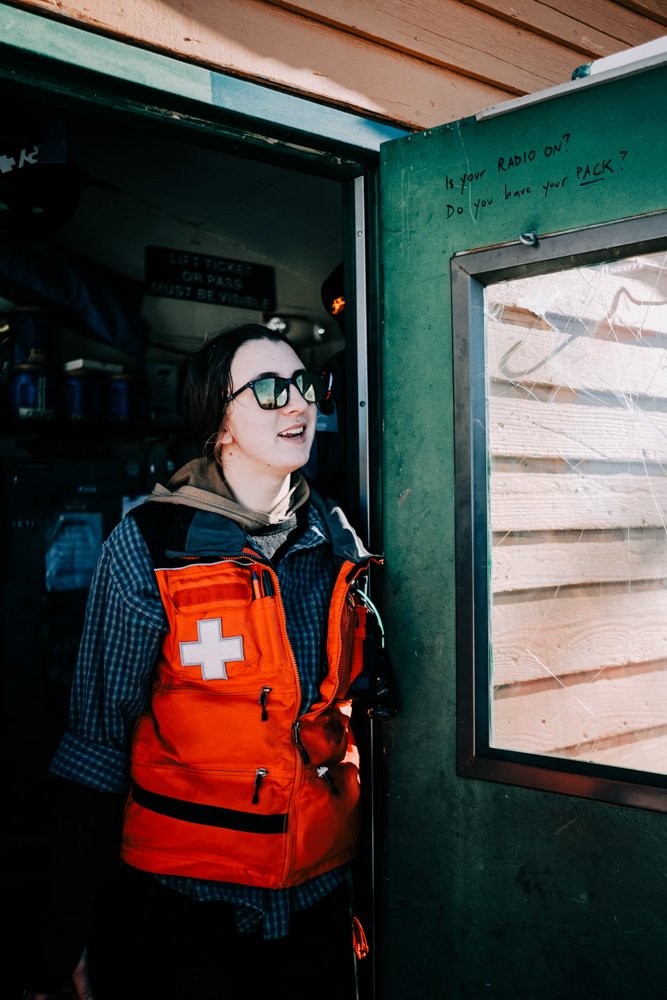
Winterplace Ski Patroller Maya Mills at the patrol shack. Photo by Chris Jackson
“We do a lot of behind-the-scenes things as well,” said Maya Mills, who has patrolled for three seasons at Winterplace Ski Resort in Ghent. “Every sign that’s set up, every piece of bamboo and rope, all the pads on the snow guns and lift towers, those are all set up by ski patrol.” Mills emphasized that no ski patroller goes through all the class hours, the long days in ski boots, and the early mornings to be a “ski cop.” They do it because they love to ski or snowboard, she said.
As the day wanes and the resorts prepare to close, the ski patrollers convene before making their final laps on the open trails. They scope out the slopes for any injured or lingering skiers and snowboarders before lifting the ropes and hanging up the closed signs for the evening. “Without ski patrol, the mountain could not run safely,” said Mills.
Between the long and tiring days, harsh winter conditions, and sometimes gruesome injuries, there aren’t many easy days as a ski patroller. Some days feature single-digit temperatures and brutal winds, while others hit 50 degrees, which feels more like 70 in patrol gear. According to Petrich, a normal day at Snowshoe involves three to four calls, while busy days can have 15 or more. But what drives folks to keep patrolling year after year is often a deep-seated passion for winter sports and the skiing community. “I love to ski, and I like to help people that may be injured,” said Ovechko, who has patrolled for 40 years at Canaan Valley and Timberline ski resorts. “It’s fulfilling. I’ve developed comradely and life-long relationships with patrollers. We’re like a family.”
Ski patrolling also provides winter employment opportunities for people in the seasonal outdoor recreation industry, many of whom work as river guides during the summer. “One February I decided I wanted to patrol,” said Petrich, who works summers as a river guide at ACE Adventure Resort in the New River Gorge. “Since then, I’ve loved winters. I’m able to be active.” And with skiing being one of the most expensive outdoor activities, patrolling can help curb some of the costs. Petrich said another reason he got into patrolling was because it was a financially smart decision for him and his family. His wife, Mara Petrich, also ski patrols at Snowshoe. “My family loved skiing and snowboarding, and it was a way to flip the script in order to make it affordable,” he said.
Some ski patrollers get paid, while others volunteer to receive free ski passes at their home resort. Some resorts also offer patrollers industry discounts on lift tickets at other ski resorts. Every resort in the state offers its patrollers some form of discounted lift access for their family members and loved ones, which helps get others, especially the youth, involved in ski patrolling.
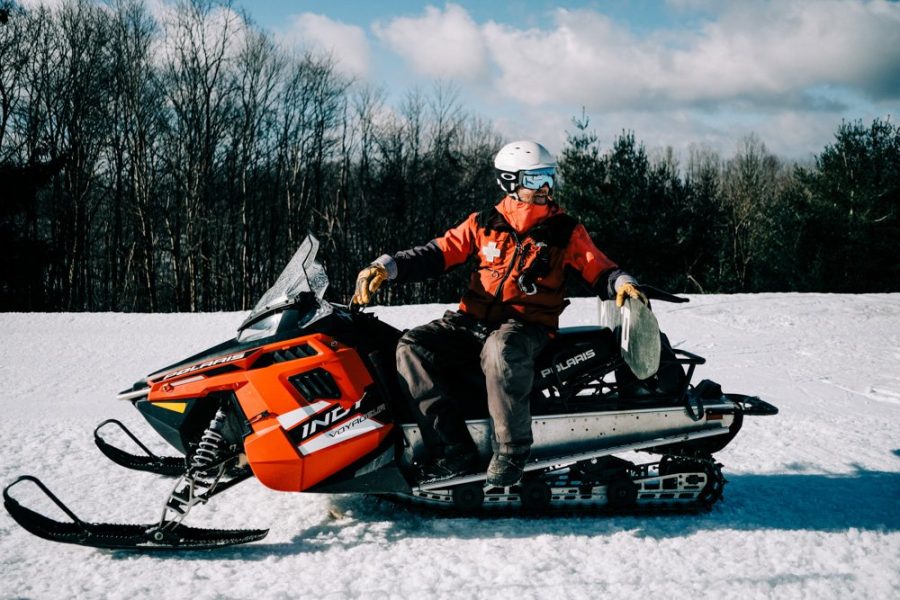
Petrich’s 14-year-old daughter, Rose, who is on the Snowshoe Ski Team, often shadows her father on calls while she is out skiing. “She’s already a big help on patrol,” said Petrich. “She helps with openings and closings, re-sticks bamboo stakes and signs, and stops to check on people,” he said, adding that she does almost everything except for providing medical care and driving the snowmobile.
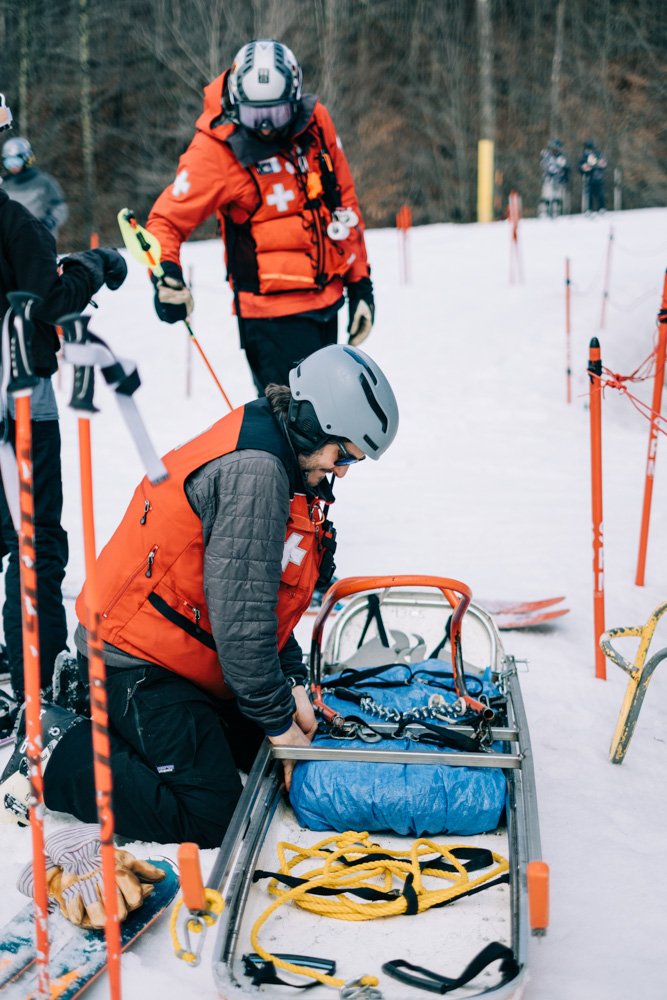
Snowshoe Ski Patroller John Petrich packs a toboggan after hauling a patient off Shay’s Revenge. Photo by Chris Jackson
Mills also spent her teen years watching her dad, Tri Mills, ski patrol at Winterplace. “I’ve been skiing at Winterplace my whole life,” said Mills, who is now 21. She started working at Winterplace’s ski school during the 2020–2021 season and became a ski patroller the following winter. “I mainly started patrolling because I watched my dad do it for so long, but once I started, I fell in love with it. From helping a lost kid get reunited with their parents to helping someone with a broken leg, there’s nothing about the job I don’t love.”
Which is not to say that ski patrolling doesn’t come without any negative experiences. Like any first responder or EMT, there’s an inherent risk that patrollers may see people die. Patrollers are, at times, the only people that can prevent a skier from bleeding out. They comfort and console those who are hurt, lost, scared, or in pain. It’s a physically and mentally demanding job, and one that sticks with you.
Mills recalls one day when she saved a woman’s life. “I can’t really go into the details of what happened that day, but I was scared,” said Mills of the incident. “Her family was scared… I was able to walk away from that situation definitely shaken but feeling good that I was able to help her and her family to the very best of my abilities. That’s why I’m in this job.”
Chris Jackson is a Fayetteville-based photographer and proud member of the National Ski Patrol. He spends his time biking, skiing, and trying to wrangle his two daughters to join him on adventures.