
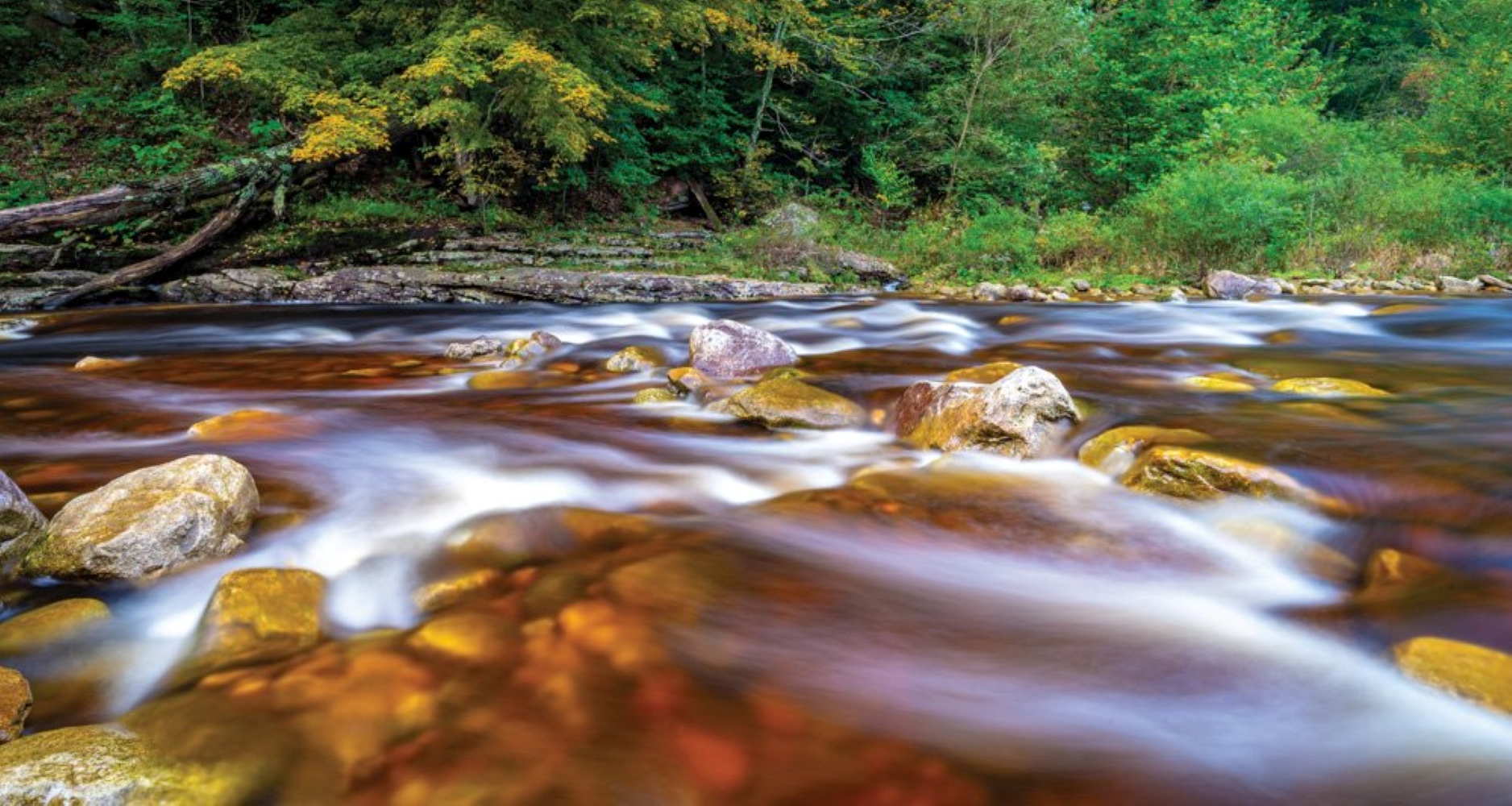
FEATURE PHOTO: The gorgeous waters of Red Creek, which flows through
the Dolly Sods Wilderness, also contain some gorgeous trout. Photo by Dylan Jones
Written by Chris Wade
I grew up in Fairmont, West Virginia, downstream from Valley Falls where the Tygart Valley River winds its way through Colfax before it meets the West Fork to form the Monongahela. It was there in Colfax, along a sweeping bend of the Tygart, where I first learned how to cast a fly rod.
Although I mostly fished for smallmouth bass, I became proficient in catching the occasional sycamore branch. On summer evenings, with the familiar sounds of cicadas buzzing and birds chirping filling the humid air, I stood in the knee-deep water casting a popper fly, freshly tied by my dad, into a channel where the smallmouth fed. This was my introduction to what has become a lifelong passion, one that’s introduced me to some of my closest friends.
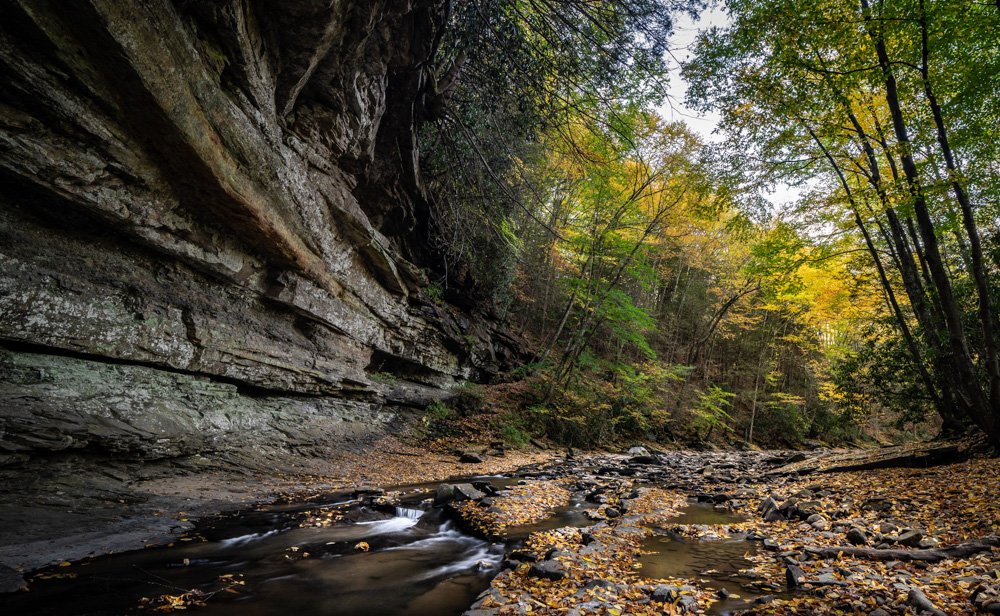
Gandy Creek, which flows from the Allegheny Highlands, is a favorite amongst anglers. Photo by Dylan Jones
Fly fishing requires patience, practice, and an understanding of timing—both in terms of casting mechanics and the cycles of the natural world. It has taken me to some very remote and peaceful locations and given me a deep appreciation of pristine places. Reading a stream, searching for aquatic life, and finding that perfect drift—placing the fly so it moves naturally with the water current—make every adventure on the water a learning experience.
Learning how to roll cast on small native streams makes for a learning curve as steep as the terrain these waterways tumble down. Having hooked my fair share of the prevalent West Virginia maple, oak, or rhododendron trout, this is something I often attest to. Improving your fly casting involves constant evolution and adjustment. Landing the perfect drift gives me the same satisfactory rush I imagine paddlers experience when navigating the perfect line through raging rapids.
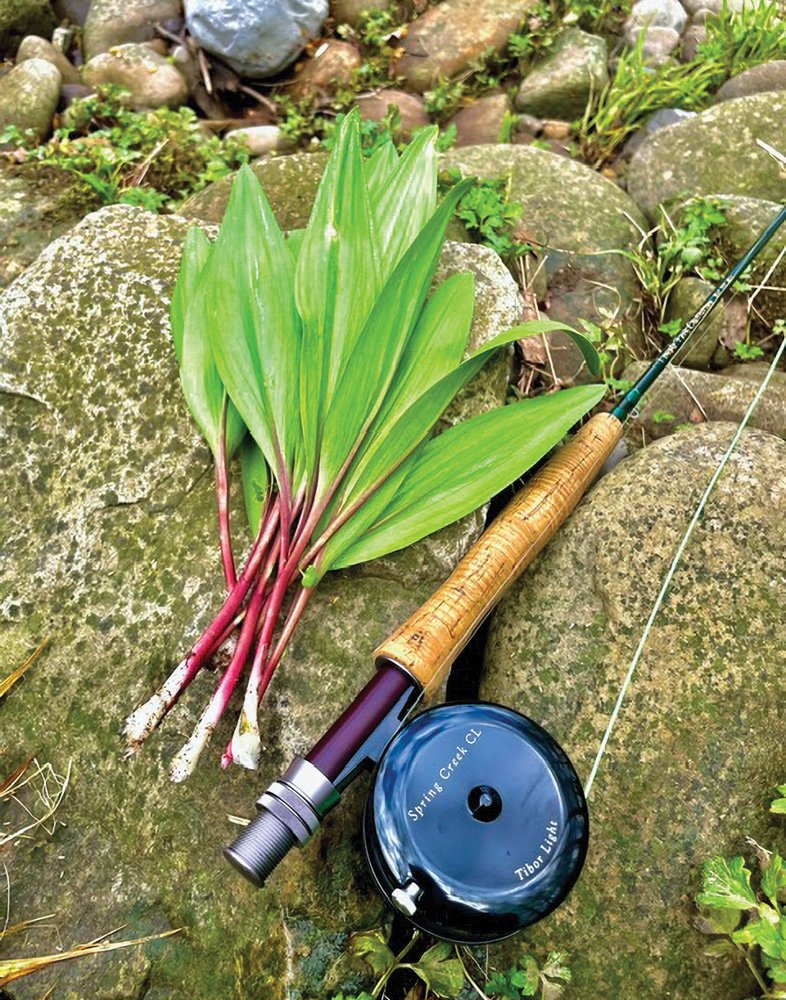
Tools and treats of the trade. Photo by Chris Wade
During a recent outing with Darell Hensley, a good friend and local guide, he asked to observe my line management then immediately offered sage advice on mending. The impromptu lesson goes to show that even after decades on the water, I’m still learning. Darell is a fishing expert on the waterways throughout the West Virginia highlands who owned and operated the Tory Mountain Outfitters fly shop in Davis from 1997 to 2003.
I was a young kid when I first met the legendary Dr. Frank “Doc” Oliverio, who owned the Evergreen Fly Fishing shop in Clarksburg. My dad and his fishing buddies would take fly-tying classes and mill about the shop for hours while telling tales of past adventures. Doc occasionally took me under his wing and guided me on the stream during a day out with my dad and his friends. Looking back, walking and reading the rivers and streams with Doc taught me many of the techniques I still use today. I think he enjoyed teaching as much as he did fishing; that generational sharing of knowledge is something I enjoy as well.
Over the years, I’ve explored beyond the Tygart, venturing into the highlands of Tucker County and wading through the rolling waters of Randolph, Pendleton, and Grant counties. The small trout streams that lace through Canaan Valley and the Seneca Creek Backcountry are some of the most pristine waters I’ve fished. Standing in the Cheat River watershed on the west side of the Eastern Continental Divide, those headwaters eventually flow into the Gulf of Mexico. On the east side, your drifts could end up in the Chesapeake Bay.
My brothers and I would do an annual father-son weekend on the Cranberry River and bike upriver to camp where Dogway Fork enters the Cranberry. The crystal-clear water of the catch-and-release section has always been ideal to look for rising rainbow, brown, and brook trout, the latter of which is, of course, West Virginia’s official state fish (although technically a member of the char family).
One evening while walking back to camp from the stream, I caught a black bear digging through my food storage that I had just unpacked for the night’s dinner. I immediately ran upstream a couple hundred yards where my dad was fishing and told him about the bear pillaging my ramen noodles. The next thing I remember was my dad running full charge with branches in hand to chase off the curious bear. Later that evening, a nearby solo camper came over to our fire to ask if he could move his tent a little closer. The hungry bear continued watching us from across the river late into the night. It’s deep in remote places like the Cranberry, Potomac, and Cheat watersheds that you can spend entire days fly fishing without seeing another person yet encountering plenty of wildlife.
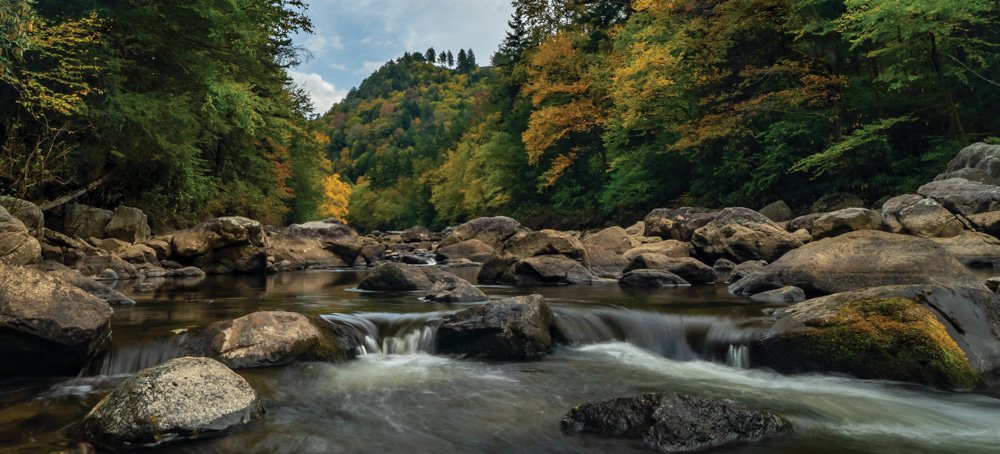
A treacherous trail takes adventurous anglers down to fish the Blackwater River canyon. Photo by Dylan Jones
These streams and rivers, however, have not always been as healthy as they are today. Decades of acid mine drainage, silt runoff from clearcut timbering, and other forms of pollution choked the aquatic life and damaged the sensitive riparian ecosystems of many streams throughout the state. Orange-stained rocks still exist today, serving as a reminder that whole stretches of river were once considered dead, unable to support fish or insect life.
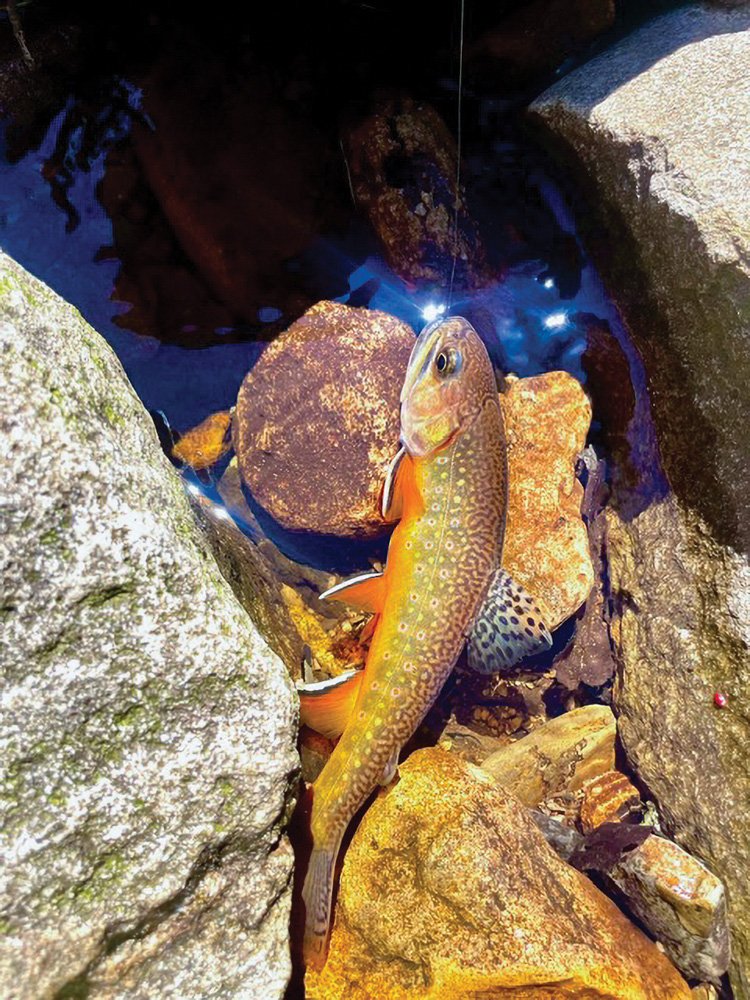
What it’s all about. Photo by Chris Wade
Watershed advocacy organizations like Trout Unlimited, Friends of the Cheat, Friends of the Blackwater, Save the Tygart, Friends of Deckers Creek, and West Virginia Rivers have focused on local stream restoration as a major component of their missions. As a board member of Friends of the Cheat, I’ve seen firsthand the positive power of these collective efforts. What was once considered an impossible task of restoring an entire watershed has become an ongoing story of resilience and recovery. Today, anglers can catch fish in places that, just a generation ago, seemed permanently lost.
When I’m out on the stream and see mayflies coming off the water, they’re a reminder of the countless hours these organizations—and their dedicated volunteers—spend treating acidic mine runoff, collecting samples, and monitoring water quality. The unique ecology of West Virginia’s waterways is something that needs to be protected for future generations to enjoy just like I have, and I’m proud to play a small part in these ongoing efforts.
For me, fly fishing is both a physical activity and a spiritual pursuit, allowing me to step away from the constant connectivity of the real world. Whether the flies I’ve learned to tie over the years entice a fish or not, the simplicity of being on a stream in a mountain valley with my dad and a few friends is what it’s all about. I’ve come to see fly fishing not as a pastime, but as an important part of my well-being. There never really is a bad day on the water.
Chris Wade is a wealth management advisor and aptly named angler based in West Virginia. When he’s not landing a perfect drift, you can catch him chillin’ with his wife and two pups.