
The trees are everywhere. In the woods. On the side of the road. In your grandad’s backyard. Indigenous peoples knew them. White settlers harvested them. So why is it that, while countless orchards grow apples and pears, the pawpaw—North America’s largest edible fruit—never made it out of the woods? Moreover, why are so many people unfamiliar with something so woven into the fabric of Appalachia’s past?
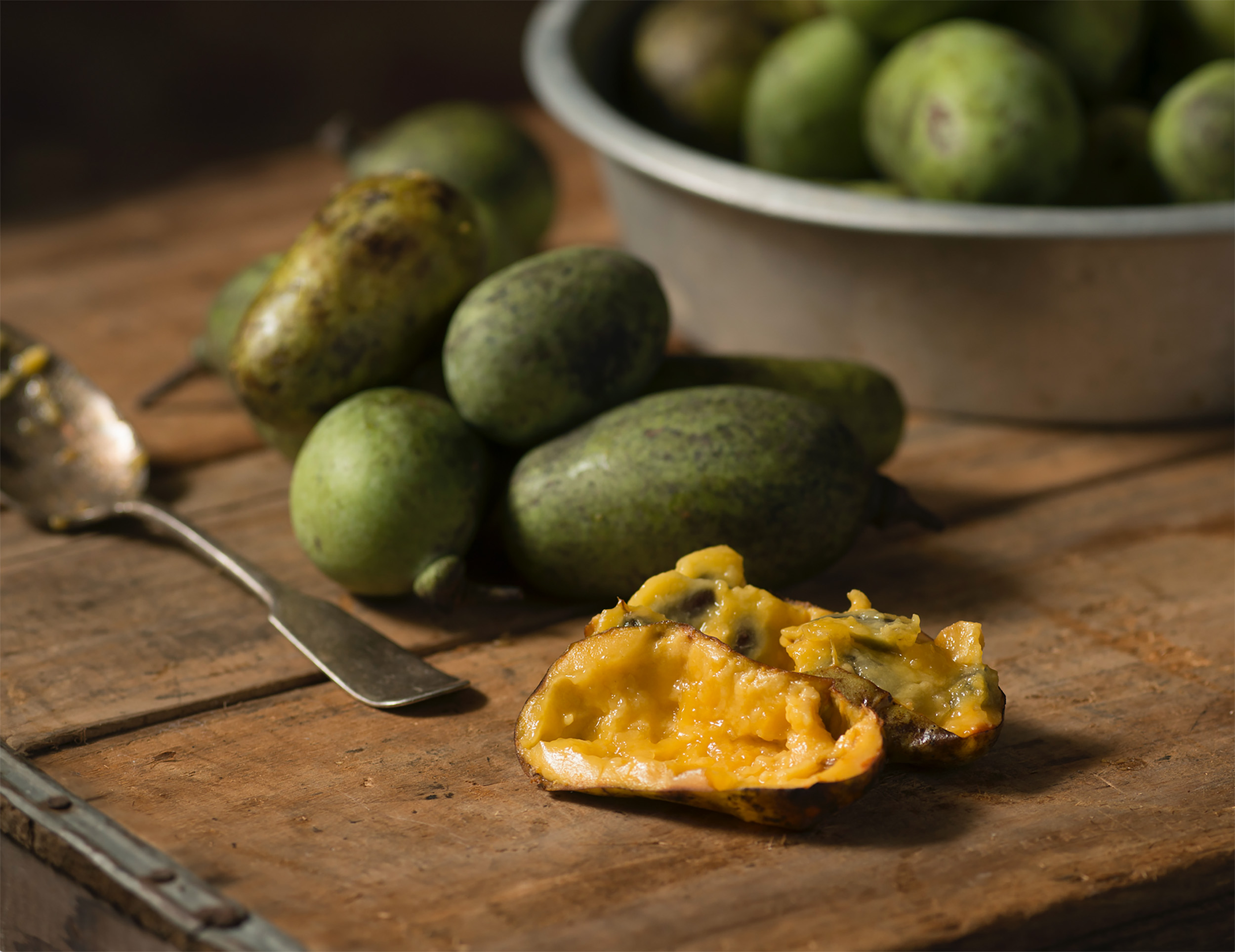
That includes me, a native West Virginian who has spent most of her life standing on rocks, swimming in rivers, and chasing mountain views. I’m the managing editor of the Appalachian adventure magazine you’re holding in your hands, but I didn’t eat a pawpaw until my 40s. I knew they were out there, but I couldn’t tell you anything about them, much less describe the taste or where to find one. I’ve since learned that they grow on smaller deciduous trees with big, tropical-looking leaves. I know the petite fruits have a custard-like texture and big black seeds and taste like a banana–mango–pineapple. But why weren’t they in our elementary school lunch boxes? Why didn’t a pawpaw a day keep the doctor away? How did I—and so many people, it seems—miss out on pawpaws?
Left behind
According to Andrew Moore, it’s not our fault. The author of Pawpaw: In Search of America’s Forgotten Fruit believes society simply forgot about pawpaws. That may be hard for some Appalachians to imagine, because certain communities and families have always foraged, and the fruit has never left their autumn tables. But in most places, the pawpaw disappeared from our culinary lives.
It wasn’t intentional, Moore says. “We didn’t reject the fruit—we just turned away from some of our older traditions.” Foraging for pawpaws was as easy as walking outside and picking them up off the ground, something both white and Indigenous peoples had done for hundreds of years. And it worked until we didn’t need to do it any longer. “By the mid 20th century, our food systems were increasingly industrial, and we started having less of a connection to the land,” Moore explains. Grocery stores appeared, and foraging became shopping, but pawpaws had a short shelf life and bruised easily, so they weren’t great candidates for the produce section. Bigger fruit came boxed from faraway places. Nobody needed a pawpaw.
Our history with pawpaws is nevertheless undeniable—we have towns and rivers named Pawpaw and songs about pawpaws. “It’s throughout American folklore,” Moore says. “We embraced it. We went and got the fruit and made it part of our lives. But the broader culture—the big machine of American capitalism—hadn’t turned its eyes to pawpaws.” And it never did. So when America started driving to the market, the pawpaw was left in the woods, and people like me never got a chance to meet it.
A lost connection
Neal Peterson has done his best to change that. The Harpers Ferry, West Virginia, resident has spent five decades becoming the leading independent pawpaw cultivator in North America. You might say he’s the one who civilized the fruit—just a bit. Pawpaws never made it to commercial orchards, but Peterson managed to bring them out of the woods.
As a kid in the Kanawha Valley, pawpaws were the hard things he picked up and threw at his friends. Years later, he found them in Morgantown’s Core Arboretum. “I ate my first pawpaws on the floodplain,” he says. “And they were delicious. It was an eye-opener. I was already very much into plant breeding and genetics. The light dawned immediately. I thought, ‘This is an incredibly delicious fruit. It’s right up there in the top tier with peaches and oranges,
but it’s not domesticated.’ And then I thought, ‘But it could be.’ ”
Determined to create a better pawpaw, Peterson found the best specimens in the country—the biggest, sweetest, and fleshiest. Over the decades, he tracked down historical collections of pawpaws from enthusiasts to select the best genetic material. Eventually, he released his cultivars to the horticultural world, varieties named for Indigenous rivers, including Shenandoah, Susquehanna, Allegheny, and Potomac. Specialty growers now plant these Peterson pawpaw cultivars—which are larger and sweeter and have fewer seeds and a longer shelf life—in orchards around the U.S. and internationally, earning him the nickname Johnny Pawpawseed.
Does he have a favorite? “They’re all my children,” he says. “It’s sad to say you have a favorite.” But he admits it’s Susquehanna, a large fruit with very few seeds.
Several other private breeders are also producing new cultivars, and Kentucky State University has established an international pawpaw research and breeding program and serves as a gene bank for pawpaw species. For his part, Peterson is retired, but pawpaws are his legacy. Thanks to him, you can grow your own Susquehanna in your backyard or get mail order pawpaws anywhere in the country.
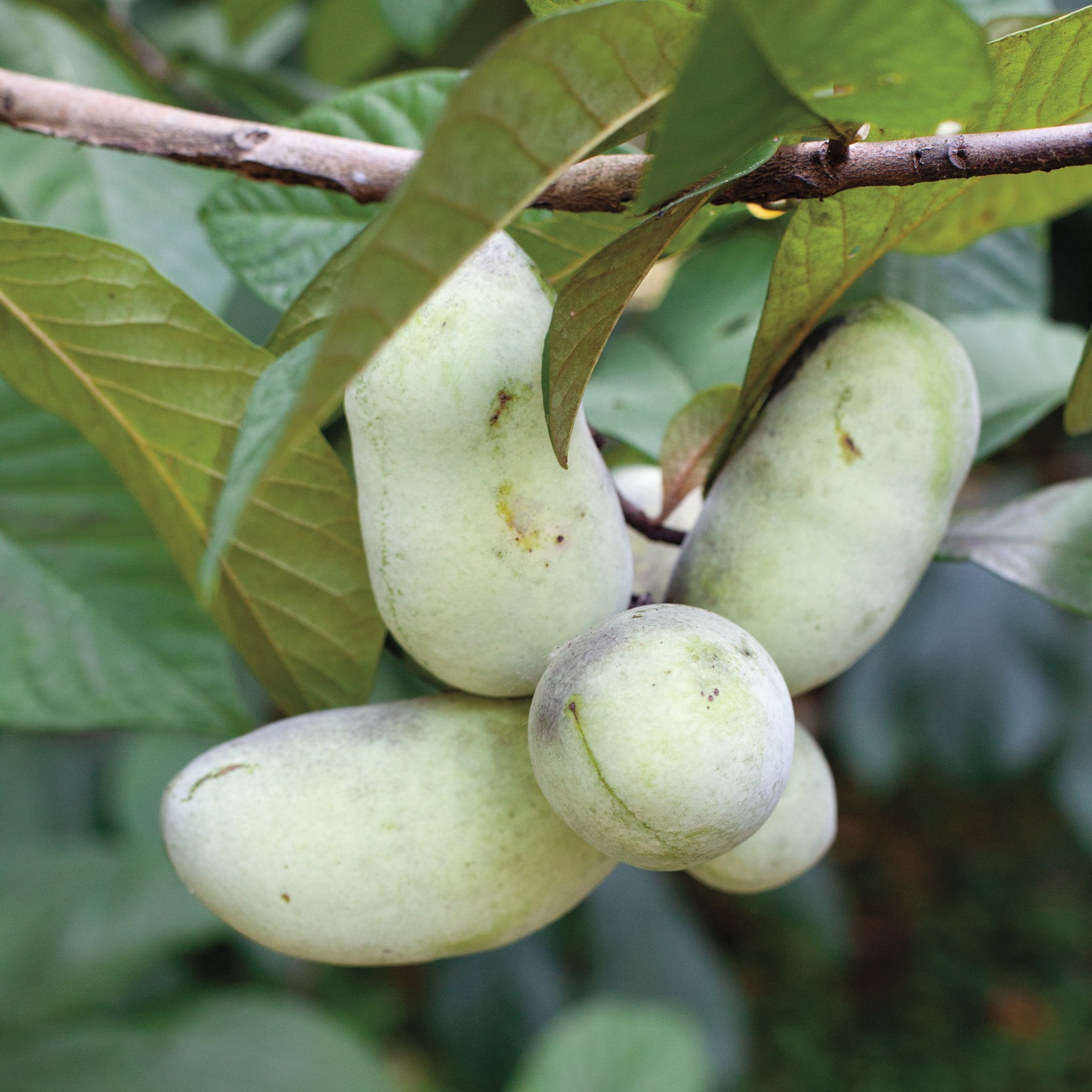
Photographed by Carla Witt Ford
Spreading the word
Both Moore and Peterson credit pawpaw festivals with bringing the fruit back to public consciousness, and one stands out. Just as Richwood, West Virginia, proclaims itself the ramp capital of the world, Athens, Ohio, has declared itself ground zero for pawpaws.
“The Ohio Pawpaw Festival should be credited with much of the revival of the pawpaw in the past 25 years,” Moore says. “It has set the blueprint for other states to do something similar.” This is the Woodstock of the fruit world. The festival has grown from a tiny affair to a monster, three-day event where foodies can partake in tasty things like pawpaw crepes, salsa, ice cream, and cookies. Those who appreciate an ale can sip a pawpaw beer, be it a wheat, pale ale, or saison. In addition, and perhaps more significantly, the annual Best Pawpaw contest considers everything on the judges’ plates, whether cultivars, wild, or newly created.
The enthusiasm for celebrating the forgotten fruit has been contagious. At the West Virginia Pawpaw Festival, which takes place in the WVU Core Arboretum where Peterson began his journey, you can learn, touch, taste, and take home trees. A new festival has begun in Paw Paw, West Virginia. Other events have sprung up, too. “Thanks to Ohio’s festival, we have pawpaw festivals in the Carolinas,” Moore says. “We have a Gulf South Pawpaw Symposium in Louisiana. There are pawpaw festivals in Central Maryland—they’re all over the place now.” People are meeting the pawpaw again—one fall weekend, one ice cream scoop at a time.
It seems the pawpaw’s slow return to our collective consciousness lies in the intersection of science, celebration, and Appalachian tradition. The world came between us and the little green fruits, but they never went anywhere, and neither did we, really. What a comfort to know we’re never more than an arm’s reach from each other, the people and the pawpaws.
Keep it Classy with an Appalachian Martini
3 ounces citrus vodka
1/2 ounce St-Germain
2 tablespoons pawpaw puree
Add all ingredients to a cocktail shaker with ice. Shake. Strain into a martini glass.