


There are some ways Appalachian folk can’t help but show where we’re from—like our holler-born phrases or canning traditions. We often embrace stereotypes by flipping their connotations into something we’re proud to reflect. Likewise, we gravitate toward animals we’ve learned to appreciate beneath a surface layer of misunderstanding. From near-mystic hellbenders to raccoons and opossums, we’ve come to embrace the slimy, the secretive, and the scroungy as unsung contributors to our environment.
But there’s another staple creature in our midst that fits the bill, and it’s not hiding in the cover of darkness or murky waters. To find an emblem for our region’s overlooked importance, resilience, and resourcefulness, why not look up? Chances are, a vulture is drifting overhead.
Important work
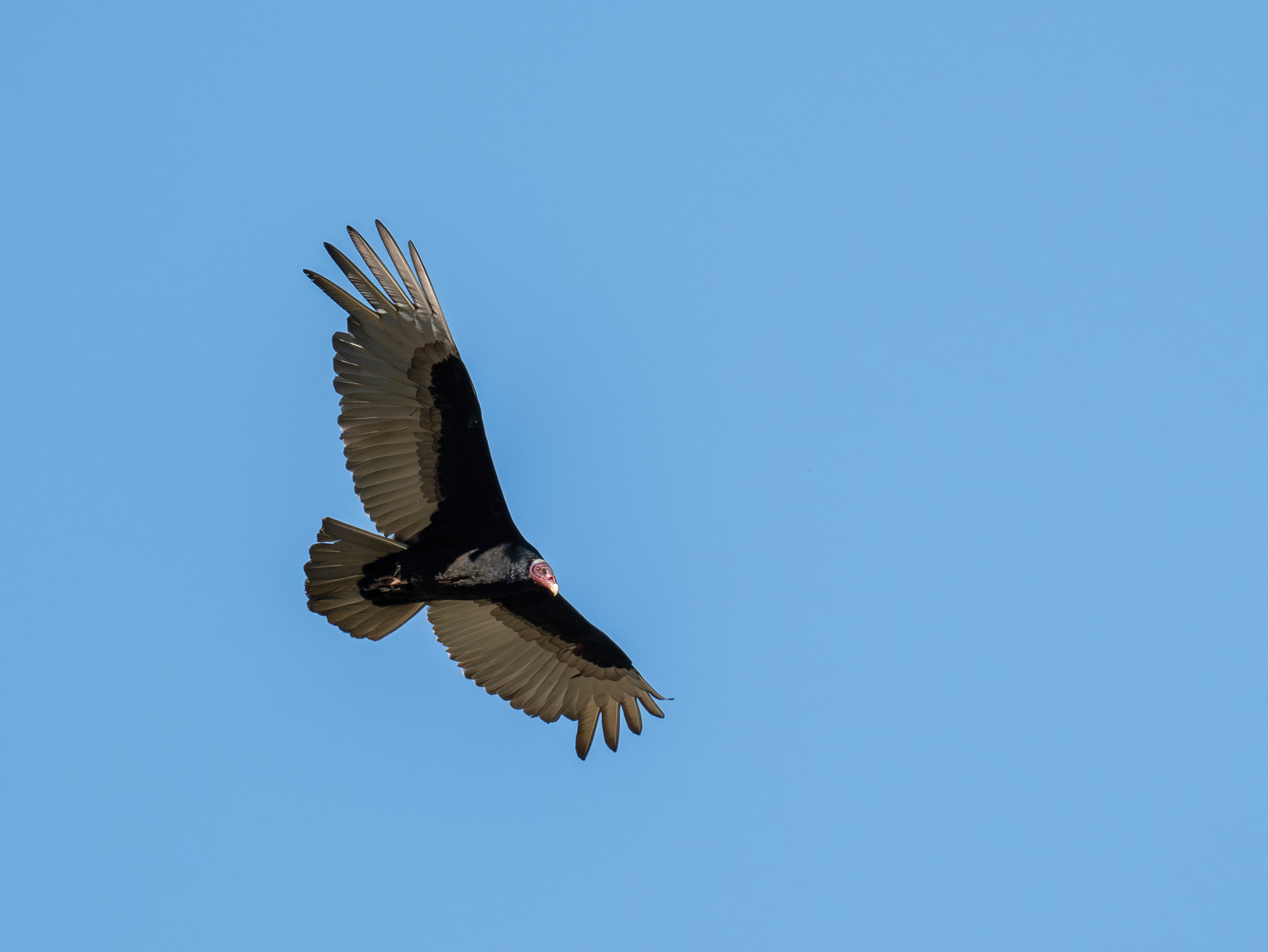
From below, the first thing to notice about a vulture is its long wings edged with finger-like feathers. It could be catching a thermal that’s rising from the sun-soaked ridge you’re standing on, either working in a spiral or gliding straight ahead. Aside from tilting side to side, it makes flight seem effortless. You see a speck of a scavenger in the sky, but the vulture sees our entire landscape.
Vultures are imperative for their role as nature’s cleanup crew. Their diet of carrion, or dead animals, is a crux of transformation—they take what’s decaying, clean it up, and efficiently digest it with their specialized stomach acids and gut biomes. By rapidly removing carcasses from the landscape, they limit opportunities for pathogens and other scavengers to exploit them, while returning nutrients to the ecosystem.
Other parts of the world have had to face a vultureless reality firsthand. In India, more than 99% of vultures were wiped out from the widespread use of a veterinary drug that left lethal residues in livestock carcasses. This catastrophic decline triggered a sanitation crisis and a need for secondary ways to remove deceased animals from the ecosystem and contributed to increases in disease transmission. Across the United States, populations are thankfully stable, and vultures remain an important part of the scavenging community that keeps our landscapes functioning.
Photographed by Mollee Brown
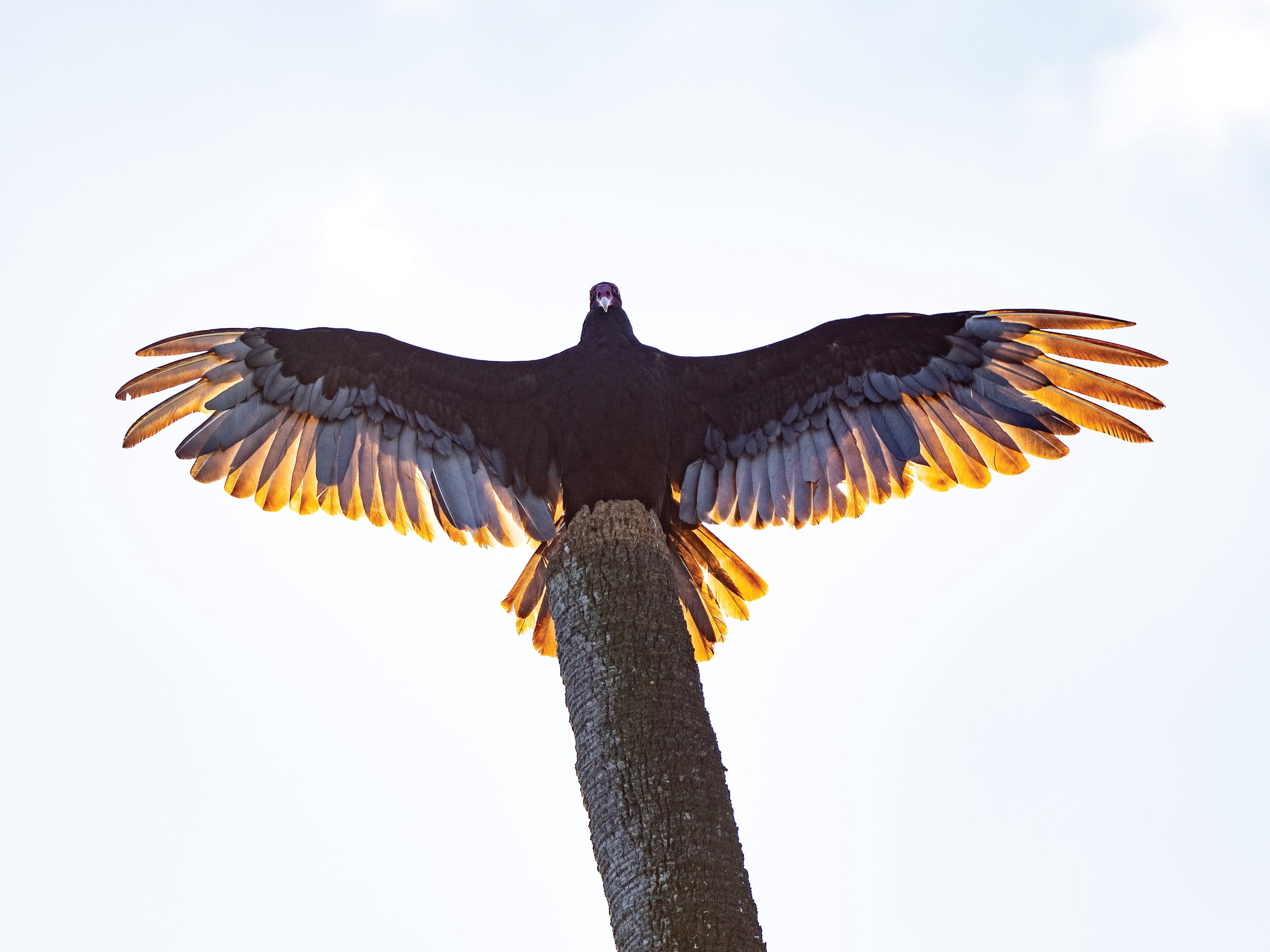
Two species of vulture call this region home: turkey and black. Turkey vultures are some of the largest birds in the sky, with a wingspan of nearly 6 feet, and are named for their featherless, red-skinned heads. They source their food using a combination of their keen sight and even better sense of smell. Soaring through just about every habitat type we have, they are usually the first vultures to locate a fresh kill.
Black vultures are more compact with dark heads. Rather than relying first on their sense of smell, they turn to their collaborative, cunning, and more aggressive behaviors to find food. After a turkey vulture smells and locates a meal, black vultures can be quick to follow them and, despite their smaller size, jostle for the best position to consume their claimed meal. But they don’t just rely on secondhand knowledge—black vultures also use their strong eyesight and are willing to consume an even larger variety of food sources than turkey vultures.
Whereas turkey vultures spend large portions of their days alone or in small groups, black vultures tend to congregate in larger numbers as they roam. But when the sun begins to set, both species fully tap into their social sides as they return to their roosts. When vultures gather together at night—sometimes dozens at once, and both species together—they are not just gathering to sleep, but also to exchange valuable information. They form social hierarchies and maintain family bonds throughout their lives. Social interactions there may help vultures exchange information about food and reinforce bonds.
A natural fit
Through it all, vultures manage to take advantage of opportunities in the landscape rather than fighting against it. They make it look easy, despite not being easy to look at, at least by some standards. It’s probably a combination of the hooked bills, big nostrils, beady eyes, and those prominent, bald heads. But beauty standards beg to be challenged, and from a lens of function, vultures are artful masterpieces. Many of their unusual features serve a purpose, aiding them in finding and consuming carrion. The lack of feathers on their heads is one of the most helpful attributes, keeping their faces and necks clean from rotten meat and germs as they eat. It’s all a matter of perspective, and in knowing the specialized value of their features, we can celebrate their ingenuity.
Vultures are seen as negative or ominous by many, but a change in perception is due. Luckily, we’re good at understanding the need to look past stereotypes in these parts. Historically, Indigenous groups in this area saw vultures differently. A branch of the Shawnee living along the Kanawha River throughout the 1600s called themselves the Xuale or Suale People, literally translated to Buzzard or Vulture People. Vultures carried varied meanings across different tribes and ranged in reverence as symbols of mortality, rebirth, and balance.
If you find yourself looking for a source of solace, consider a midday vulture gliding overhead as an invitation for meditation. As you watch it, imagine our world from its point of view, and count your slow, deep breaths between each wingbeat.
Vultures can be misunderstood because they make use of what is left behind. But the niche they fill is crucial—they transform what is left behind into something useful. They’re adaptable and deeply resilient. And they’re nearly always there to remind us that, no matter how things are on the ground, there’s always a reason to look up.
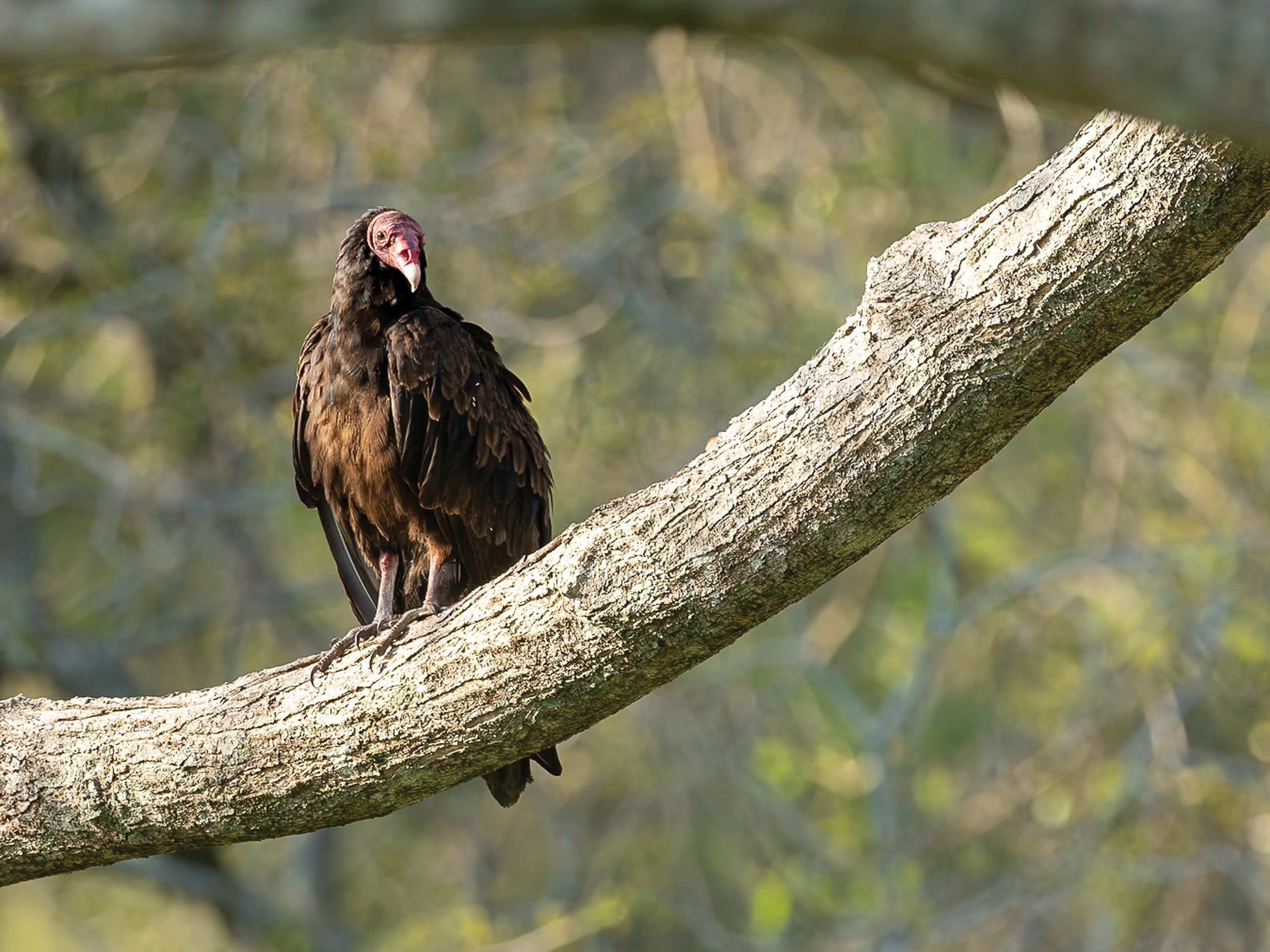
Photographed by Mollee Brown
I Spy, Raptor Edition
A quick guide to identifying that shape in the sky.
Turkey Vulture
Wings are held in a shallow “V shape” as they soar, with lots of wobbling and rocking. Look for a small head, long wings, and a long tail. They often circle without flapping.
Black Vulture
Shorter, broader wings. Black vultures have compact bodies and shorter tails. They soar with their wings mostly flat and flap more frequently than turkey vultures.
Bald Eagle
Eagles have broad wings and a large head that sticks noticeably beyond the wings. Adults have a white head and tail, while juveniles are mostly brown. Their flight is powerful and direct.
Red-tailed Hawk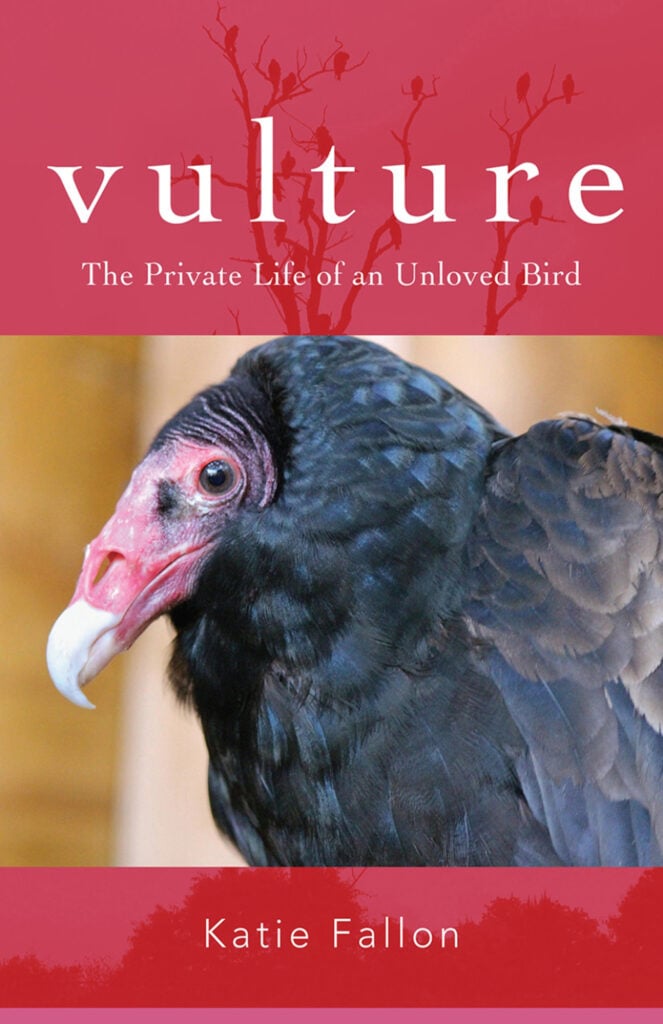
Classic broad-winged hawk. Look for rounded wings and a shorter, rusty-red tail. They frequently soar in wide circles, but usually with more purposeful wingbeats than vultures.
In-Flight Reading
Vultures may not be the most popular birds on the block, but author and conservationist Katie Fallon adores them. She educates the public about their importance and has developed a bond with the vulture residents of the Avian Conservation Center of Appalachia, a rehab facility she and her husband, veterinarian Jesse Fallon, helped start in 2012. In her book, Vulture: The Private Life of an Unloved Bird, Fallon delves into the science, history, and ecology of turkey vultures.