



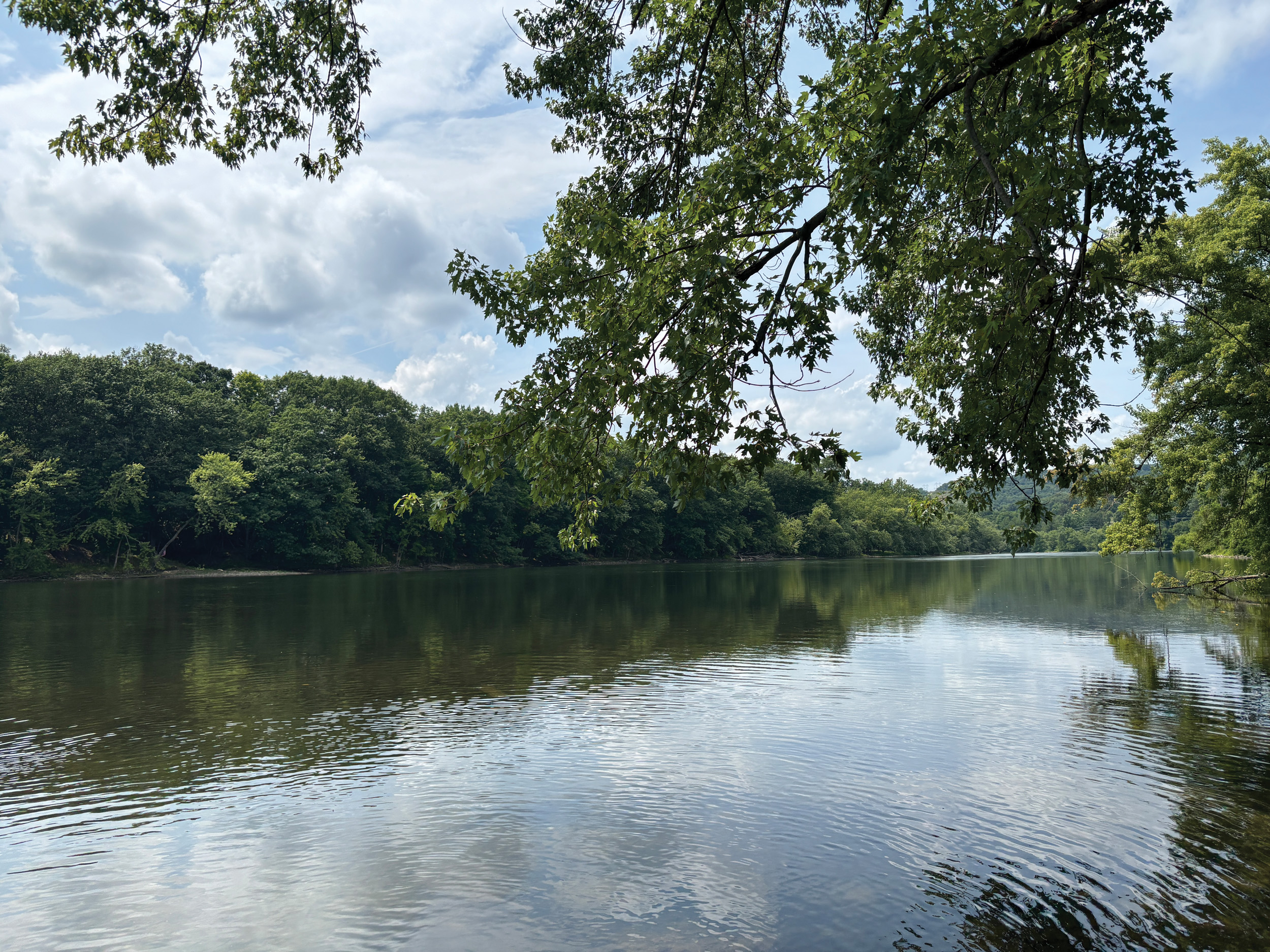
There are a lot of wildernesses in America, but none are so small as the 372 acres that sit in the middle of the Allegheny River in northwestern Pennsylvania. This is the same river that flows under bridges to meet the Monongahela in Pittsburgh and form the Ohio. But up here, the river is wild and scenic. Literally—parts of the Allegheny have been formally designated a Wild and Scenic River.
Don’t confuse this area with Allegheny Islands State Park, just upriver from where the Steelers and Pirates play ball. Here, seven alluvial islands—formed over time from river silt deposits—sit north of Tionesta in the Pennsylvania Wilds. This little wilderness is part of the Allegheny National Forest, over half a million acres that contain some of the largest tracts of old-growth forest in Pennsylvania. It’s also known for many riparian areas along its streams and rivers.
Congress designated Allegheny Islands as a wilderness in 1984 to protect the unique riverine ecosystem known as a floodplain forest. It’s a landscape frequently reshaped due to seasonal flooding. The canopy is dominated by moisture-loving trees like sycamores and silver maples. Green ash, shagbark hickory, and willow are also common. The wilderness consists of seven islands that stretch along 56 miles of river from Buckaloons Recreation Area down to Tionesta. From north to south, look for Crull’s Island (96 acres), Thompson’s Island (67 acres), R. Thompson’s Island (30 acres), Baker Island (67 acres), King Island (36 acres), Courson Island (62 acres), and No-Name Island (10 acres).
Vegetation on the islands is thick, except on R. Thompson’s Island, which lost most of its old growth trees to a 1975 tornado. You won’t find any trails, and motorized equipment is prohibited. Moreover, the only way to access the islands is via the water. But that’s not a bad thing, because the Allegheny is a flatwater paddling paradise. In fact, kayaks are the primary mode of river transportation, and the landscape is usually speckled with colorful boats. Everybody has a ’yak, in this neck of the woods.
Piper VanOrd, owner of Allegheny Outfitters in Warren, Pennsylvania, is thrilled to help people enjoy the wilderness with a paddle in hand. “We’re pretty lucky up here to have the islands that we do,” she says. “We have the Allegheny Islands Wilderness, but even beyond that, the river is just dotted with them up here. It is really rare that you don’t leave the southern tip of one island without having the next in sight. You can hop from island to island, making your way downriver.”
The amount of time you spend in the wilderness is entirely up to you. Most of the islands have a few first-come, first-served camping areas. Visitors are highly discouraged from building new campsites so as not to damage habitat in such a small space. Most likely, there’s another spot on the next island downstream.
“Lots of people just stop and picnic for lunch,” VanOrd says. “Some people camp overnight. Some people camp for a couple of nights. These are basically just untouched islands. As you’re paddling downriver, you just look for a small dirt path. Some sites are a little further inland, not far. Most of them you can just see from the shoreline. You’ll see a fire ring and a beaten path that heads away.”
You can bring your own boat to the Allegheny Wild and Scenic River Water Trail, but if you’d rather let someone else haul and shuttle, Allegheny Outfitters can do the heavy lifting. And if you want to spend more than just a day in America’s smallest wilderness, VanOrd recommends canoes. “Usually when people are going on serious multi-day trips, they’re knocking out 50 miles,” she says. “They’ll take at least one or two canoes.” Before adventurers depart, Allegheny Outfitters will go over safety regulations and the paddling route, recommend campsites and points of interest, and note areas of caution and natural hazards. Then it’s time to don PFDs and hit the water.
Allegheny island-hoppers can expect to see an array of Pennsylvania wildlife. Above the water, look for bald eagles, ospreys, great blue and green herons, cormorants, and mergansers. In the water, keep a sharp eye out for beaver, muskrat, otter, and mink. And below the water, turtles, pike, muskie, bass, hellbenders, mud puppies, darters, and plenty of aquatic insects call the river home. VanOrd posts almost daily GoPro videos on social media to reveal what’s going on beneath the Allegheny’s surface. “It’s definitely a very healthy stretch of river up here, as far as our critters that call it home,” she says. “That’s why I say we’re so lucky.”
Paddling Past History
Thompson’s Island has seen some action. Long before it became part of the Allegheny Islands Wilderness, it was the site of the only Revolutionary War battle fought in northwestern Pennsylvania. Indigenous peoples had always used the river and the surrounding region for trade, hunting, and travel, but in August 1779, Colonel Daniel Brodhead’s expedition clashed with Seneca warriors in a brief but pivotal skirmish. Although archaeologists continue to debate the battle’s exact location, paddlers passing the island today are traversing one of Pennsylvania’s most historically significant river landscapes.