

Photographed BY ART BARKET
The mighty Cheat River begins its journey where the rushing waters of the Black Fork and Shavers Fork rivers merge in the historic town of Parsons in Tucker County. The mainstem of the Cheat flows north past the small towns of Saint George, Rowlesburg, and Albright before entering the rugged wilderness of the Cheat Canyon in Preston County. As the canyon walls rise, the placid cobblestone riverbed steepens and fills with massive boulders and bedrock ledges. The ensuing stretch offers a whitewater playground for skilled paddlers stacked with legendary rapids. Although the Cheat Canyon is best explored by boat, hikers can head down to the rocky banks by hiking the Allegheny Trail, which runs the length of the canyon on an old railroad grade above the river.
Over millennia, the seemingly random boulders of the Cheat Canyon have fallen from cliffs high above the river or have been pushed downstream by biblical-scale floods. The last major event to tumble house-sized boulders through the canyon was the infamous 1985 Election Day flood, when the Cheat rose 30 feet in one day, killing 38 people and causing millions of dollars in damage to homes and infrastructure. The erosive effects of the rushing water, coupled with wind and time, have steadily sculpted these rocks, creating some amazing spectacles that resemble familiar forms.
As humans, our brains are wired to seek out patterns in nature, like stars forming constellations, or clouds resembling animals. While searching for a word to describe this phenomenon, I came across “mimetolith,” which is defined as a natural rock feature resembling a living form, typically a human face, head, or the form of an animal. This relatively new term, which is a combination of the Greek words mimetes (an imitator) and lithos (stone), was coined by Thomas Orzo MacAdoo and first printed in 1989. Among the myriad rocks scattered throughout the Cheat Canyon, a number of them have become well-known mimetoliths, named by local paddlers that frequent the rushing rapids.
Miss Piggy
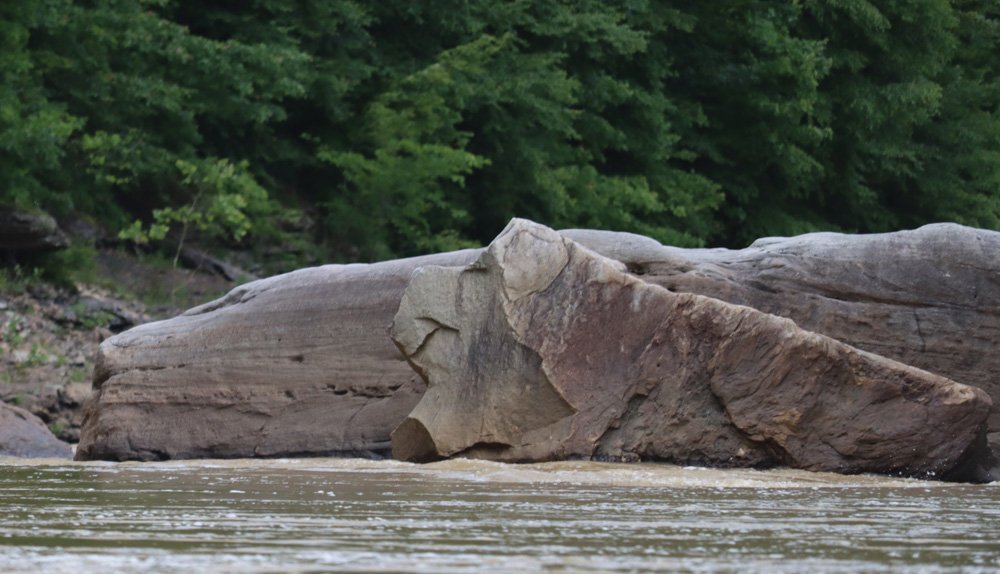 This large porcine rock sits in the large pool preceding the Tear Drop rapid. Composed of Pottsville sandstone, Miss Piggy’s permanent smile means she’s always happy to see everyone who passes by. Likewise, paddlers are always happy to see Miss Piggy, as she marks the end of a long flatwater stretch and the start of the best series of rapids in the Cheat Canyon, including Tear Drop, High Falls, Maze, and The Coliseum.
Fist
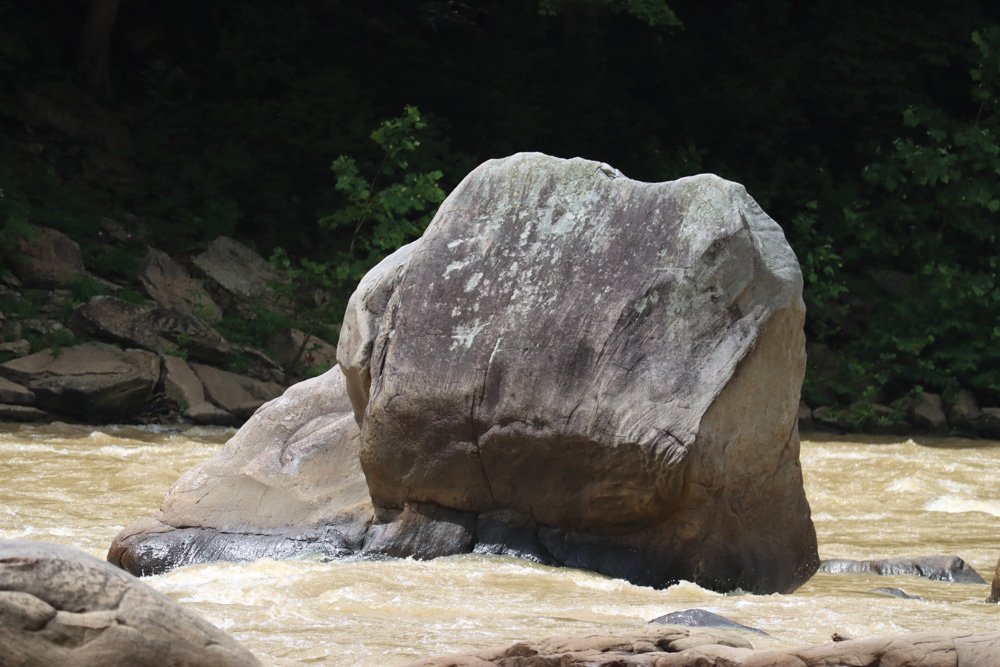 The Fist sits midway through its eponymous rapid. This striking boulder takes the form of a triumphantly clenched human hand. The rock is aggressively poised upstream and faces paddlers as they brave the rapid. The proceeding ledge is fast and steep, and paddlers need to keep it upright to avoid getting knocked out by the Fist. During the 2025 Cheat River Massacre-Ence downriver race held in May, the Fist rapid was the site of carnage: two kayakers swam at the same time, and one of their boats swamped and sank to the river bottom.
Armadillo Rock
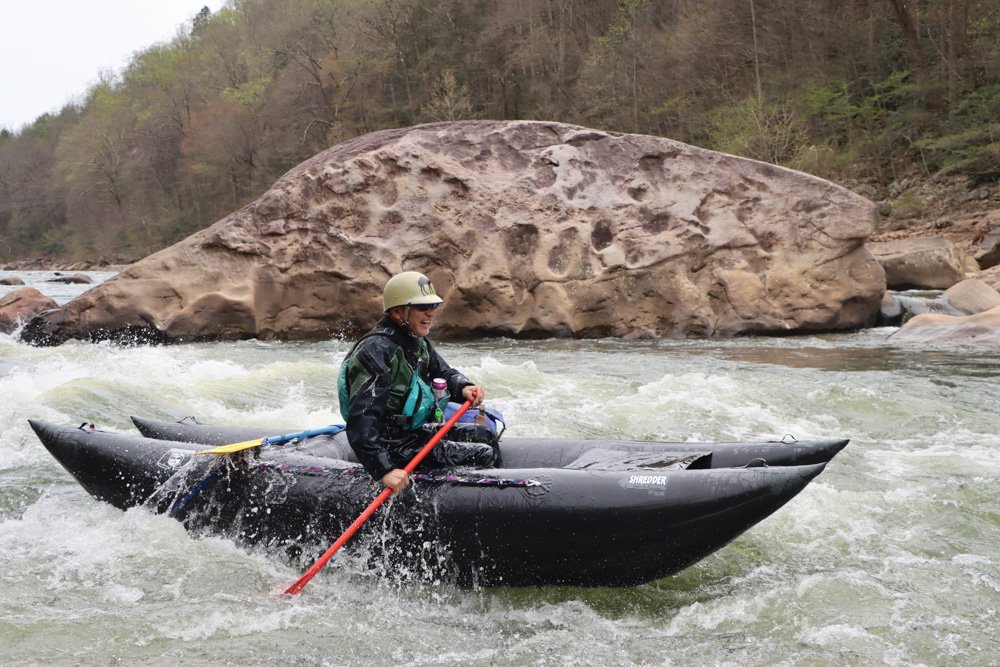 Armadillo Rock is one of the largest boulders found in the Cheat Canyon. This house-sized mimetolith resembles the scaled head and body of an armadillo. Armadillo Rock is composed of Pottsville sandstone and chokes down the entire flow of the river to a right-side channel, forming a fun series of wave trains. The sculpted backside of the armadillo is covered with eroded potholes that formed over millennia as cobblestones washed over the boulder. Rocks caught in these small depressions are swirled around by water, slowing carving away the rock and sculpting the armored creature we see today.
 Beer Can Rock
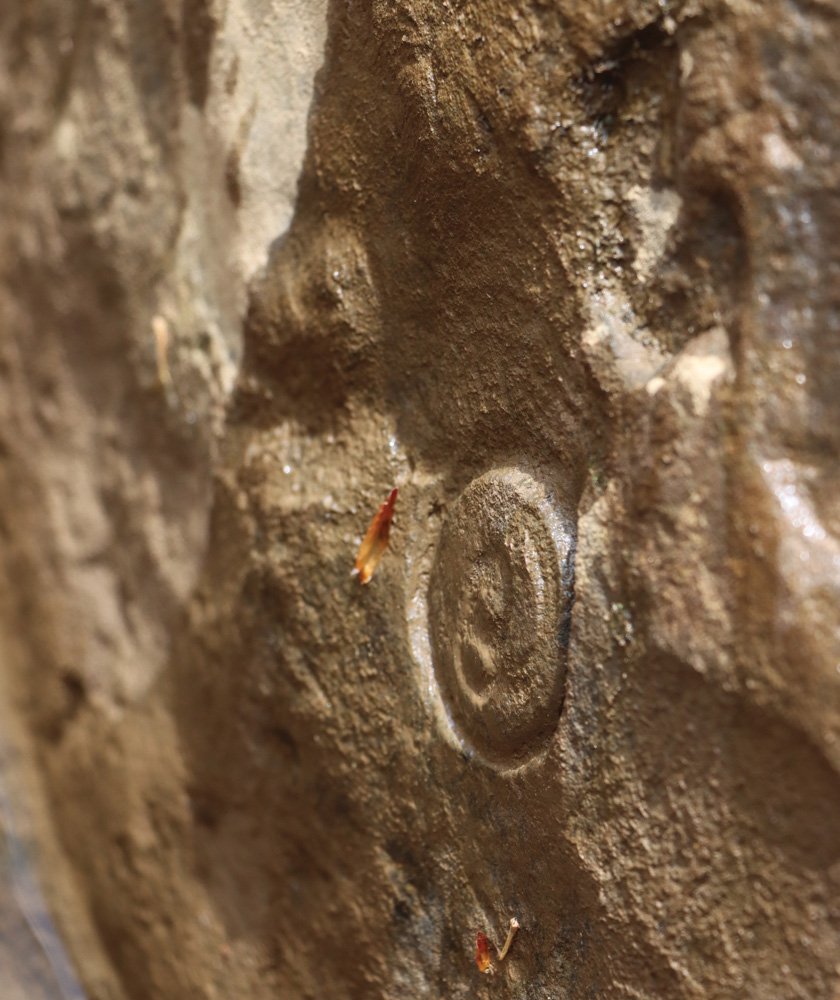
A bit less magical than the Tail of the Dragon, and yet more relevant to modern life, is this surprising shape that has been dubbed Beer Can Rock. I recently discovered this imprint while scouring the riverside rocks for interesting finds just like this. I have no idea what process might have caused this formation, but it appears to look exactly like the top of a beer can —and even has the tab to crack it open. For decades, cheap beer has been the preferred beverage of raft guides and river cruisers, and Beer Can Rock offers the perfect spot to eddy out and crack open a cold one.
Tail of the Dragon
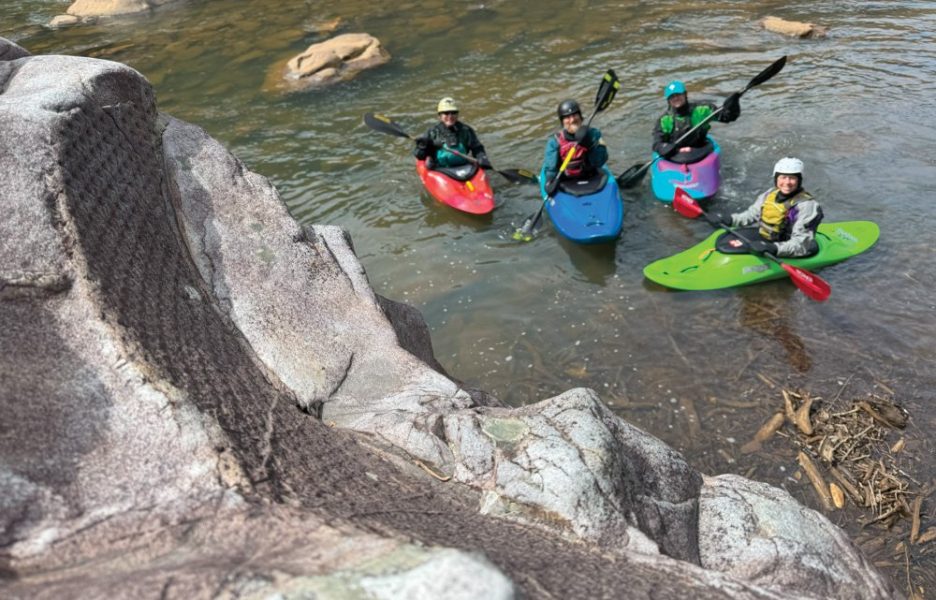 Three hundred million years ago, during the Carboniferous Period, much of what is now West Virginia was a tropical environment comprised of swamps and forests. During this period, Lepidodendron, a large tree-like vascular plant, flourished here. The fossilized imprints left by Lepidodendron plants resemble the tail strike of a mighty dragon (or a tire track to motor sports enthusiasts). The Lepidodendron went extinct some 250 million years ago. Much of the plant matter from Lepidodendron and other plants during this period decayed in the swamps and bogs, creating the vast peat deposits that eventually compressed into coal. Fossilized imprints of many plant species can be found in the sandstone boulders throughout the canyon. In a striking wall at a rapid called Fossil Falls, an exposed limestone layer provides evidence of an ancient seabed where one can find thousands of fossilized shells and other small sea creatures.
Turtle Rock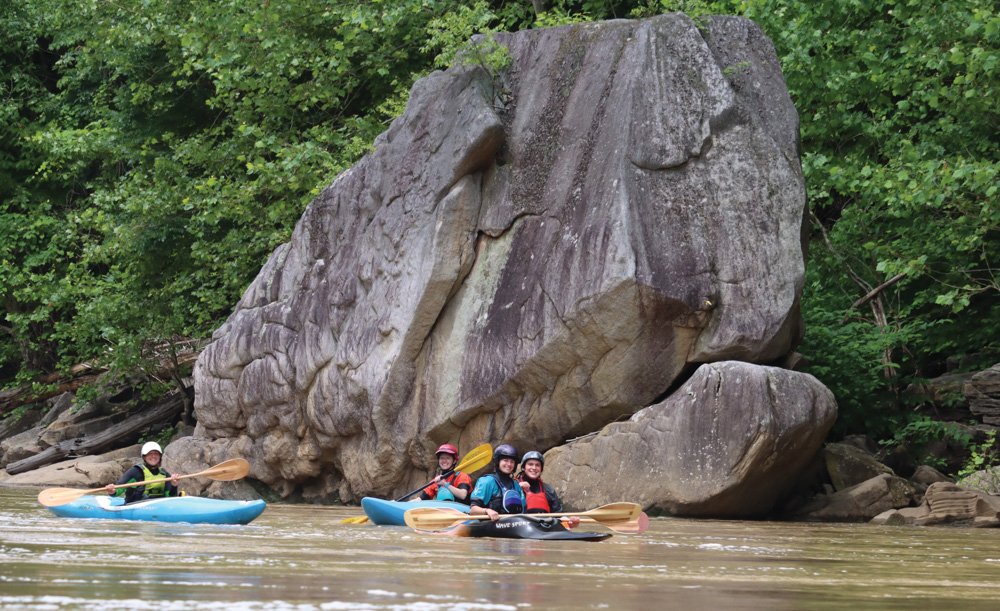
Turtle Rock resembles a giant turtle shell with a turtle head sticking out just above the water. This giant Pottsville sandstone boulder fractured perfectly to create the head and neck of the turtle. Turtle Rock can be found just below Elephant Rock and Pete Morgan’s rapid, which was named for the guy who ran a gas station in Albright that served as the go-to for paddlers seeking river level information in the 70s and 80s. Interestingly, there is an old hand-carved gauge featuring lines and Roman numerals on the backside of Turtle Rock. The history of this seemingly ancient gauge is unknown.
Elephant Rock
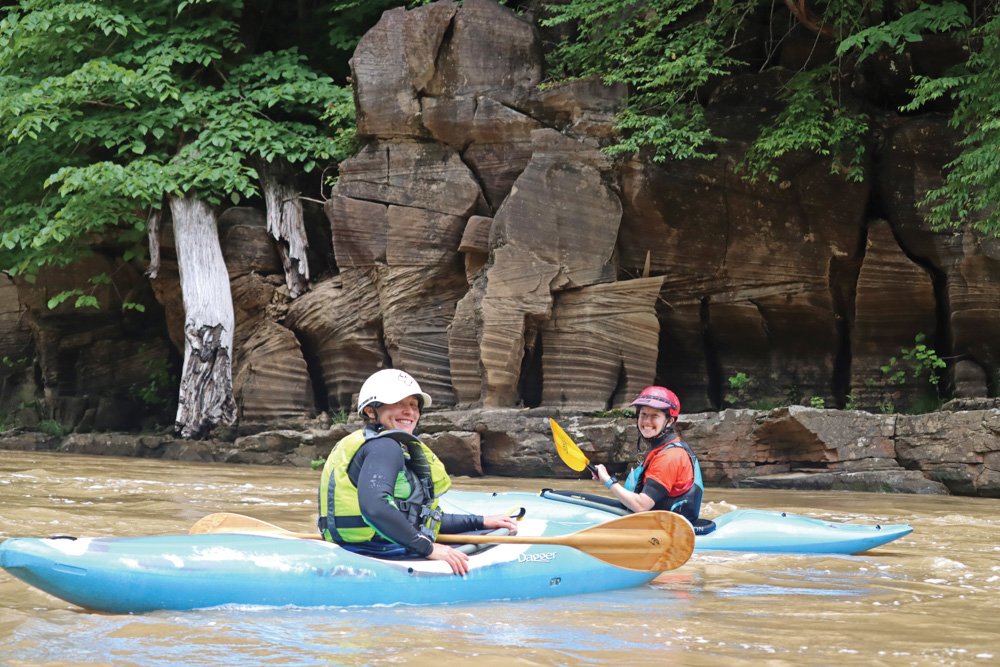 Elephant Rock is one of the most spectacular and awe-inspiring rock formations in the Cheat Canyon. Just below the exciting Coliseum rapid, the Cheat slices through a layer of Loyalhanna limestone, creating this amazing herd of elephants marching through the canyon. The Loyalhanna limestone is a unique layer of rock that is actually a mixture of sandstone and limestone. The striped, layered columns of limestone resemble the legs of the herd, while the centerpiece of the formation creates an uncanny resemblance to trunks and heads. Early paddling pioneers, awed by these stone columns, named the Coliseum rapid due to the resemblance with Roman architecture. Coliseum is the hardest rapid in the Cheat Canyon, rated as a solid class IV at medium flows, and can turn into a rowdy class V rapid at high water.
Cheat River Guardian
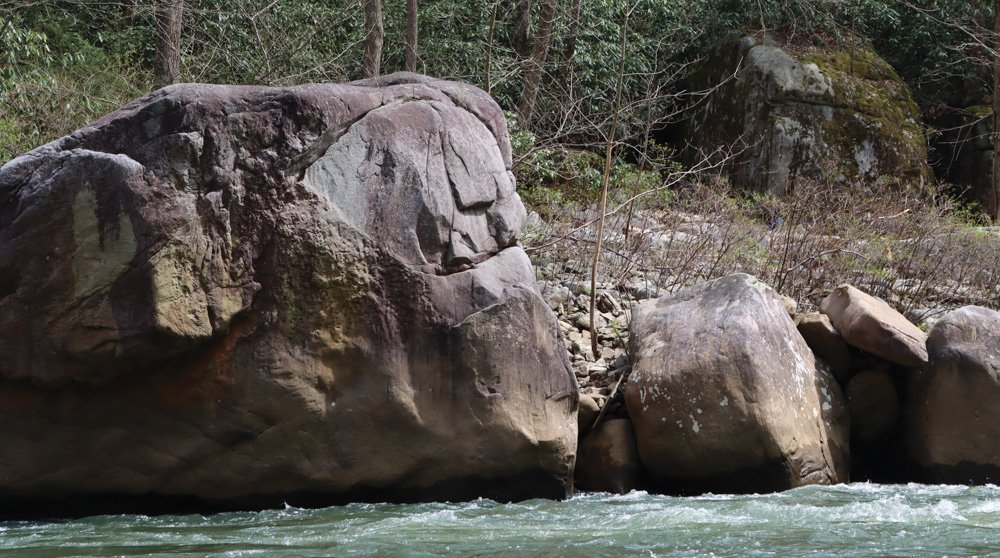 The Cheat River Guardian faces strongly upstream, forever keeping a stoic and watchful eye on the canyon. You can find the Guardian at the bottom of the mighty High Falls rapid, where the river tumbles down a set of bedrock ledges and slides. As I stare at this rock, I see a warrior wearing a Trojan-style battle helmet. The face and helmet stand out so much that this mimetolith appears to have been carved by humans. This impressively large rock feature doesn’t get much attention since it sits on the bank opposite an impressive cliff with waterfalls that trickle into the canyon.