



Photographed by Dylan Jones
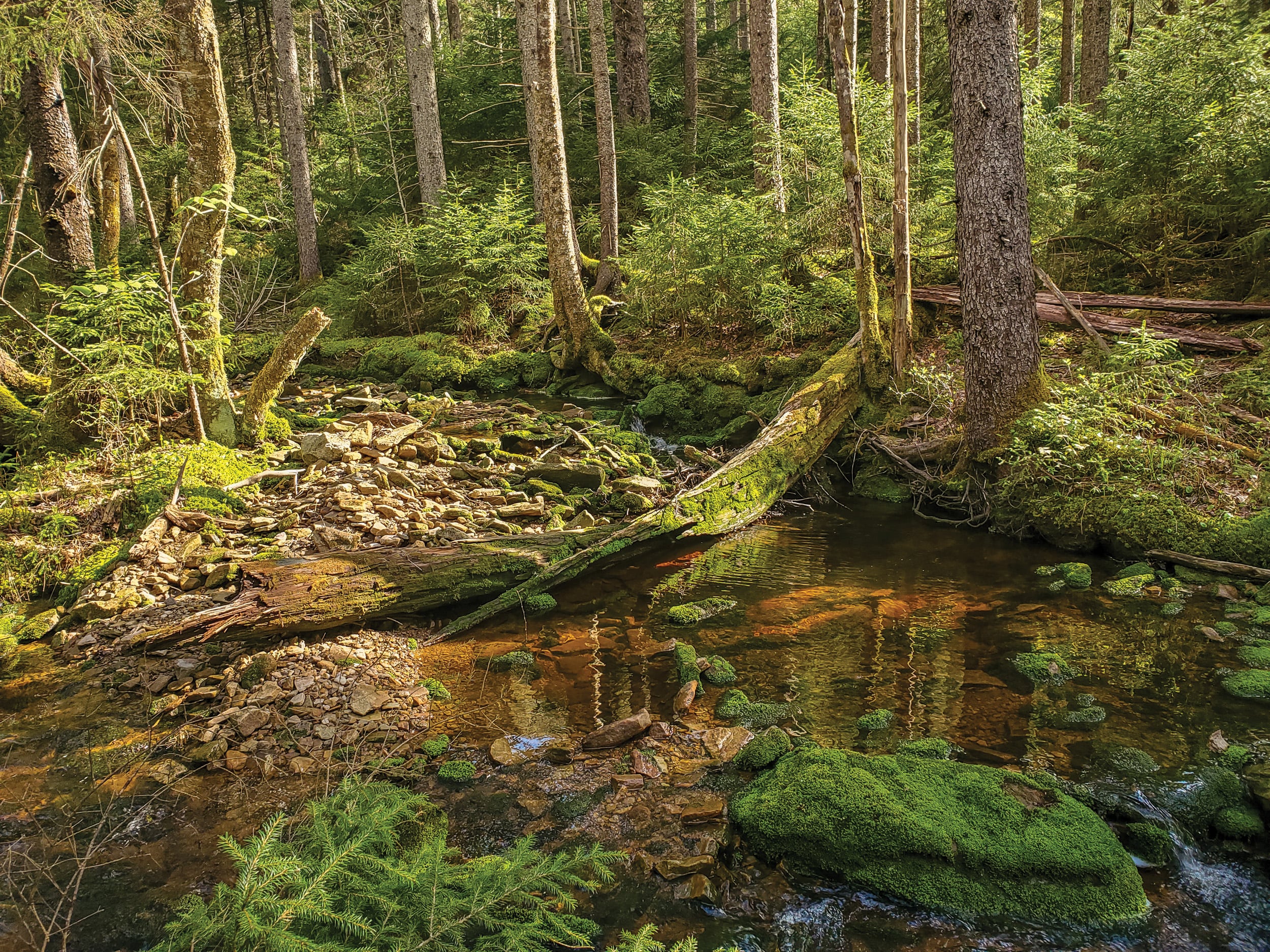
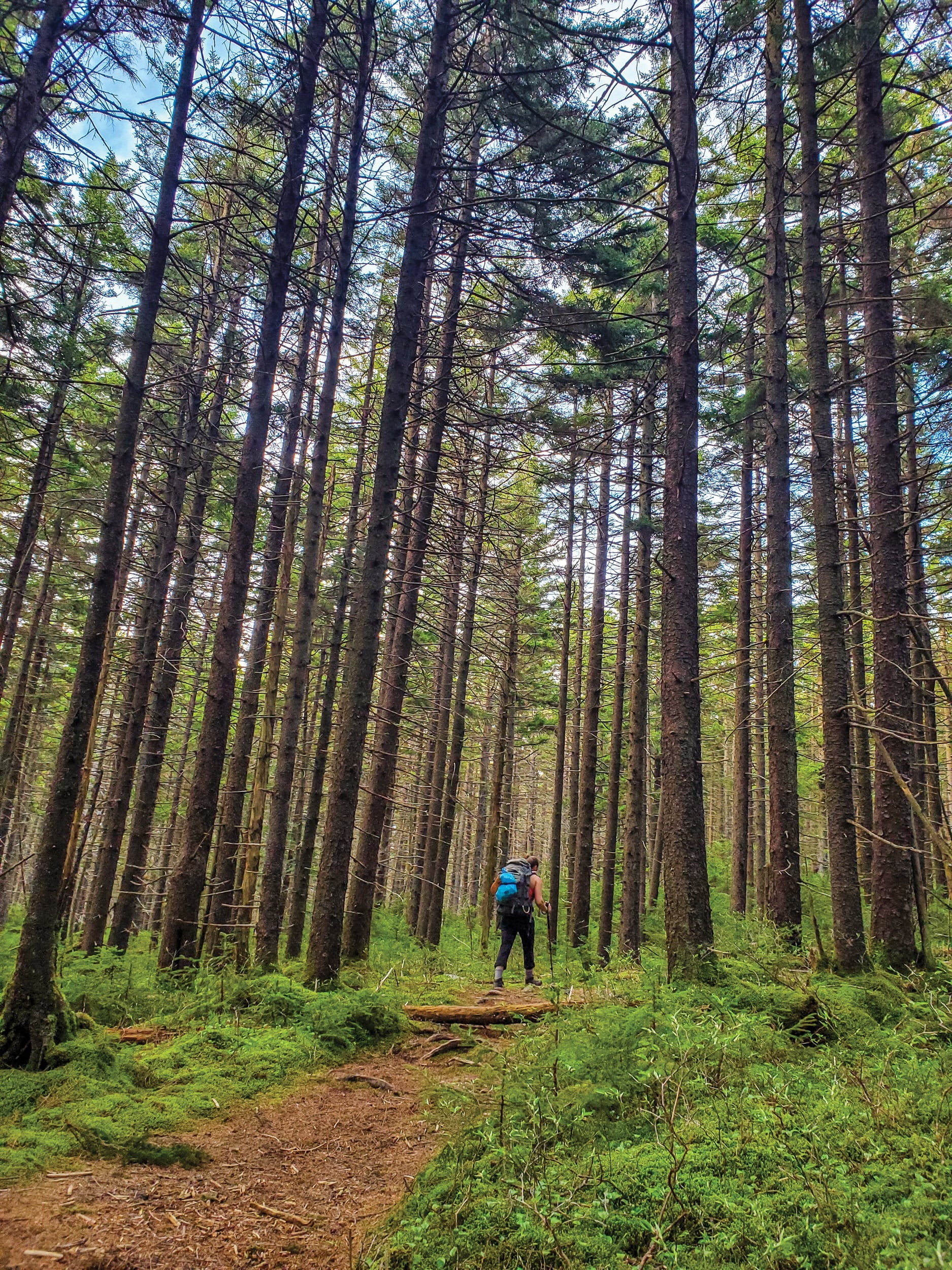
I saunter through the sunlit forest. Thick mats of verdant moss and deep duff soils dampen all sound around me. It smells dank in a good way, the sort of organic rot that pleases the nostrils. A crowded patch of miniature trees appears to clamber over one another in their relentless quest for sunlight. I notice a large gap in the tree canopy. Eventually, one of these contestants will fill the hole left by the giant that fell long ago.
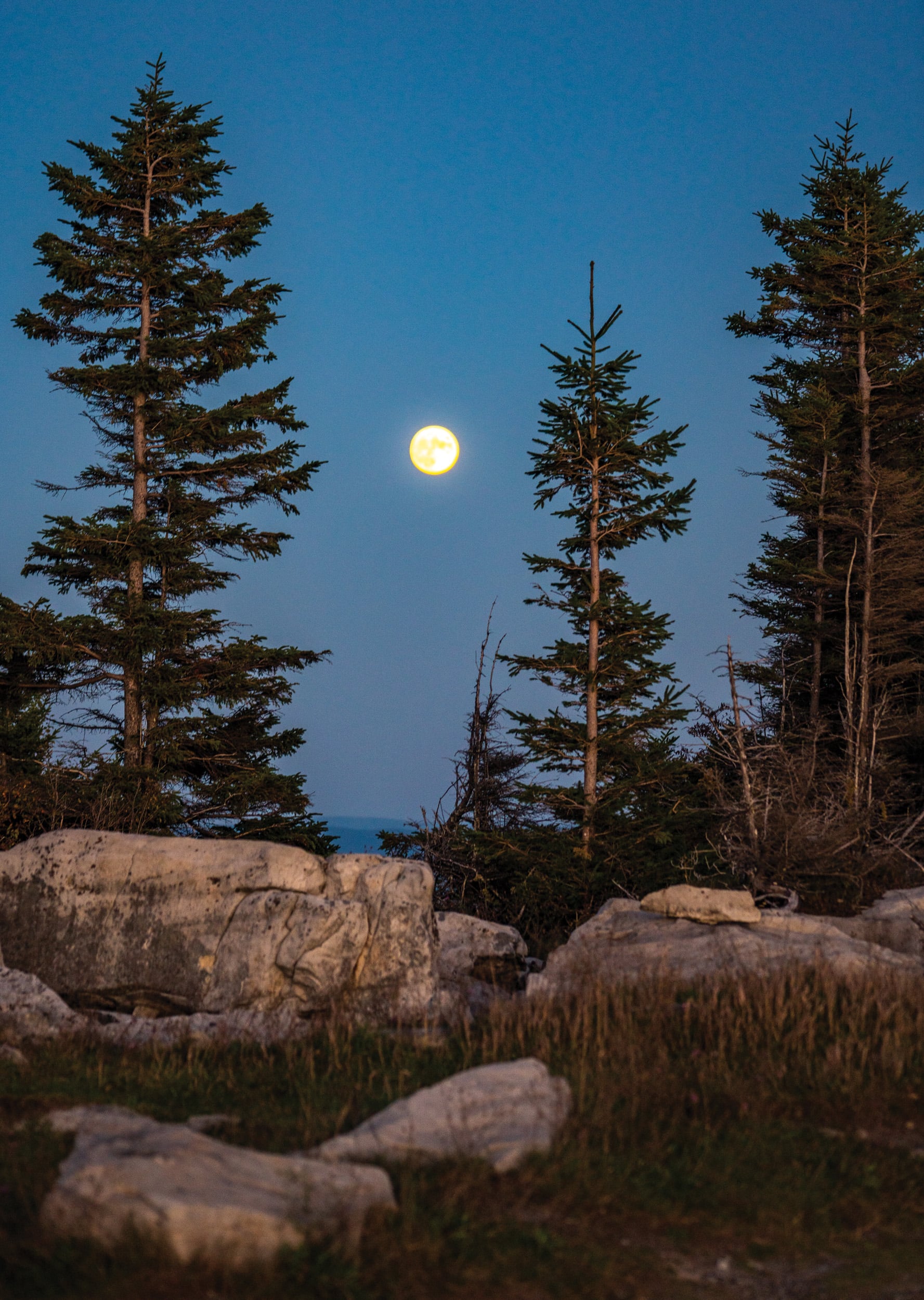
I’m at 4,000 feet elevation in a towering grove of red spruce trees atop the aptly named Red Spruce Knob, one of many so-called spruce islands that dot the summits of West Virginia’s high country. These patches of dark green, situated atop the highest points, contrast with the lighter green of the hardwood forests on the seemingly endless ridgelines of the ancient Allegheny Mountains.
Red spruce forests once covered more than a million acres in West Virginia. Now these precious ecosystems only cover an estimated 30,000 acres, or just over 0.2%, of the Mountain State. A dedicated group of individuals is tirelessly working to change that, doing its part to ensure that the fledgling forests it is planting will one day look like the mature one atop Red Spruce Knob.
Leading the charge is the Central Appalachian Spruce Restoration Initiative (CASRI), a patchwork-quilt collaborative of organizations and governmental agencies working toward the common goal of restoring red spruce across its historic range. Major partners involved with CASRI include the U.S. Forest Service, the U.S. Fish and Wildlife Service, the West Virginia Division of Forestry and Division of Natural Resources, the West Virginia Highlands Conservancy, and The Nature Conservancy (TNC), among others.
Much like the composition of a forest, CASRI’s success comes from strength in numbers. “One entity alone could never get us to the point that we are now in this restoration journey,” says Mike Powell, land management stewardship director for the West Virginia chapter of TNC. “CASRI is integral to getting our partner work mainstreamed at larger scales beyond what any one partner could accomplish alone.”
That restoration journey begins in facilities where red spruce seeds are extracted from cones and propagated into seedlings that are then shipped to planting sites all over Central Appalachia. Dave Saville, a Morgantown-based conservationist who pioneered many of the methods used to propagate red spruce cones into seedlings, gathers red spruce cones dropped from squirrels in forests around the region and sprouts them here in the Mountain State.
“It’s all being birthed here in West Virginia,” says Katy Shallows, Appalachians Forest Director for TNC. “We’re doing this because of Dave Saville’s long dedication to producing locally sourced red spruce seedlings, and now we’re taking into account climatic and genetic science.”
Conservationists once believed local genetic pools gave forest plots the best chance of survival and adaptation. But as understanding of climate change has evolved, scientists now see broader genetic diversity as the best path to adaptation across the Appalachians. The bulk of red spruce grows in the wildlands of New York and continues north into Maine, where it’s the most plentiful tree in the state. This connected corridor offers a natural thoroughfare for genetic diversity to move around populations.
However, in the Central Appalachians, genetic variations are limited because these small populations are fragmented, and the best chance of survival comes from assisted gene flow—the accelerated spread of genes between populations within a species’ existing range.
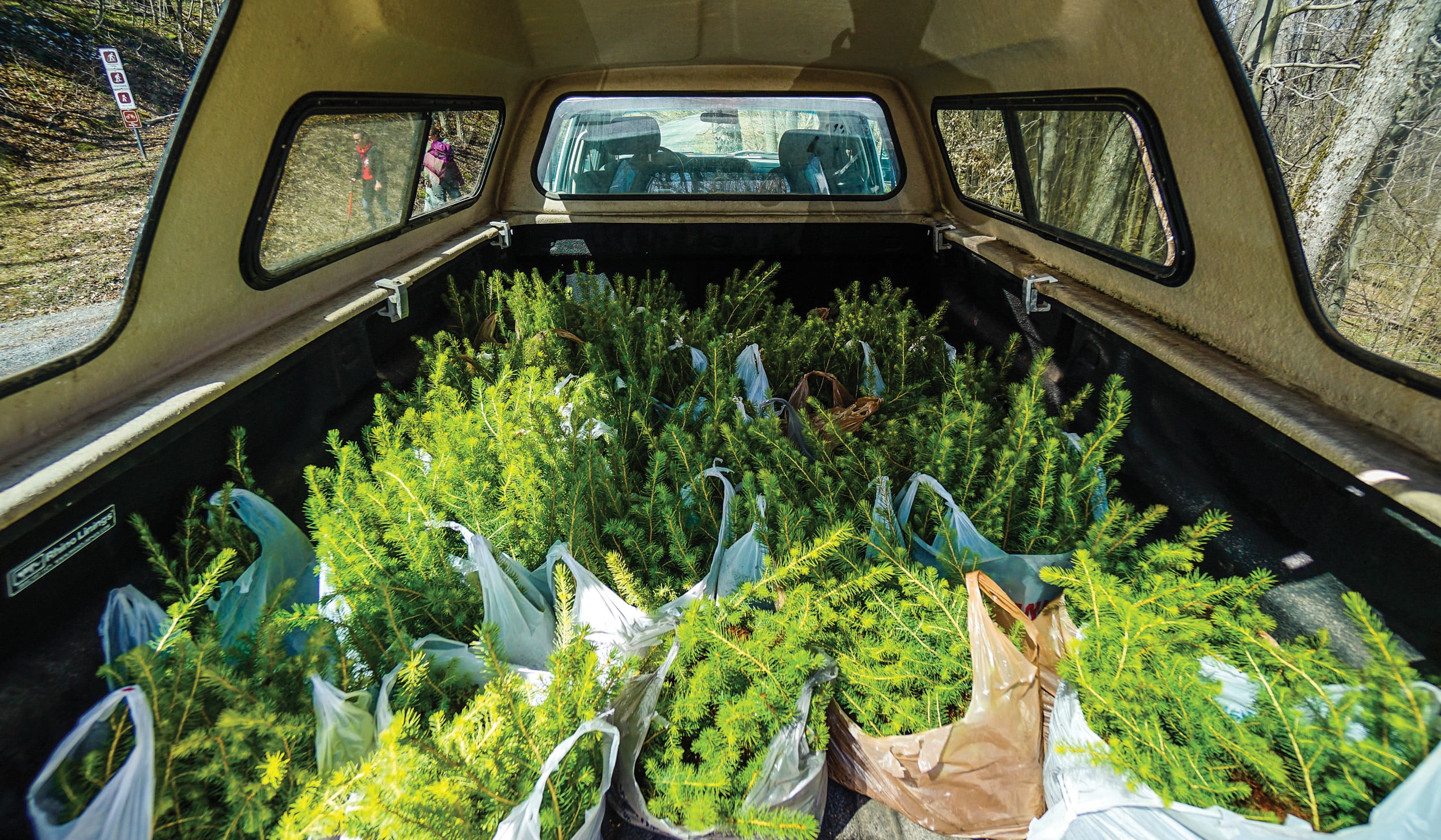
Bags of red spruce seedlings, shepherded by Dave Saville of Morgantown, West Virginia, wait to be planted at the Canaan Valley National Wildlife Refuge. Photographed by Dylan Jones
As the trees reproduce, a combination of genetics takes place in just a few generations that might have taken millennia to occur naturally. “That’s what we’ve been doing for five years now,” says Shallows. “We’re starting to move our sources northward to follow the insights from climate modeling. It’s kind of a guessing game informed by science.”
Red spruce restoration efforts also rely heavily on forestry techniques. For naturally occurring stands of spruce saplings and planted forest plots alike, the go-to move is spruce release—the mimicking of natural disturbances, like wind and ice storms, that cause areas of mature forest to topple and open up the canopy.
Photographed by Dylan Jones
The large-scale deforestation in the 19th century unleashed our current hardwood forests, which were able to rapidly regrow from energy stored in stumps and roots. Red spruce, however, can only regenerate from seeds, most of which were destroyed by the wildfires that raged across the barren slopes following the logging spree. Tiny pockets of surviving spruce created the current spruce islands. Meanwhile, regeneration of hardwood forests dominated the canopy, with red spruce saplings waiting in the understory. “These red spruce are extremely shade-tolerant, so they are able to survive, but not able to thrive,” Powell says.
By opening up the forest canopy, these idle spruce trees—which can sit relatively dormant in the forest midstory for decades—can grow rapidly and retake their place as the dominant kings of the canopy.
To date, most spruce restoration in the Mountain State has taken place on high-elevation public lands like those found around Canaan Valley and the Allegheny Front, as well as large areas like the Mower Tract in the Monongahela National Forest on Cheat Mountain.
According to Shallows, after restoration locations are selected, genomic and climate modeling tools are used to find locations of current spruce populations that will likely be best adapted to the site. “This year, we have five tree sources for plantings in West Virginia. And maybe three of those will be really well-adapted for the future.”
As Powell puts it, these plantings are happening “in majestic places where people can sense and feel that what’s happening here is important. This is where TNC plays a big role that’s this overlap of protection, restoration, and recreation. We can restore these forests all day long, and a lot of people may never see it. But if we can develop a trail with an interpretive sign and get people out to experience these projects, it builds support for this kind of work.”
As someone who’s spent countless hours in West Virginia’s red spruce forests hiking, biking, camping, and simply sitting among these giants, I am thankful for these trails. On the descent back to the trailhead, I exit the dark forest atop Red Spruce Knob and enter the brighter, lighter greens of the birch–beech forest below. While this ecological zone still offers plenty of beauty, I take comfort knowing that the comeback of the red spruce is well underway.