


Written by Mark H. Anderson
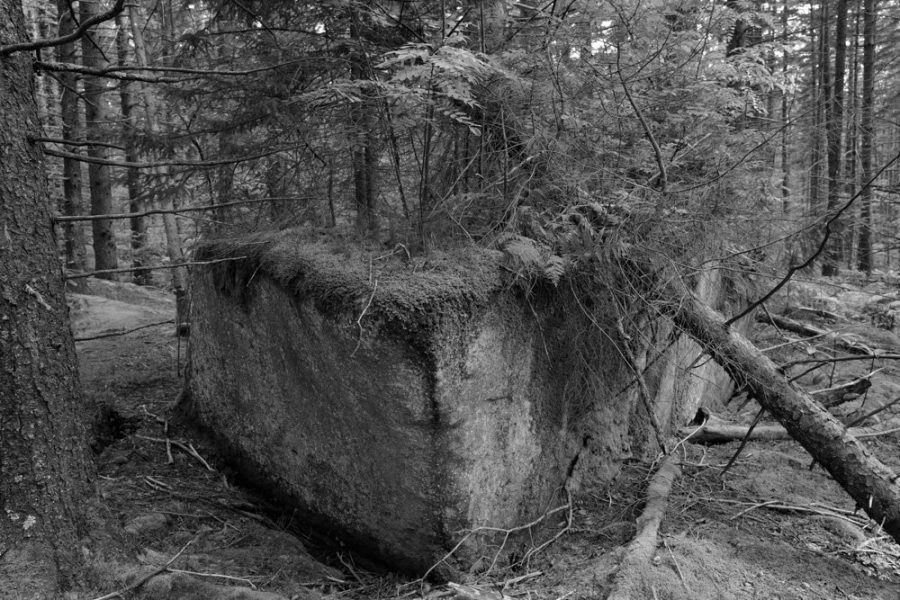
The scene always stops me in my tracks. A solitary boulder sits silently in a tract of thick Appalachian woods or a meadow high atop the Alleghenies. It is a beacon, a landmark, and it adds a timeless texture to the landscape. Often it is a lone chunk of rock made of sandstone or limestone. Other times it is broken into pieces or covered in dimples, grooves, and cracks—signs that erosion is slowly grinding the rock away.
My mind races with questions. How did the rock get there? How long has it been sitting by itself on top of the ground? How did it become isolated in the forest or the meadow? How many millenia—or, actually, megaannum—has it been around? When will the indomitable powers of nature—water, wind, time—fully break it down?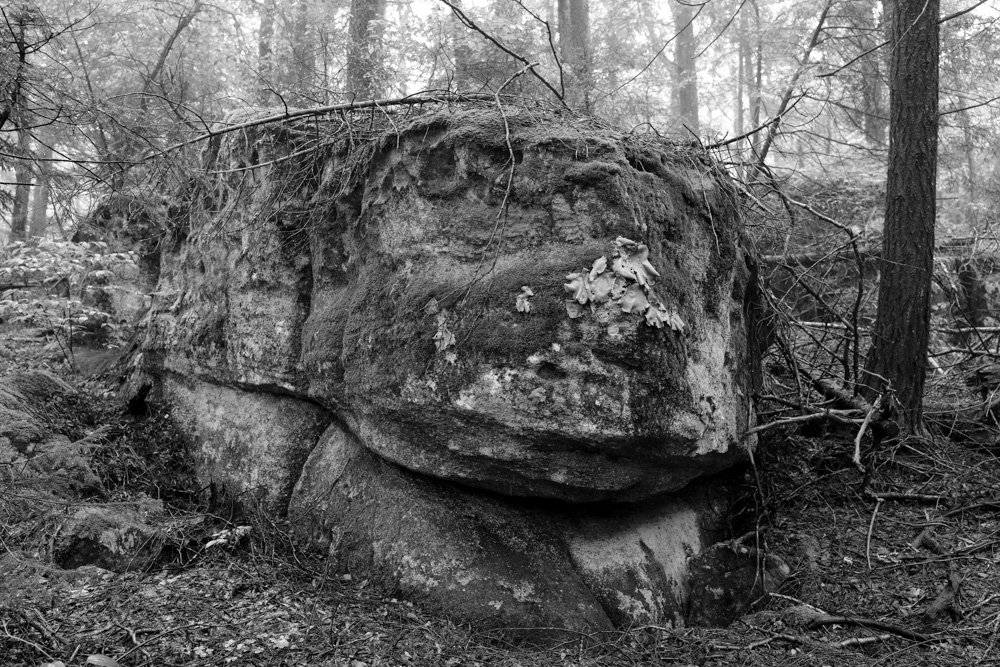
There are no nearby cliffs from which the boulders fell. Glaciers weren’t involved, as they didn’t reach West Virginia during the last Ice Age. The boulders didn’t sprout from the Earth. Instead, layers of material decayed around them.
The forest understory or meadow grasses close in. Spruce, hemlock and northern hardwoods tower above—and some on—the boulders. Moss, lichen, ferns and other plants grow around them. Miniature ecosystems thrive on top of some; others appear scrubbed by the relentless flow of wind and water.
The seasons turn around the boulders. Trees fall. Plants die. Animals, and perhaps a few humans, pass by; they, too, will die.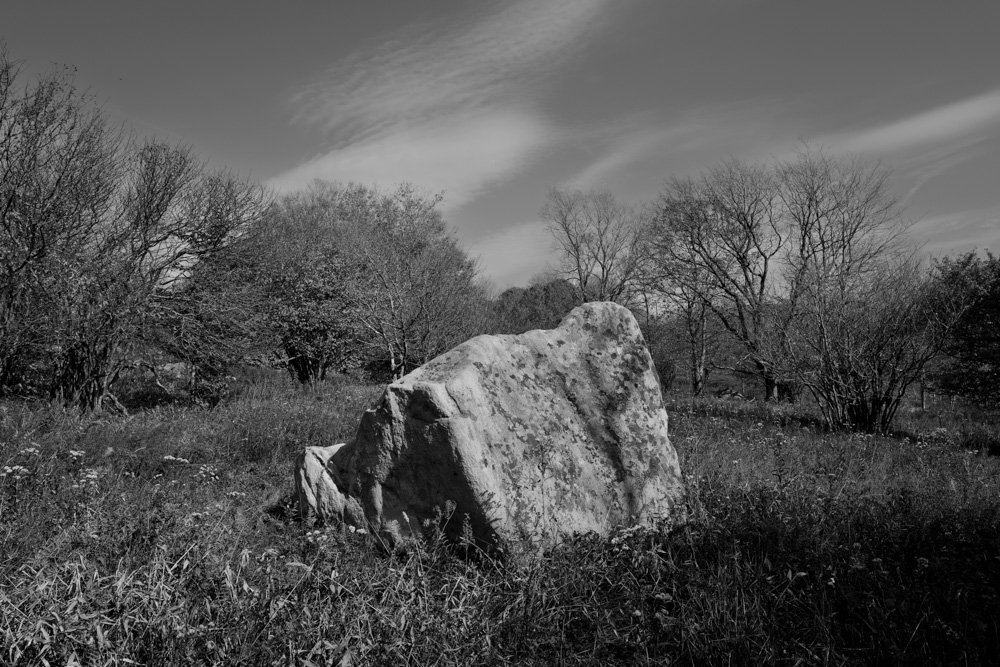
Yet, the boulders remain. Tougher than other rock around them, the boulders have resisted erosion for eons. They are much, much older than us. They are remnants of long-ago cataclysmic events that shaped our planet into how we experience it today.
Tucker County, where I live, is particularly rich with such remnant boulders. They sit in the Monongahela National Forest and surrounding public and private lands. They are crucial pieces of the wild West Virginia landscape. Steve Keating’s book, A Dolly Sods North—Blackwater Companion, offers some geologic context on their existence.
Some 320 to 300 million years ago, sandy material settled in a giant coastal basin. That sedimentary material was eventually compressed into sandstone layers that were uplifted when the North American and African continents collided during the Permian Period, forming the Appalachian Mountains.
One particularly tough sandstone layer is called the Pottsville Formation. This erosion-resistant layer creates iconic outcrops across the Mountain State, from Coopers Rock State Forest all the way to the high point of Spruce Knob. Much of the exposed rock in Tucker County, including many of the boulders I love, are made of Pottsville sandstone. I play among these ancient, weathered rocks when hiking, mountain biking, or skiing—and when taking photographs.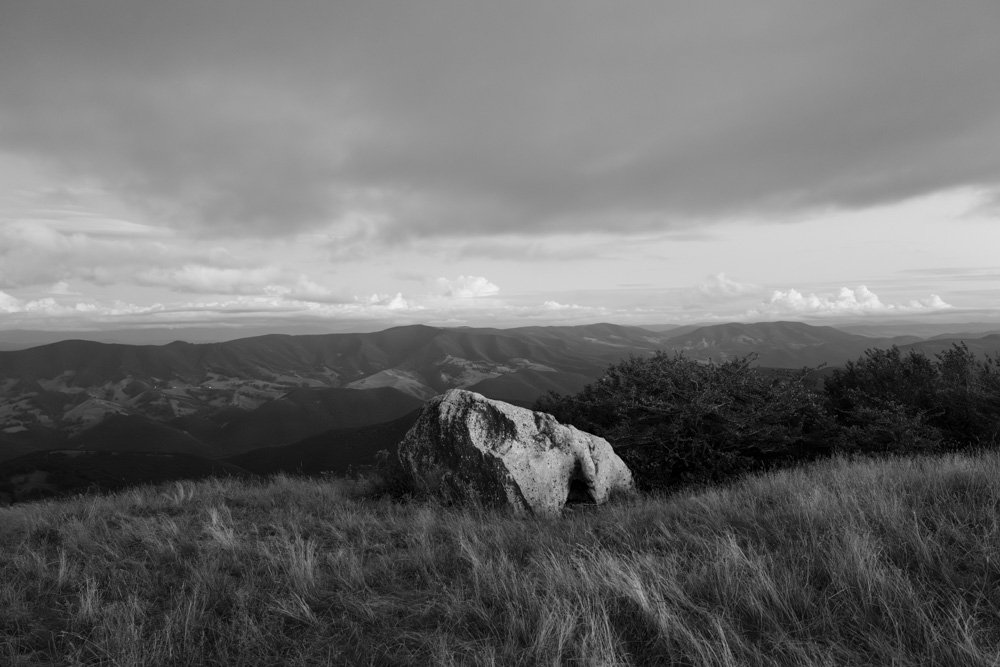
I started taking pictures of these boulders in an attempt to capture the resilience and independence they represent to me, and to record the timeless presence of an often overlooked feature in the natural landscape. I chose to shoot this series in black and white—a traditional form of photography that portrays subjects in monochrome. Void of color variation, this format helps the boulders stand out by giving them contrast against the ebbs and flows of nature that surround them.
Alan Watts, a beat generation writer and philosopher, said photography has the ability to reveal the power of ordinary objects by “showing us that if we look at it in a certain way, these things are significant.”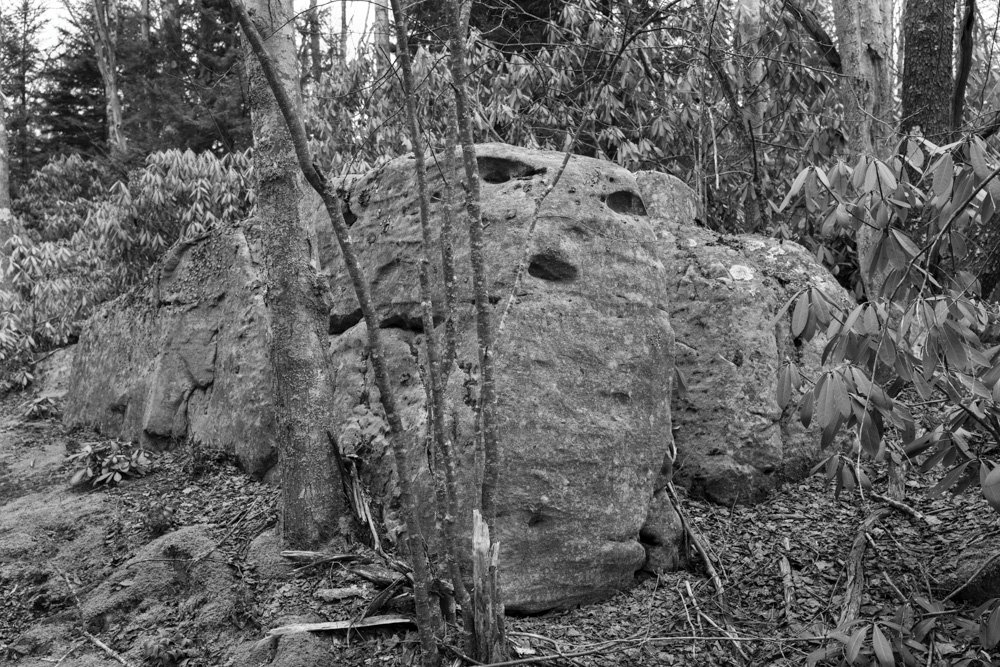
Yes, the boulders scattered in the woods and on ridges can help us better grasp how we as humans fit into Earth’s timeline and landscape. They have helped me to not waste days and set priorities that bring greater meaning to life: exploring the outdoors, building relationships, not taking anything for granted, and being ever curious about things big and small.
If you let them, the boulders can provoke contemplation on the short amount of time we have to live. They signify seeming permanence surrounded by impermanence. The boulders will make you feel small, temporary, mortal—maybe even thankful for our brief time on Earth. They can make trivial worries melt away. What’s important can become more apparent. Now, go out into the forest and find a boulder.
Mark H. Anderson is a journalist, photographer, and multiport traveler living in Davis, WV. He has a huge crush on the West Virginia highlands.