
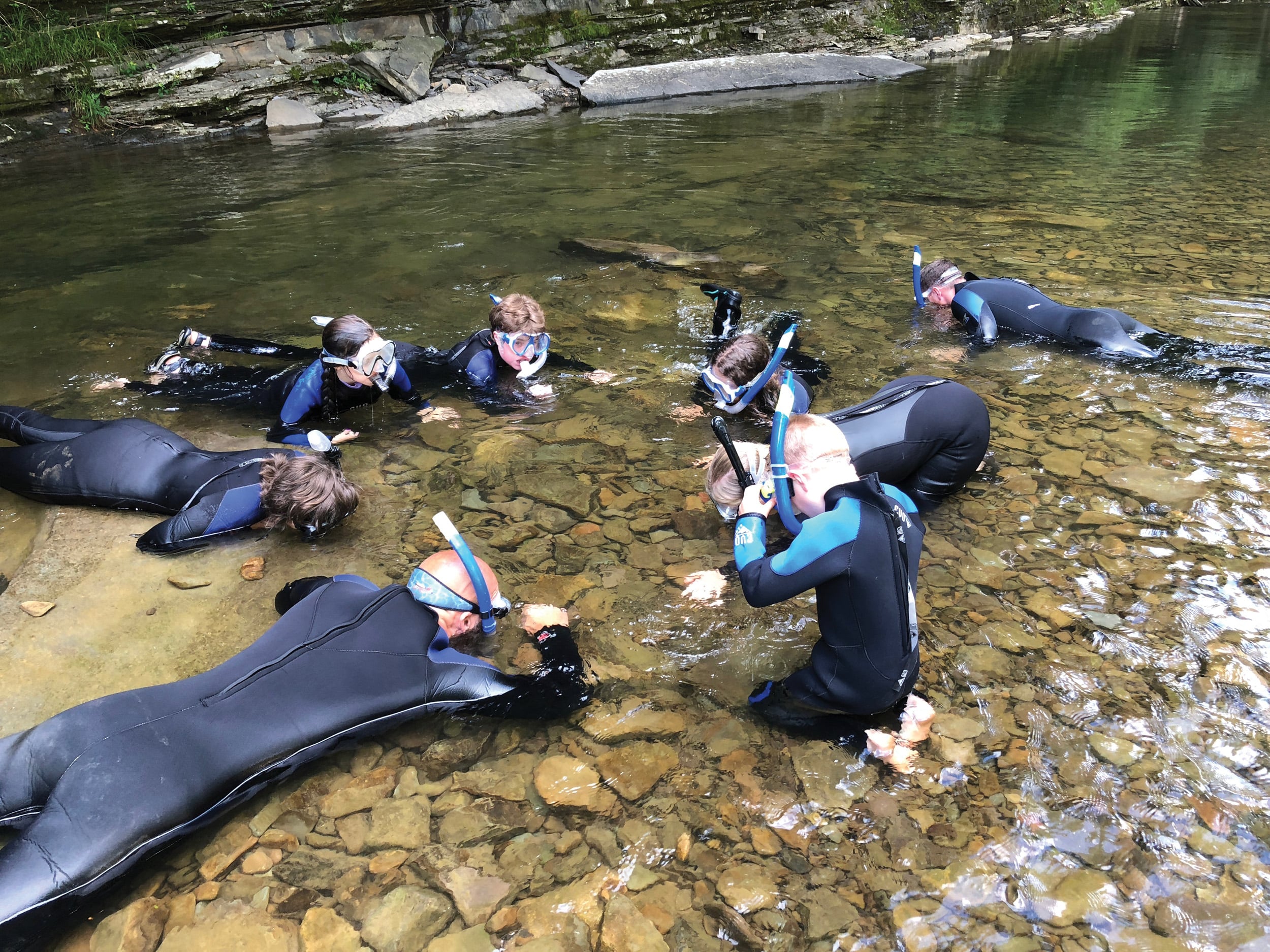
The first rule of Snorkel Club: We tell everyone about Snorkel Club. West Virginia’s rivers are a living classroom worth seeing.
That’s why Friends of the Cheat has been leading groups into the busy waters of the Cheat River watershed since 2018. Participants—mostly students and community-based youth groups—don masks and snorkels for a chance to explore an underwater world where they’ll meet fish, aquatic plants, and benthic macroinvertebrates. In this living classroom, snorkelers learn about water quality testing, meet colorful darters, and discover the kind of habitat a hellbender might call home.
While all snorkel sites lie within the Cheat River watershed, programming varies by location. At headwater sites in the Monongahela National Forest, attendees learn about the role forests play in river ecosystems, like filtering water, offering shade that keeps temperatures low, and stabilizing river banks. By contrast, down at the Cheat River main snorkel site, organizers may tell the river’s long story with a focus on its history of mining degradation. For many decades, the river ran orange with acid mine drainage—little life existed in its waters. But with the passage of the Clean Water Act, efforts of state and federal agencies, and the hard work of groups like Friends of the Cheat, the river has been restored.
Not all visits find warm summertime streams, but that doesn’t stop the fun. One group of students on Shavers Fork—a high-elevation Cheat River tributary—wore wetsuits in the chilly water while they sampled aquatic insects and participated in a scavenger hunt, as did a group on Horseshoe Run, near Parsons, as they studied water pennies.
Snorkel Club programs are offered to K–12 public schools, registered nonprofit organizations, and groups like 4-H clubs. Common snorkel locations include Horseshoe Run Recreation Area, Stuart Recreation Area, Otter Creek Trailhead, and parts of the Cheat River.
Interested groups can find more information on Friends of the Cheat’s website.