


Written by Laura Jackson and Nancy Stranahan
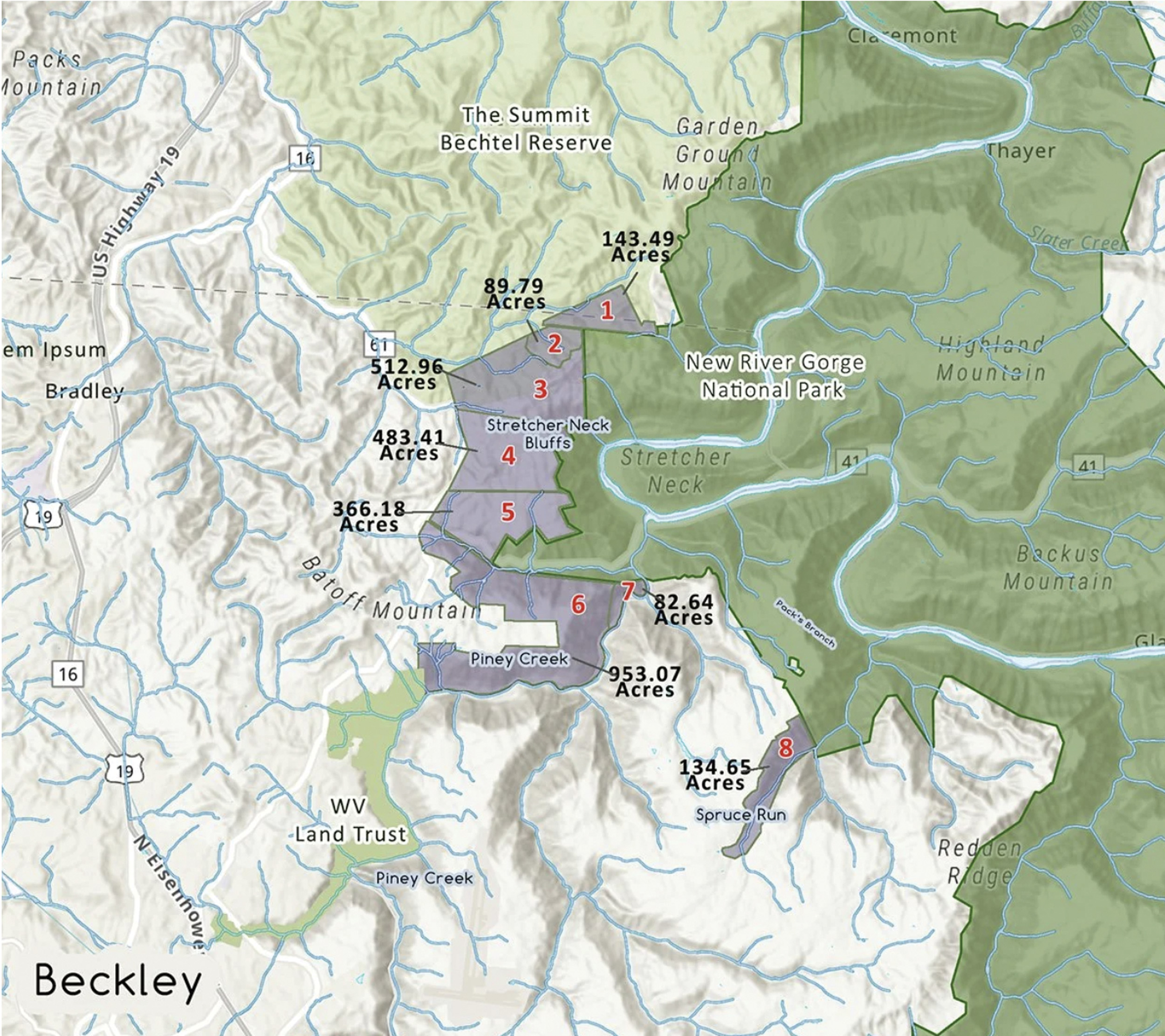
In late May of 2026, some of the best remaining wildlands in the heart of Appalachia were announced for sale by an auction house. On the auction block were 2,770 acres split into eight parcels, each touching New River Gorge National Park. When announced, the auction was only six weeks away.
The Arc of Appalachia—a nonprofit land trust headquartered in Ohio but committed to wildlands preservation in Ohio, West Virginia, and Kentucky—was already aware of the national significance of the region. The parcels’ predominant feature was Piney Creek, a spectacular, 1,000-foot-deep gorge sculpted by a roaring whitewater trout stream. Fortuitously, two of the eight parcels lay on the west bank of Piney Creek on its last 4-mile run before its confluence with the New River inside the national park.
The City of Beckley was paying attention, too. Its recreation and tourism leaders had been working since 2011 on a plan to connect the city directly to the national park via a proposed 12-mile hiking and mountain bike trail. It was no pipe dream—the West Virginia Land Trust owned land along Piney Creek extending nearly two-thirds of the way from Beckley to the national park, and a trail was already installed nearly the entire distance. If the remaining 4-mile gap could be purchased at auction, Beckley’s 15-year endeavor would come to fruition.
The purchase would also connect three existing conservation properties—Scouting America’s 14,000-acre Summit Bechtel Reserve to the north, the 614-acre Piney Creek Preserve owned by the West Virginia Land Trust to the south, and the 72,800-acre national park to the east.
The Arc director Nancy Stranahan recalls, “We knew we wanted to buy the Piney Creek parcels 6 and 7, but it wouldn’t hurt to raise money for the others—maybe we’d raise more money than we thought.” So Stranahan set an undisclosed $3.7 million goal, and the Arc staff members threw everything they had into building the campaign. When it finally went public on June 6, 2026, the auction was only 24 days away. She mused that, if they raised even half their goal, she would have assessed the campaign a great success.
When auction day arrived, the Arc of Appalachia’s staff and board had raised $3.2 million in pledges. They hoped they had enough money to buy more than just the Piney Creek parcels.
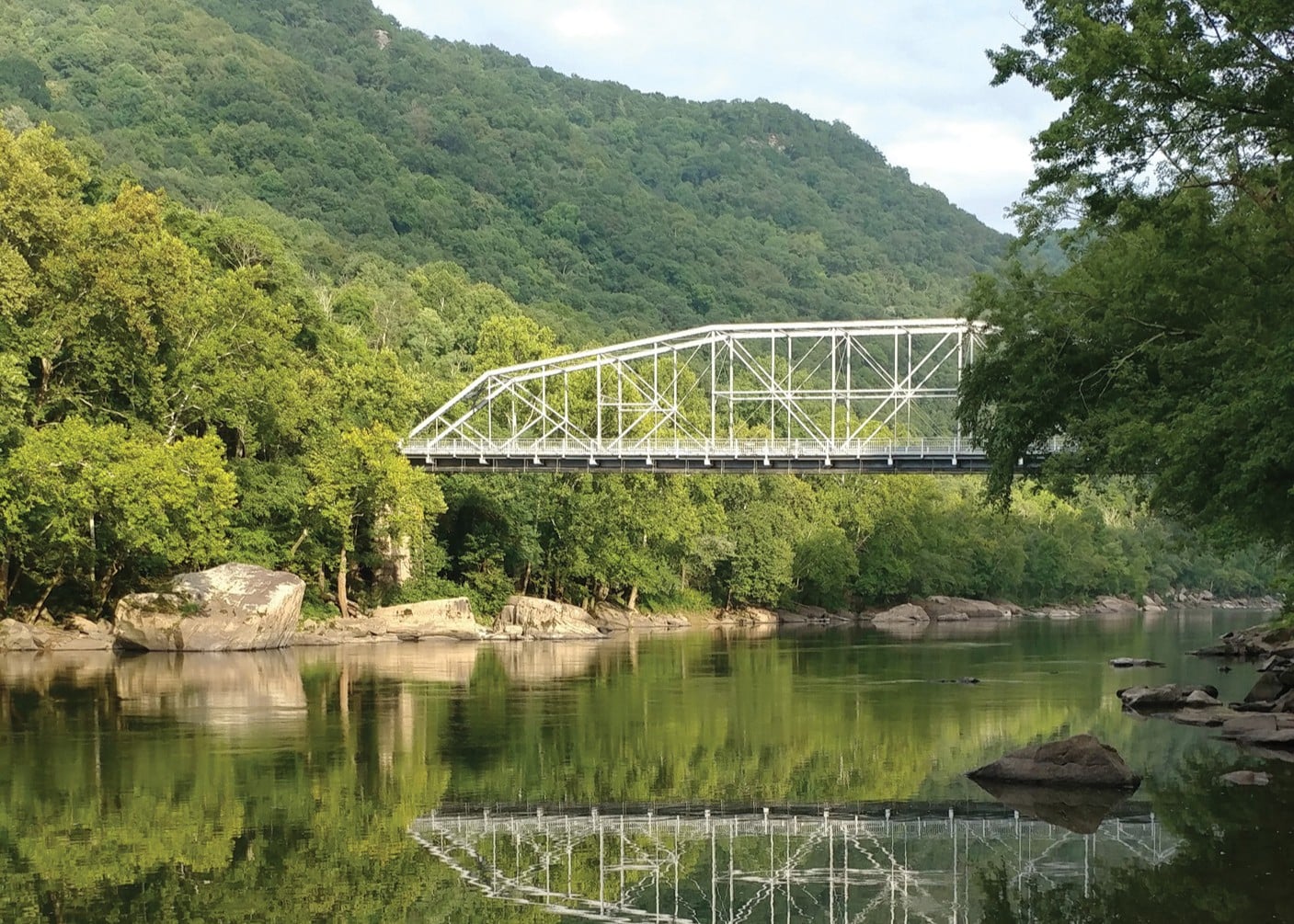
Courtesy of Arc of Appalachia Staff
If purchased, the property was to be called the New River Wilderness and would incorporate a variety of terrain. North of the Piney Creek parcels, Stretcher Neck Bluffs includes biologically rich wetlands, swamp forests, and masses of rhododendrons and mountain laurel. Several high-elevation overlooks offer dramatic views of the Stretcher Neck oxbow in the New River. Spruce Run, a parcel farther to the south, is a rock-walled mountain stream that drains into the national park as part of Mill Creek, a separate watershed from the Piney. This tributary is filled with hemlocks and rhododendrons, and in many ways can be considered the most remote and likely the most biologically significant of all of the auction parcels.
It all came down to auction day, which turned out to be a marathon, with 120 registered bidders. For nearly three hours, the Arc watched the proceedings unfold with dismay. The organization landed on the leaderboard two times, only to be knocked off within seconds, and the Arc staff were certain they’d go home empty-handed. But the action peaked in the final moments when the staff threw the organization’s entire weight onto the combination of parcels four through eight. In the end, they won—and successfully preserved—1,980 acres of New River Wilderness with help from 722 donors in 41 states.
Stranahan credits a collaborative association formed with partners that included the West Virginia Land Trust, Green Forests Work, Beckley Area Foundation, and Piney Creek Watershed Association. Other regional organizations offered their encouragement and support, including New River Gorge National Park & Preserve, New River Conservancy, Beckley Outdoors, Beckley Area Trails, Beckley–Raleigh County Chamber of Commerce Foundation, New River Alliance of Climbers Association, and Southern West Virginia Trout Unlimited.
She also believes the victory means West Virginians aren’t alone in conservation efforts, as support came from well beyond West Virginia’s borders. “It’s past time that the nation realizes West Virginia has some of the densest forests left in the nation and harbors some of our country’s greatest natural treasures on private lands,” she says. “If we can succeed with a campaign like this one, then it stands to reason that we can do it again and again. Now that’s a statement of hope.”
Learn more about the Arc of Appalachia and this campaign at arcofappalachia.org.