Highland Profiles is a series highlighting West Virginia’s exemplary outdoor adventurers, business owners, and community innovators.
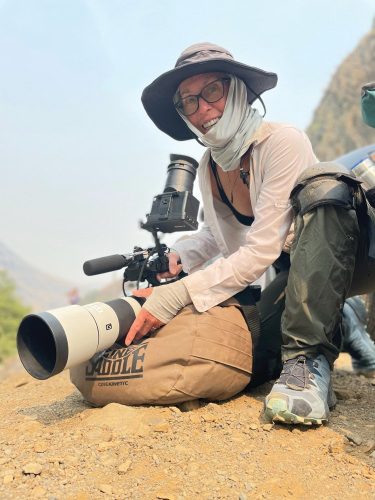
Laffey on set in some far-flung, remote locale. Photo courtesy Colleen Laffey
When I called Colleen Laffey to do this interview, her phone went straight to voicemail. A few minutes later, I got a text saying, “I’m so sorry! It snowed last night so I ran to Snowshoe to ski and completely spaced on our call.” I smiled. It was exactly something I would do. Colleen offered to give me a ring within the next hour, but when there’s fresh powder on the slopes, work can certainly wait.
We caught up the following week and chatted about her life as a whitewater photographer and video boater in Fayetteville in the early 1980s. She filled me in on some of her big projects as a camera operator, which include Love is Blind, Jersey Shore, World’s Toughest Race: Eco-Challenge Fiji, and Tough as Nails, just to name a few. Her work has taken her all over the country and around the globe, yet she continues coming back to the Mountain State. From the close friendships to the world-class adventures right out her front door, West Virginia is a special place that Colleen feels lucky to call home. I couldn’t agree more. This interview has been edited for length and clarity.
What’s your coming to West Virginia story?
I grew up in Pittsburgh and went to school there for photography. One day we were having a portfolio review and a guy approached my table to look at my photos. He was wearing muddy boots, blue jeans, a river T-shirt, and a hat that said “Wild Rivers Photo Services.” His name was Greg Green. He handed me his card and asked if I wanted to shoot whitewater rafting.
That was in 1981. We went down to Big Nasty [a class IV rapid] on the Cheat River to shoot photos. I’d never been on a river or rafting before. The next day, Greg took me rafting on the river. It was March, so the river was very cold, but I loved it. After the trip, we went back to the lab to process the film. When he saw my photos, he offered me a job.
What was it like being a whitewater rafting photographer?
I worked on the New River my first year. I shot seven days a week and made $200 a week. Back then, there were 18 or 19 rafting companies, and I took photos for 16 of them. I would get a bag full of film and a list of all the different raft trips on it. I’d sit at Fayette Station [a class IV rapid on the Lower New] all day and shoot. Some of my favorite memories are of getting to know all of the people that worked at the different rafting companies.
How’d you get into guiding and video kayaking?
After spending a few years taking whitewater photos, I decided I wanted to spend more time rafting. I trained to be a raft guide with Charlie Waters at Appalachian Wildwaters and then guided for six years on the Cheat, Tygart, New, Gauley, and Upper Youghiogheny rivers. I loved trying to convince eight to 10 people to get my raft to go where I wanted it to. But I eventually reached a point where I was no longer happy guiding. I learned how to kayak and wanted to have a camera in my hand again, so I started video boating in the late 1980s.
What is video kayaking?
You’re paddling in a kayak alongside a rafting trip. You have a camera with you and basically leapfrog the trip. You start out with the trip, get ahead of them, hop out at a rapid and shoot photos, then pack up all your gear and do it all over again. It’s a dangerous job because you’re often all by yourself. And no matter how good of a paddler you are, everybody makes mistakes. Making a mistake when you’re by yourself is a whole different ball game than making a mistake when you’re with a group of people. My mantra was “Alert, Aware, Alive.”
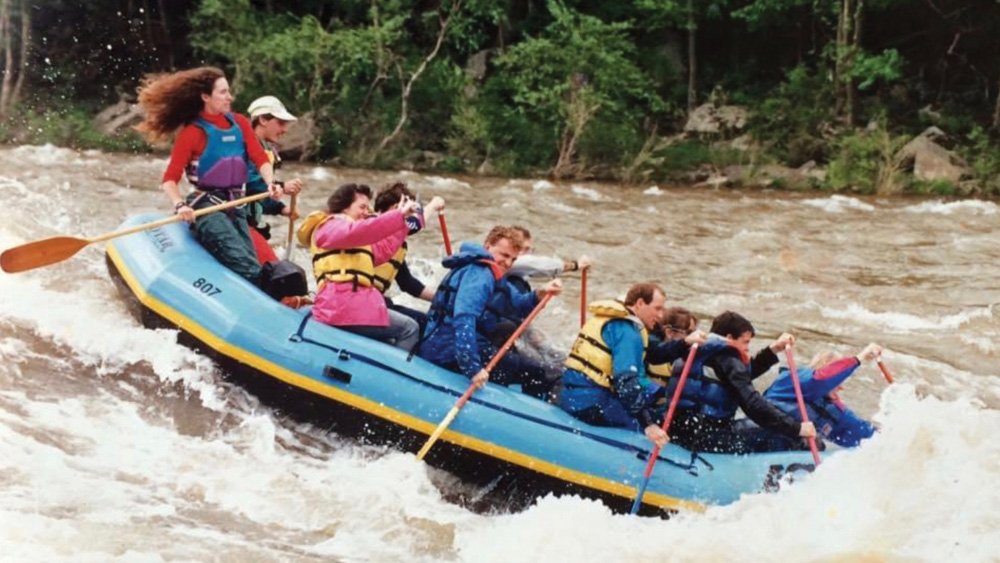
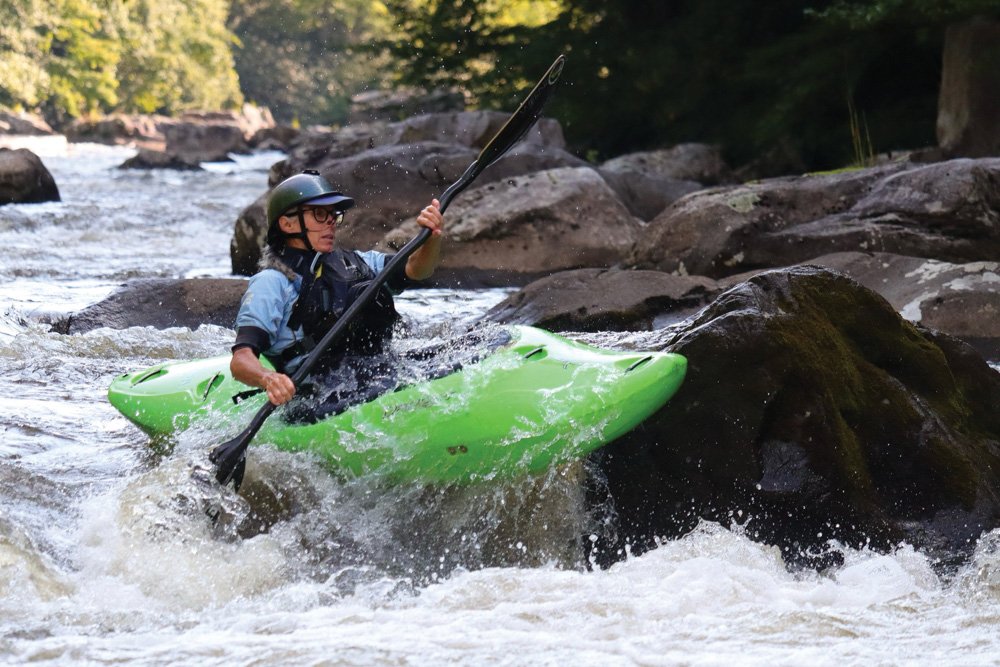
Laffey guiding on the New River in the 1980s. Photo by Whitewater Photography
How was living in Fayetteville?
I moved to Fayetteville in a 1971 Oldsmobile Cutlass. I tried to find a place to live, but no one wanted to rent to me because I was a river rafter. Plus, I was only looking to rent a place from April until October, which is kind of a pain. I lived in my car at the North American River Runners campground for about a month. I was such a city person. I slept in the backseat of the Cutlass while everybody around me was in nylon tents.
Then I became friends with some locals and they told me about an apartment for rent in downtown Fayetteville. Back in the 80s, nobody had cell phones and getting a landline was super complicated. There were two phone booths across the street from my apartment near a liquor store where Water Stone Outdoors is now. I’d give out the number for one of the phones and one of the guys from the liquor store would run up to my apartment to tell me whenever I had a call.
Do you miss those days?
I miss the quiet of West Virginia. We were really lucky back then. We had this beautiful place all to ourselves. The rafting industry wasn’t even an industry. People just liked to paddle and share their stoke for whitewater. Every rafting company had its own personality and ethos. There would be a big party every year where all the rafting companies would get together and bond. It’s been hard to watch all the smaller businesses get gobbled up by bigger businesses and then get acquired by corporations.
What were some of your first projects as a camera operator?
When I went to school for photography, I learned how to do some video filming and editing. While I was working as a video kayaker full-time for 11 years, every time a production would come through the area, I would try to get on it as a production assistant. But that was tough to do as someone from a small town in West Virginia.
One day I remember seeing a show called West Virginia Journal, which was part of West Virginia Public Broadcasting, and thinking, “I could do that.” I worked up a proposal with 10 story ideas for the senior producer. She said yes and that they’d paid $100 a story. I filmed a story about some friends that had a llama trekking company and ran trips along the Highland Scenic Highway. I also made stories about the White Grass Ski Touring Center, the Appalachian String Band Festival, and my friend Kim Shingledecker, who was training to be a boxer. Some of the stories took me three months to shoot, but I was so excited to have a platform and to take on challenging projects that I didn’t care about the money.
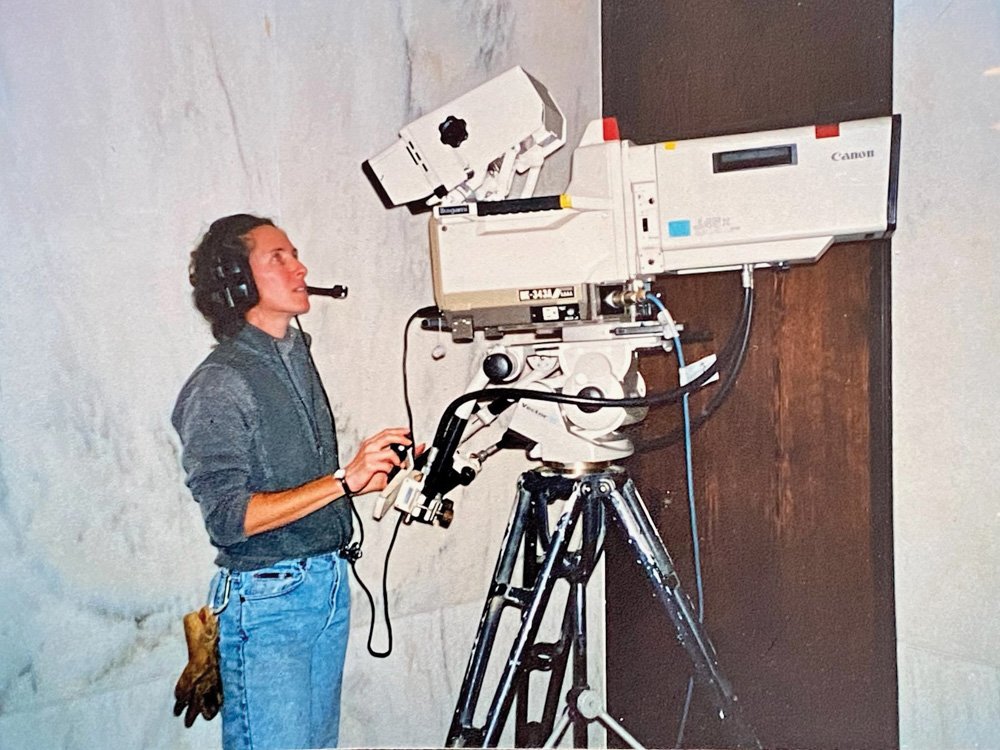
Laffey filming for West Virginia Public Broadcasting. Photo courtesy Colleen Laffey
When was your first big shoot?
I filmed some adventure races in the late 1990s and early 2000s. Some of these races ended up being qualifying races for the 2001 Adventure Racing World Championships in Switzerland. Someone from the production company shooting the world championship contacted me to ask about using some of my footage for the background videos on the athletes. I told them they could use my footage under one condition: they had to hire me as one of their camera operators. That was for the Discovery Channel and it was my first really big shoot.
I got to go to Switzerland and since I had been doing all those regional races, I knew a lot of the racers and had a really good rapport with them. When someone’s going through a rough time, they don’t want a camera in front of their face. But these racers already trusted me to tell their stories, so a bunch of my footage ended up in the show.
What are some of your favorite projects to date?
I’d rather do something that sparks my creativity and engages my mind than do something just to make money. I was a camera operator for three seasons of MotoMaidens, which documents the journies of five women who get together and ride motorcycles. They’re such interesting people and I really enjoyed spending time with them. My producer, an audio person, and I were jammed up in a truck travelling all over Montana to shoot—it was amazing.
But I also film shows where I don’t necessarily fit the demographic of people who watch them. I shoot a lot of dating shows [including Temptation Island and Are You The One], where I get to work with a lot of beautiful equipment and great lenses. Because they’re bigger shows, I work with crews of 10 or 20 other camera operators. It’s a whole different dynamic, which can be really fun.
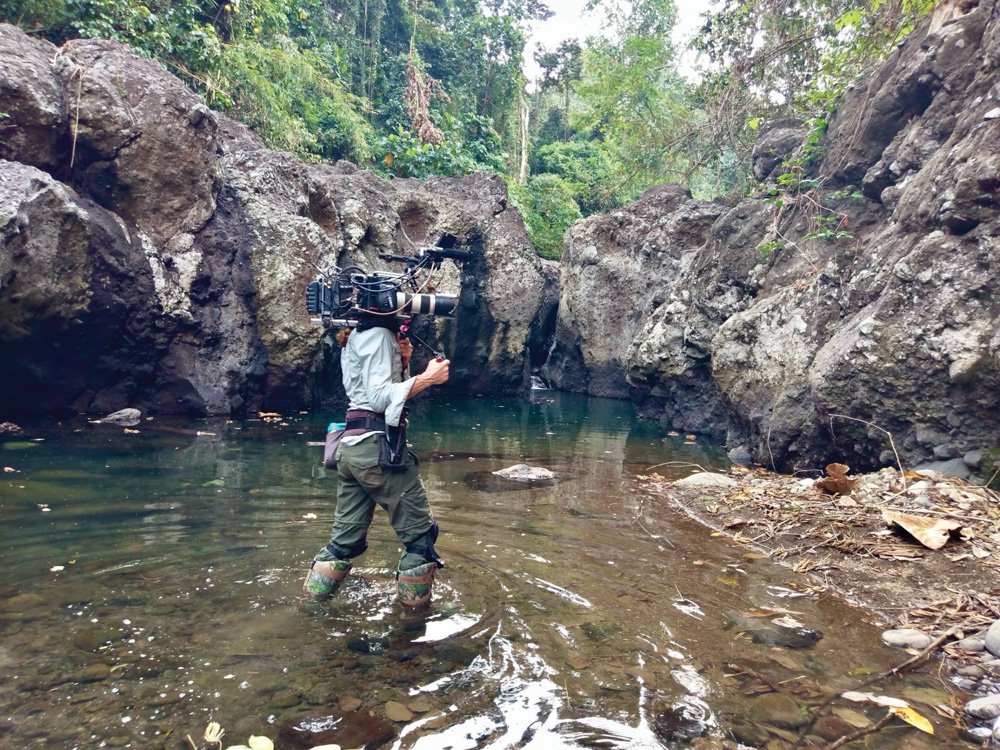
Laffey shooting in Bali. Photo by Ryan McPherson
Do you watch the shows you film?
I generally do because I want to see what the editors liked and used so I can figure out what to focus on moving forward. It’s funny. I shot on the first four seasons of Jersey Shore. There were five or six camera operators, each shooting 12 hours a day. We thought the show was going to be so boring, but then the editors took all of our footage and turned it into something interesting. It gave me a real appreciation for the fact that editing is an art form in and of itself.
What’s kept you in West Virginia all these years?
I’m like a migratory bird that keeps coming back to the same nest. Over the years, I’ve lived in Los Angeles, Costa Rica, and Alaska. The thing that keeps me coming back to West Virginia is my strong network of friends here and easy access to all the things I love to do. I designed and built my house on a 2-acre property adjacent to the New River Gorge National Park and Preserve. I live halfway between the put-in and the take-out of the New. West Virginia is one of the best places in the world to kayak and the water is warm unlike the rivers out west. I’m also the world’s most mediocre mountain biker and I can hop on the trails right from my door. The people in the outdoor community here really care for each other and look out for each other. There are communities all over the world, but there’s something about the community in West Virginia that is really special.
What are some of your hopes for the future of outdoor recreation in West Virginia?
I really love seeing the trend toward building more mountain bike trails. I would love to see West Virginia figure out a way to connect towns with trails. When I travel for my job, one of my favorite things to do is buy a cheap bicycle and ride around town. As much as I like riding around in circles in the woods, it’s an even greater pleasure to bike to a destination. Imagine if there was a nice trail between Thomas and Davis, or between Fayetteville and Oak Hill. I’d also love to see bike trails be developed along rivers where there used to be railroads, so people could easily and safely bike their shuttles.
Any final thoughts for outdoor lovers here?
I travel all over the world and sometimes locals want to share their favorite, lesser-known spots with me. But I don’t want locals to tell me their secret spots. I haven’t even seen the regular spots, so don’t give away the marrow of the bone. Keep something back for yourself. Not everybody needs to go everywhere.