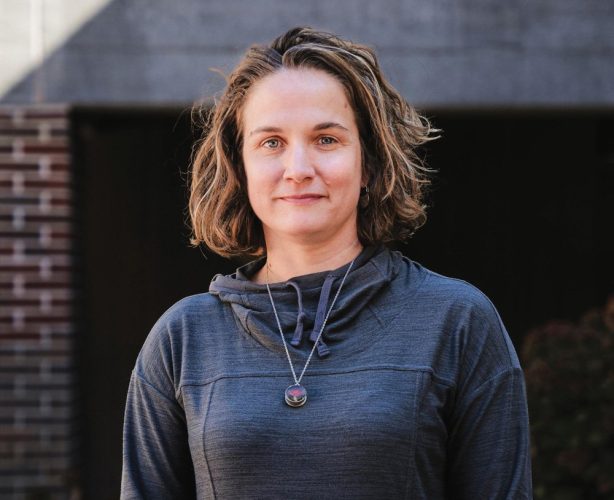
Highland Profiles is a series highlighting West Virginia’s exemplary outdoor adventurers, business owners, and community innovators.
There are few greater joys in life than splashing around in one of West Virginia’s glorious rivers on a warm, sunny summer day. On a day just like this, while floating in a river near Wardensville, Jennie Smith decided West Virginia was where she wanted to set down some roots.
In January 2022, Smith moved to Morgantown as part of the first cohort of Ascend WV, a remote-working program that offers people $12,000, free outdoor adventure opportunities, and a suite of other benefits if they move to West Virginia for two years. Through the program, Smith connected with the Morgantown community, tried out a bunch of new outdoor activities, and even met her best friend.
Just seven months ago, Smith took on the role as executive director of the West Virginia Rivers Coalition (WV Rivers), a nonprofit dedicated to conserving and restoring West Virginia’s exceptional rivers and streams. This year, WV Rivers is celebrating its 35th anniversary. The coalition was started by a passionate group of paddlers and environmentalists in the spring of 1990, making it the first statewide river advocacy group east of the Rocky Mountains. I chatted with Smith about her experience in Ascend WV, work with WV Rivers, and hopes for the state’s beloved waters. This interview has been edited for length and clarity.
When did you develop your love for the outdoors?
I was born and raised in Nashville, Tennessee. The outdoors were always a part of my life, but they weren’t as integral as they are now. For most of my adult life, I was pulled into cities. I lived in New York City, Boston, and Washington, D.C. But within those cities, I was always drawn to the parks and waterways. I fell in love with kayaking on the Hudson River and discovered how important waterways are to my own mental health and wellbeing. When I lived in D.C., Rock Creek Park was my salvation. It’s kind of funny that my love of the outdoors came through living in all of these major metropolitan areas.
When did you discover West Virginia?
I first visited West Virginia during the pandemic. It’s so cliche, but there is something magical about this place that filled me with awe. People are so proud to be from West Virginia. They’re so proud of the land and the water and the mountains and their love for them. I’d never been anywhere like that before. At the same time, I started missing my home or being in a place that felt like home. I remember playing in the river in Wardensville one weekend and just feeling like my body was remembering where I came from and who I was. I felt this incredible longing to be here. It was really overwhelming how powerful that felt.
How did you make the move here?
I knew I wanted to get out of D.C., and during the pandemic, people were buzzing about remote working programs. I found one in Bermuda, another in Europe, and one in West Virginia. I applied to all of them and was accepted to the one in West Virginia. I couldn’t believe it when it happened. I moved to Morgantown in January 2022 to be part of the first cohort of the Ascend WV program.
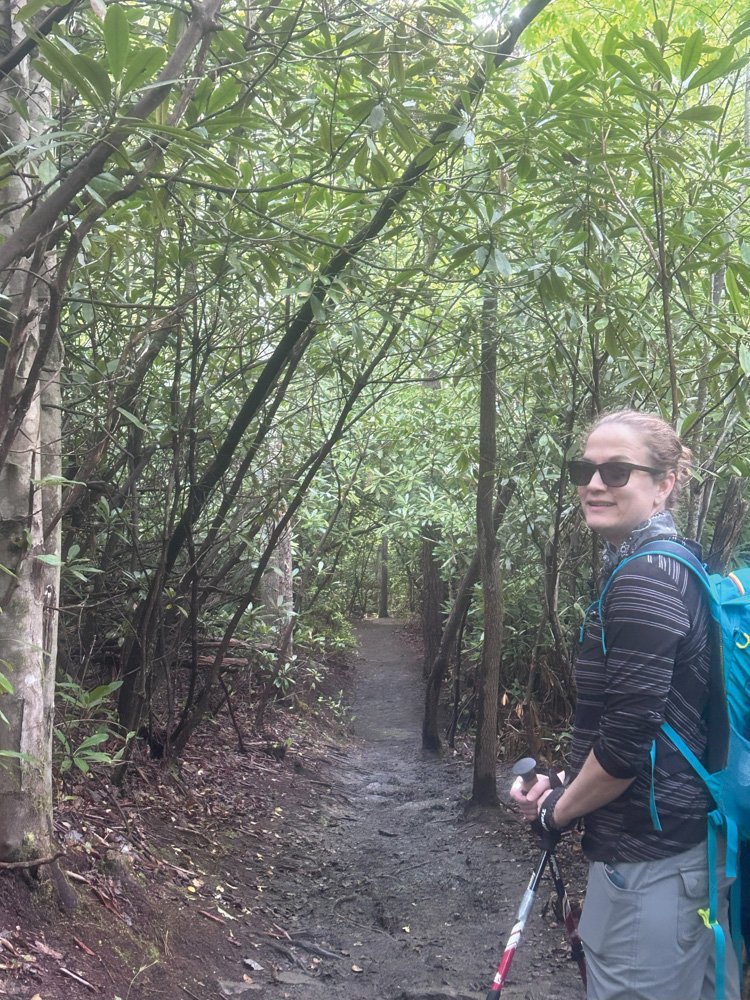
Jennie Smith in the green tunnel. Photo courtesy Jennie Smith
Tell me about your experience in the Ascend WV program.
It’s a two-year, remote working program, so I still had my job in D.C. The program provided me with $12,000 and access to a beautiful coworking space in Morgantown that my team at WV Rivers and I still use often. It also gave me free equipment rentals and exposure to several outdoor adventures I had never tried before. I went snowshoeing, kayaking, fly fishing, and mountain biking. Most importantly, Ascend WV gave me a lot of support for connecting with the community. I got involved with the nonprofit Main Street Morgantown, whose mission is to develop and promote a vibrant downtown area. I’m still involved with that today. For me, the real value of the program was that it opened doors to the community and nature of my new home.
What inspired you to apply for a job with the West Virginia Rivers Coalition?
Since I moved here, I wanted to get to know the state, the land, and the people who live here better. I also wanted to be part of something that had a positive impact. Maybe it’s kismet, but the executive director position with WV Rivers opened up and it seemed like exactly what I wanted to do. I honestly couldn’t believe it when they offered me the position. I was over the moon.
Fill me in on the history and mission of WV Rivers.
Our rivers and lands don’t have a voice, so they’re depending on us. The coalition was started 35 years ago by a group of paddlers and environmentalists who were concerned about the pollution they were seeing and wanted to save and protect West Virginia’s river and streams. As a coalition, our goal is to ensure everyone has access to clean, safe, and healthy water. We do this by advocating for water policy, engaging with communities, and protecting public lands.
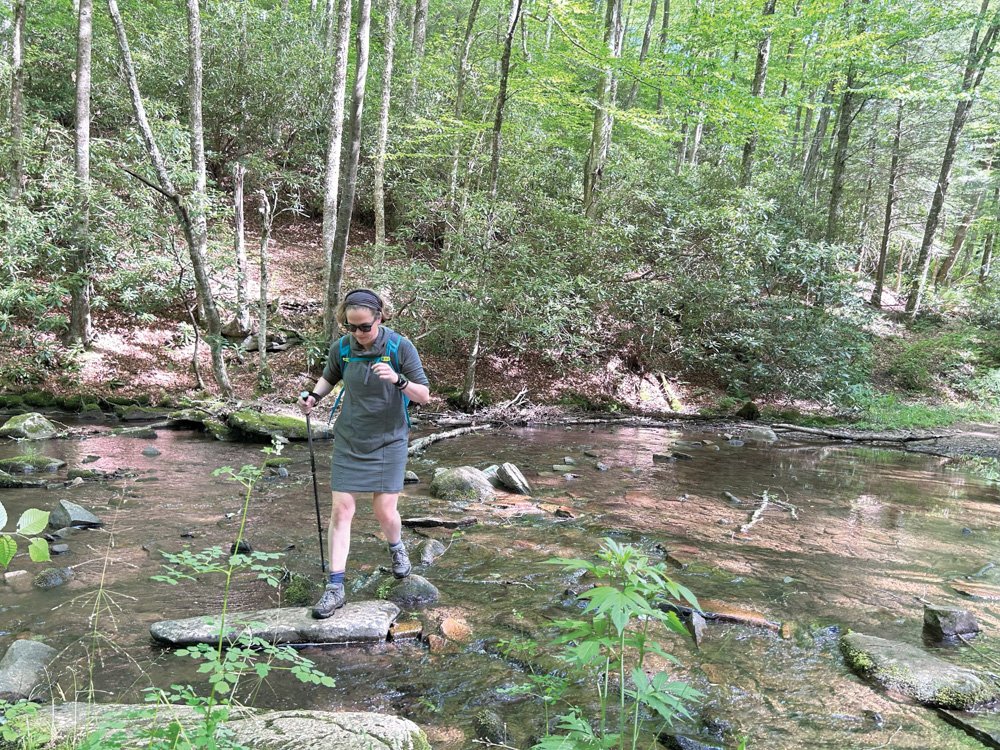
Smith crossing Seneca Creek, directly enjoying some of the very waters that she and her team at West Virginia Rivers protect. Photo courtesy Jennie Smith
How has WV Rivers influenced our state’s water policies?
We’ve had quite a few successes over the years. We played a lead role in passing the Aboveground Storage Tank Act and the Public Water Supply Protection Act in 2014, following the devastating chemical spill on the Elk River. That incident, when approximately 10,000 gallons of the coal-cleaning chemical MCHM leaked from a poorly maintained tank into the Elk River just upstream of a major drinking water intake, left over 300,000 West Virginians without safe tap water for days. Our advocacy helped turn that crisis into meaningful reform, resulting in stronger oversight of aboveground chemical storage tanks and improved protections for public water systems.
We also helped pass the PFAS Protection Act in 2023, a forward-looking law that requires the identification of “forever chemical” contamination in drinking water sources and mandates state agencies to begin developing plans to reduce exposure. These harmful chemicals have been linked to serious health issues, and this law is a big step toward safeguarding public health.
Another major victory was our involvement in the settlement with the EPA and DEP to address longstanding mining pollution in the Guyandotte River watershed—an area that’s suffered from legacy contamination for years. This settlement is a breakthrough in holding polluters accountable and securing remediation commitments.
What else are you working on?
In addition to shaping policy, we serve as watchdogs—monitoring water quality, documenting pollution, and reporting violations to ensure enforcement. We’re also engaged in planning for flood resilience and drought preparedness, both of which are becoming more urgent. Looking ahead, we’ve started examining the growing footprint of data centers in West Virginia and what their massive water and energy demands could mean for our communities and ecosystems. There’s a lot to be proud of—and a lot more work to do.
What are some of the challenges you face?
It’s hard to hear the harm that has been done to communities throughout the state, often because of pollution. It’s an awareness that I didn’t really have until I stepped into this role. Water has always been safe for me. From being a little kid in a pool to being able to kayak on the Hudson, I’ve never feared drinking water or playing in water. For the first time in my life, I met people who were afraid of their water. It was a really horrible thing to witness and realize that I was so privileged to feel safe in water. These experiences have been profound to me and very humbling.
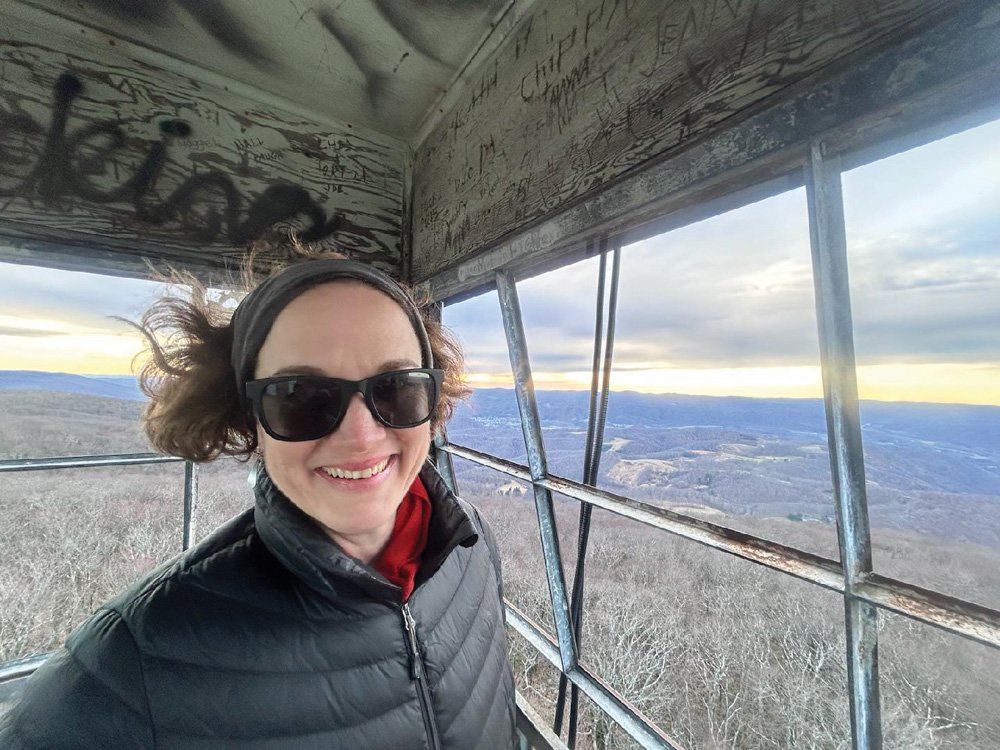
Smith braving the shaky heights of Olsen Tower in Tucker County. Photo courtesy Jennie Smith
What do you love most about your job?
I have been incredibly moved by the passion, expertise, and dedication of my staff, members, and the partners and allies we have. I’m blown away by them every day. One of the most rewarding aspects of my job is being able to visit communities around the state and listen to their stories. I love hearing about their concerns and hopes for their rivers and land. Every time I talk to someone, it just reinforces why WV Rivers matters and it energizes me for when things get hard. I took this job because I wanted to get to know the people of our state and boy has it delivered in a short period of time.
How have your travels throughout West Virginia affected you?
I love all the nooks and crannies of the Monongahela National Forest. I feel so grateful that we have it. I also love our state parks, like Coopers Rock and Babcock; it’s hard to pick a favorite. Seeing what’s happening in southern West Virginia has been really hard. I’ve driven through these beautiful hollers, and then all of the sudden was confronted with terrible pollution coming out of a well or into a stream. It’s really assaulting and it’s hard to square the two—I’m surrounded by this beautiful scenery, and at the same time, people are being poisoned in front of me by their rivers and streams. It’s a difficult thing to hold the love and the heartbreak. West Virginia has changed me. The more I’ve opened myself to its beauty and its people, the more I’ve felt this deep pull to protect it. Once you really feel connected to this place, you can’t help but want to stand up for it.
What are your hopes for the future of West Virginia’s waters?
I envision a future where every person in our state, regardless of where you live or the income you have, has access to safe drinking water. I see a future where every river and stream in our state is teeming with life and where we can all swim, fish, paddle, and play without fear of contamination or harm. I dream about a day when protecting our water is not a contentious issue, but an unquestioned priority that unites us across political, economic, and cultural divides. In the future, pollution is not just monitored and mitigated, but prevented altogether because we have strong safeguards, smart planning, and bold leadership that’s willing to stand behind that belief.