
Photographed by Judy Dourson
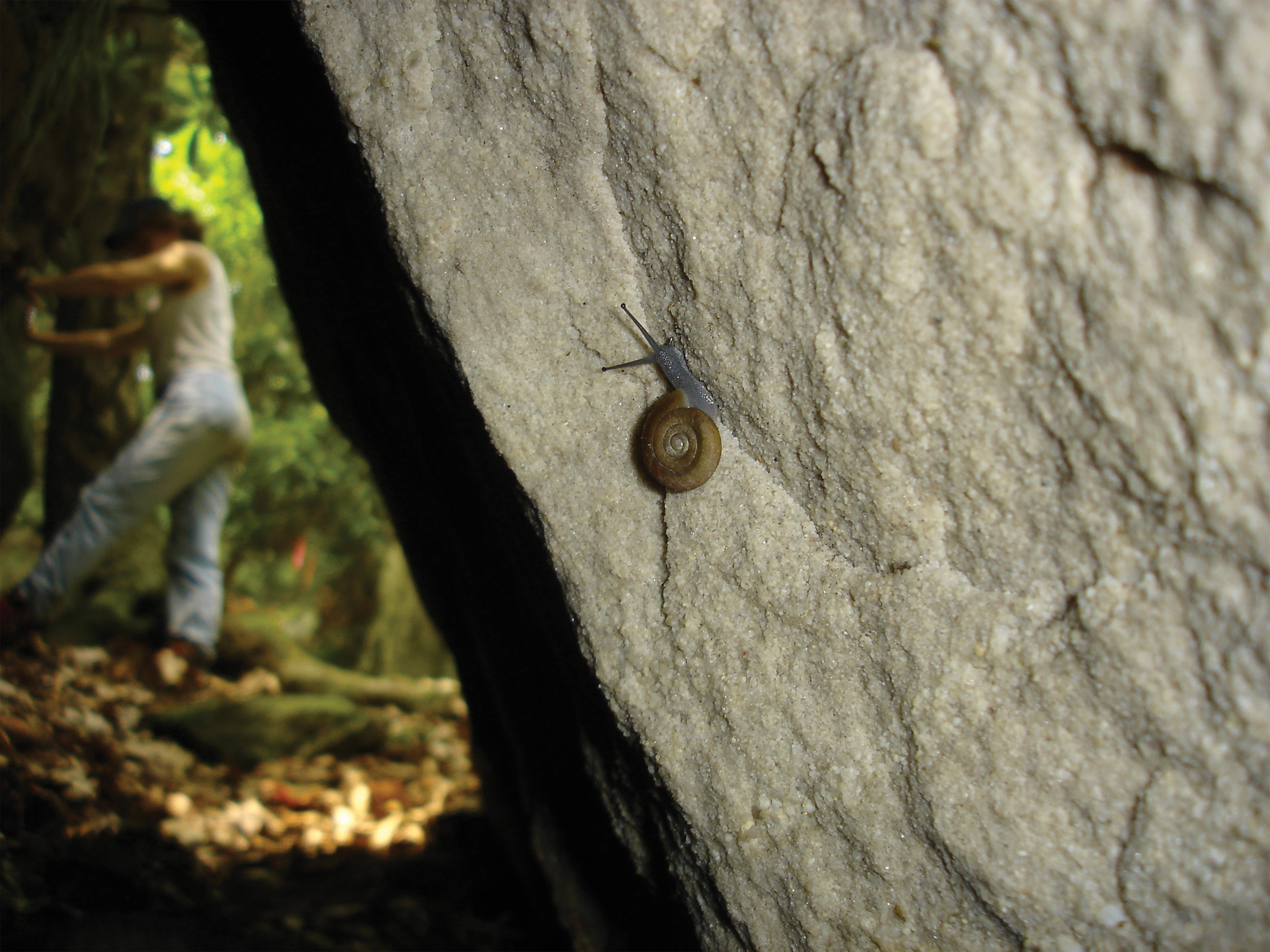
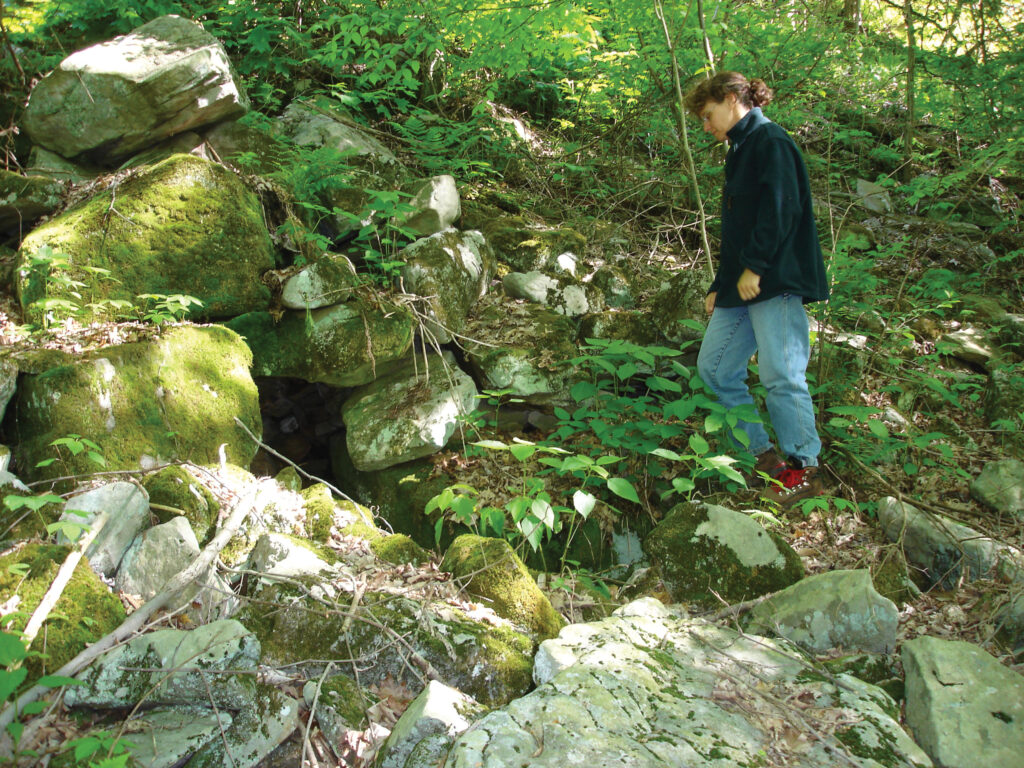
Nestled within small rock crevices in the Cheat River Canyon lives a snail that occurs nowhere else in the world. The flat-spired three-toothed snail, also referred to as the Cheat threetooth (Triodopsis platysayoides), is the size of a quarter. It has a flat, brown shell and a pearly gray body, and unlike many other West Virginia land snails, it only occurs on boulders in Preston and Monongalia counties. In 1978, the Cheat threetooth was listed as federally threatened—but this little snail has drawn admiration and curiosity from researchers and snail enthusiasts since at least the 1940s.
“This is probably one of the most studied snails in North America, maybe anywhere,” says Daniel Dourson, a retired endangered species biologist who’s authored eight books on land snails. Dourson and his wife, Judy, spent two summers venturing out on warm, rainy nights to learn about the Cheat threetooth’s habitat and diet. They discovered that this snail eats at least 27 different items, from rotting rhododendron flowers to dead cave crickets to a specific fungus that grows on woodrat scat and looks like cotton candy.
Since then, the Doursons have dedicated decades to learning about the land snails of West Virginia, the broader Appalachian region, and Central America. “It just felt like a natural fit for me to work on the underdogs of the world,” says Dourson, who has a soft spot for creatures he calls “the lesser majority.” Bats, salamanders, freshwater mussels, land snails, and many other taxa may be smaller-statured and less charismatic than birds of prey and large mammals, but they comprise the vast majority of Earth’s biodiversity and play critical roles in shaping ecosystems.
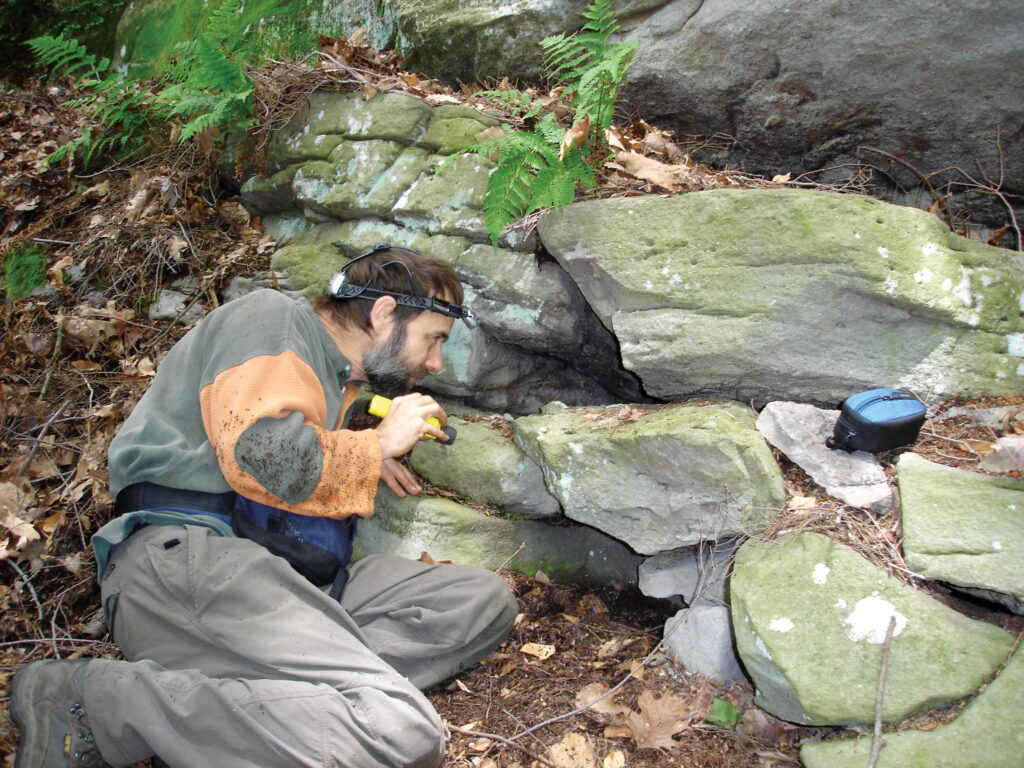
Daniel and Judy Dourson have dedicated their time to studying West Virginian and Appalachian land snails, including the federally threatened Cheat threetooth, which lives only in the Cheat River Canyon.
“It’s kind of like the game Jenga,” he says, likening the top blocks to larger animals and the bottom blocks to smaller ones. “You can take blocks off the top, and it doesn’t collapse, but if you start to pull blocks from the bottom, it falls quickly.”
As detritivores, land snails break down nutrients in decaying matter and return them to the soil. They also disperse seeds and fungal spores. Land snails and their empty shells are critical sources of food and calcium for a wide variety of animals, including firefly larvae, salamanders, snakes, birds, and small mammals. Their discarded shells also serve as refuges for ants, millipedes, and tardigrades.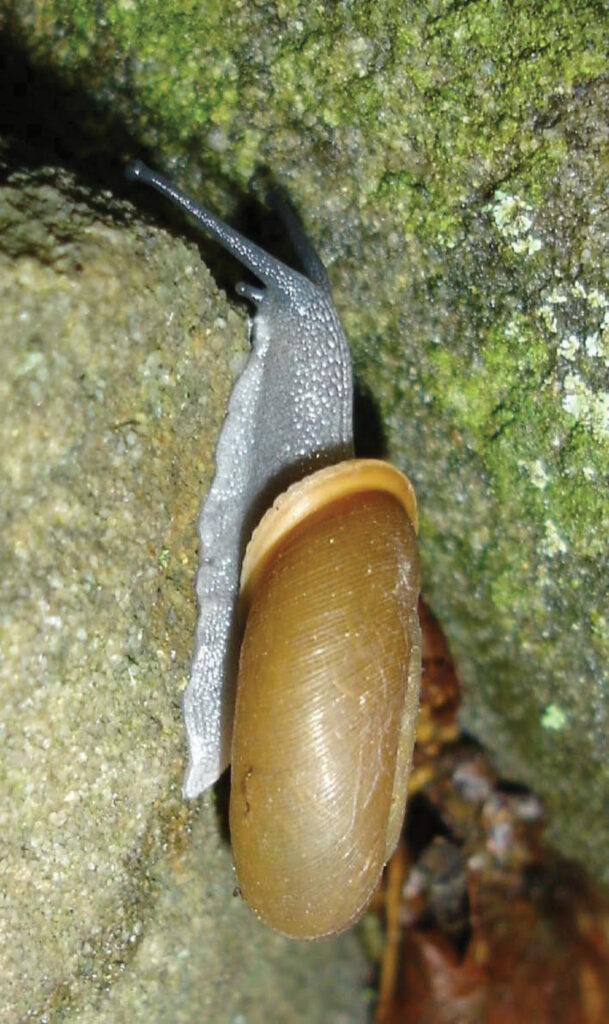
Land snails’ ubiquity makes them accessible to amateur observers, too. “When I think about ecology on the whole, that trifecta of structural complexity, diversity, and resiliency—that’s something Appalachia has in spades, and it’s highlighted by our weirdo land snail friends,” says Kyle Rooke, a fungi enthusiast based in Tucker County, who became interested in land snails a few years ago.
West Virginia hosts an immense diversity of land snails. The Mountain State is home to 186 native species, including 11 endemic species. Land snails generally live in forests, rocky outcrops, and calcium-rich environments, although some live in caves. A few species, like the Cheat threetooth, have highly specific habitat requirements. Most of the snails in West Virginia live for three to four years and consume mushrooms, detritus, wood, bark, and green vegetation.
Because they’re quite small—some tinier than a grain of salt—and live in decaying matter below the soil, land snails are particularly easy to overlook. If you were to go out and collect all the snails you can see with the naked eye, you’d likely miss out on 40% to 50% of the snail fauna in West Virginia, Dourson says. “It’s this amazing world under our feet.”
Instead of overlooking these small creatures, the Doursons collect samples of leaf litter and detritus and sift through it in search of tiny creatures. They’ll often find pseudoscorpions, millipedes, and ants, all of which can spend their entire lives within the discarded shell of a snail. Along with soil samples, they identify snail shells that they and other scientists collect in the wild. “You’re not damaging the live population,” says Judy Dourson. “And because there are some snails that are very specific to certain habitats, we feel like they could be used as an inexpensive way to determine the health of a forest, just like mussels can indicate water quality.”
From 2006 to 2015, the Doursons worked with colleagues from the West Virginia Division of Natural Resources (WVDNR) to compile information for the book Land Snails of West Virginia. During that time, they identified 17,130 collected snail specimens based on their shell size and shape. Some shells are conical, while others are flat, round, or domed. Shells can also have teeth, hairs, or distinct fringes. “Some of the small ones have the most interesting microsculptures of any animal on the planet,” says Dourson.
Along with confirming the total number of native land snail species in West Virginia, the Doursons discovered seven species that were new to science. One of these was the Greenbrier tigersnail (Anguispira stihleri), which is endemic to the Greenbrier River watershed. Its flat, white shell has five to six tight whorls that are boldly banded with rust-orange stripes. Craig Stihler, who worked for the WVDNR, actually found a specimen of it in 1993. For 21 years, he kept a gorgeous tiger-striped shell on his desk, but he had no idea what species it was until the Doursons found the snail in the wild and realized it was new to science. They decided to name the snail after Stihler, in part because he’d played a critical role in supporting their snail surveying project. “The reason we know so much about snails in West Virginia stems from the enthusiasm of one person,” Judy Dourson says.
While the survey provides a solid foundation for which land snails occur in West Virginia, there’s still an immense amount to learn about their biology and ecology. “We’ve got a whole world in front of us. It just takes getting off the phone a little bit and crawling on your hands and knees and staring at strange life forms,” says Rooke. “I think anyone can be the most knowledgeable person in their backyard.”