From Private to Priceless

From Private to Priceless

When the B&O Railroad crossed the Appalachian Mountains in Maryland and West Virginia in the mid-1800s, it opened the breezy, beautiful highlands to vacationing Easterners. Brookside Resort in Aurora, West Virginia, not far from the B&O station at Oakland, Maryland, was one of their summer retreats.

The railroad made other things possible, too—like clear-cut timbering. Brookside had a big, peaceful stand of hemlock where guests hiked and rode horseback. When the rich started driving cars in the 1910s and resort attendance dropped off, longtime resort caretaker Branson Haas bought Brookside Woods to keep it intact. And 20 years later, he sold it to the state of West Virginia on the condition that it never be cut—to protect it from the “galdarned timberman,” as one chronicler documented.

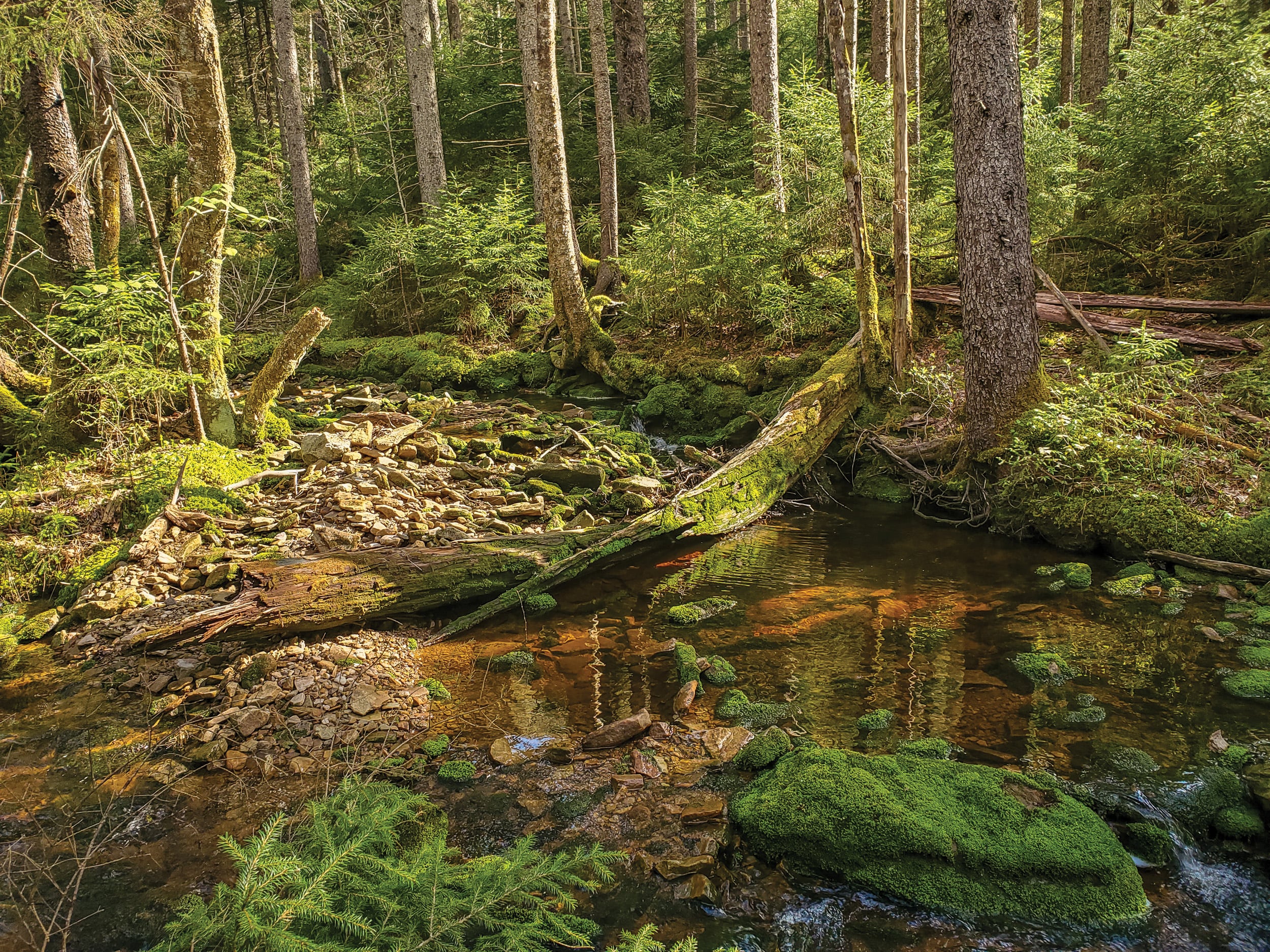
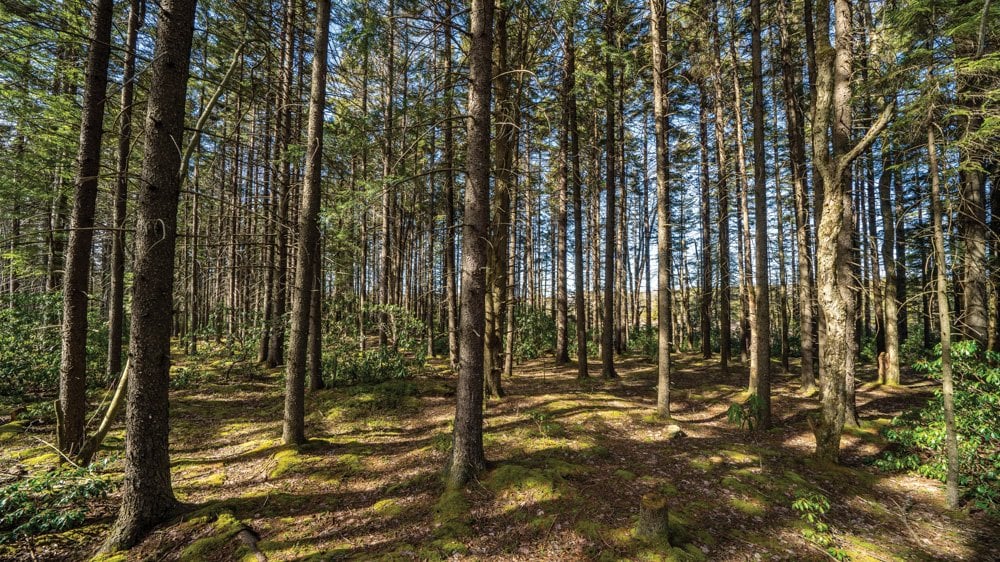
Today, it’s the 133-acre Cathedral State Park: the state’s largest stand of old-growth forest, with trees 350 and even 400 years old. Its 3 miles of hiking trails wind among 100-foot giants, and a riot of ferns, mosses, and wildflowers thrives in their shade, 170 plant species in all. Haas died in 1955. But he gave all who came after the chance to experience this one spot on the planet in a relatively undisturbed state. In 1966, it was designated a National Natural Landmark, a rare example of pre-colonial mixed eastern hemlock–hardwood forest. 

People who lived through that age of clear-cutting saw a singular, fast-moving threat to wild places, and a rare few had the foresight and the means to draw hard boundaries against it. Today, the threats are slow and diffuse: creeping development, mainly. But happily for all of us, the impulse to preserve lives on. Some of the most distinctive and restorative places we can visit were set aside for us by forward-thinking landowners. 

Yankauer Nature Preserve

When Dr. Alfred Yankauer served as an adviser at the World Health Organization in Washington, D.C., in the early 1960s, he and his wife, Marian, bought a 104-acre getaway on a high bluff overlooking the Potomac River in Berkeley County, West Virginia. 

The mile-long Kingfisher Loop trail in the Yankauer Nature Preserve is known for abundant wildflowers, excellent birding, and stunning views of the Potomac River. 
Courtesy of West Virginia Land Trust

The land once grazed cattle but, by the 1960s, it was reverting to nature. The Yankauers camped there as often as they could, and it became a real refuge for them. So when they moved to Boston in 1966, they donated it to The Nature Conservancy (TNC) to preserve it in its natural state. 

Preserves like the ones managed by the Potomac Valley Audubon Society are increasingly important as development diminishes safe refuge for migrating species like the monarch butterfly.
Courtesy of West Virginia Land Trust

TNC is a giant conservation organization today, protecting more than 125 million acres on six continents. But in the 1960s, it was just getting started. It protected its first 60 acres, at the Mianus River Gorge in New York, in 1954, and only hired its first full-time president in 1965. The Yankauer donation was an early one.

The property wasn’t fully open to the public until the Potomac Valley Audubon Society (PVAS) agreed in the mid-1980s to co-manage it. It’s matured since the Yankauers camped there. “The Yankauer Nature Preserve has been allowed to regenerate,” says PVAS Executive Director Kristin Alexander. “So what was a cedar grove, those are getting older, and it’s now an interesting mix of older cedar forest and oak–hickory forest, with gigantic sycamores along the river.” There are a couple miles of hiking trails, with more than 100 bird species and almost 200 species of flora. “We do wildflower walks—they’re spectacular there in mid-April.”

PVAS has since taken on other properties in West Virginia’s Eastern Panhandle. In 2006, the organization became co-manager of the ridgetop Eidolon Nature Preserve, donated to TNC by longtime owner Marguerite Zapoleon. In 2011, Stauffer and Elinor Miller donated their wetland directly to PVAS. Stauffer’s Marsh, once filled in as farmland, was placed under a conservation easement in the 1990s—that’s a legal agreement that permanently limits the uses of the land—and restored by the U.S. Department of Agriculture. 

And in 2016, Linda Case and her arts and sustainability nonprofit CraftWorks donated 13 acres to PVAS. That became the nucleus, through Case’s ongoing generosity, of what is now 74 acres. In an area that’s under intense development pressure, it’s all soon to be protected under conservation easement by the West Virginia Land Trust—more on the WVLT below.

A couple miles of trails there pass through a variety of habitats. “Cool Spring Preserve is everything from a pollinator meadow to big oak trees to an old orchard,” Alexander says. There’s also Cool Spring Marsh, the only example in West Virginia of rare Shenandoah Wet Prairie. And in the former CraftWorks studio, PVAS operates the Case Nature Center, which hosts guided walks, natural history workshops with animal ambassadors, and summer camps. 

Thanks to Case, the Millers, Zapoleon, and the Yankauers, PVAS now manages nearly 600 acres of distinctive protected lands for public enjoyment. Alexander mentions a young summer camper who later became a camp counselor, then camp director, and he’s now a geology major in college—just one of many such stories. “The generosity of these landowners has allowed thousands of summer campers, school children, families, and just community members every year to learn about and appreciate the natural world and hopefully gain some sense of the value of preserving green spaces.”

The high canopy and clear understory of Elizabeth‘s Woods at the West Virginia Land Trust‘s Toms Run Preserve has the serene, sacred feel that is distinctive to old-growth forests. Volunteers have created trails and trail structures at Toms Run that are in harmony with the surroundings.
Courtesy of Forks of Coal Foundation

Elizabeth’s Woods / Toms Run Preserve

In the mid-1990s, Elizabeth Zimmermann donated 84 wooded acres just south of Morgantown, West Virginia, to the West Virginia Land Trust. The WVLT is known today for its hand in conserving more than 60,000 acres of extraordinary properties in every part of the Mountain State. But in 1994, there was no WVLT. Zimmermann’s bequest was the founding property—the catalyst for the organization’s formation. 

Zimmermann’s vision was for her mature woods to serve as a nature preserve and a place for recreation and education. The WVLT held Elizabeth’s Woods passively until about a decade ago. Two adjacent tracts came available, and the organization enlarged its holdings and created public access.

The WVLT calls its now-320-acre oasis beside the Monongahela River Toms Run Preserve. It’s mostly mature forest on gentle slopes, with sharper drop-offs closer to the river. In one steep and bouldery reach, Toms Run cascades as Little Falls. Rhododendrons grow tall there, alongside beech trees and maples. On the ridges, oaks and hickories dominate.

Migratory birds in great numbers stop at the preserve in spring and fall. The forest is part of the national Old Growth Forest Network, highlighting its impressive closed-canopy stands. Its slopes filter rainwater that flows into Toms Run, a tributary of the Mon River, sending cleaner water to Morgantown’s drinking water intake.

Toms Run Preserve is big enough that shy creatures feel at home. Black bears raid neighbors’ bird feeders from there. Fishers, a weasel relative the size of a house cat, live there, too. The preserve is also big enough that its 2-plus miles of trails feel far from the sights and sounds of civilization. 

Not all land trusts develop public access—their core function is often to hold development rights to preserve properties in a natural or undeveloped state in perpetuity. But the WVLT goes beyond that. “When people talk about moving to Morgantown, they want to know, ‘What can you do there?’” says Executive Director Brent Bailey. “We play a really important role here, as in other communities around West Virginia, in preserving places that protect the outdoors and give people recreational opportunities.”

Forks of Coal State Natural Area

It’s still possible to go the Branson Haas route and work directly with a state agency. Jack Workman did it a decade ago, and we have the Forks of Coal State Natural Area to show for it. 

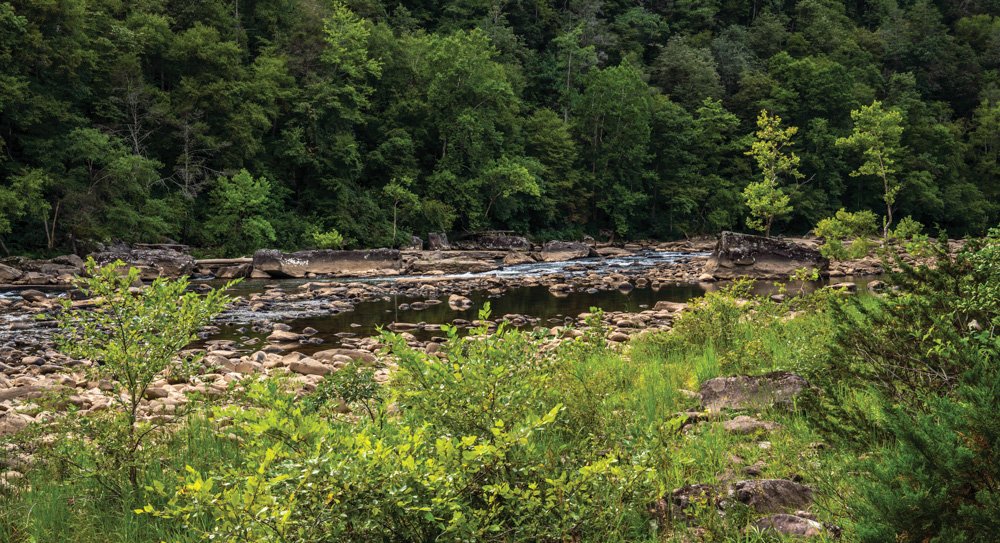
he Forks of Coal State Natural Area preserves a large swath of wilderness at the place where the Little Coal and Big Coal rivers meet to form the Coal River. Courtesy of Forks of Coal Foundation

Jack and Claudia Workman were chemical engineers. The success of plastics they engineered for the mining industry allowed them to buy a large tract in Boone County, West Virginia, between the Little Coal and Big Coal rivers: the Forks of Coal. 

“Jack and Claudia never had children, but they loved children and wanted them to learn about nature,” says Forks of Coal Foundation President Kathy Hill, who knew the Workmans. When his wife passed on in 2014, Jack Workman negotiated an agreement with the West Virginia Division of Natural Resources: About 100 acres of their land would be transferred to the WVDNR to become the Forks of Coal State Natural Area. And on it, the agency would create the Claudia L. Workman Wildlife Education Center.

The Coal rivers are popular paddling destinations, and the Forks of Coal Foundation leads an occasional nature tour on the water. Courtesy of Forks of Coal Foundation

Opened in 2022, the education center holds engaging displays about local wildlife. There’s a 1,500-gallon freshwater aquarium, an indoor beehive with a pipe to the outdoors, and pull-out drawers where kids can touch animal furs. Center staff offer nature workshops year ’round. 

And surrounding the center is 100 acres right at the confluence of the rivers, with 6 miles of hiking trails through forest and meadow. It’s full of wildlife—owls and eagles, fish and beavers, snakes and the occasional bear. Interpretive signs highlight features like old punch coal mines and a cliff formation known as Roof Rock. 

About 3,000 people visit Forks of Coal State Natural Area each year. Following a provision in Workman’s will, once the education center became operational, an additional tract of about 200 acres transferred to the WVDNR. “Jack was a very smart businessman,” Hill laughs. She expects trails in the new section to open in 2027.

“The Workmans could have sold this property and made some big housing development, but they didn’t,” she says. “They really wanted it to be used in the best way it could be used, in their minds: to conserve nature and for education. I personally have a very strong commitment to seeing it done the way they wanted it.” 

Rooting For the Underdogs

Rooting For the Underdogs

Photographed by Judy Dourson

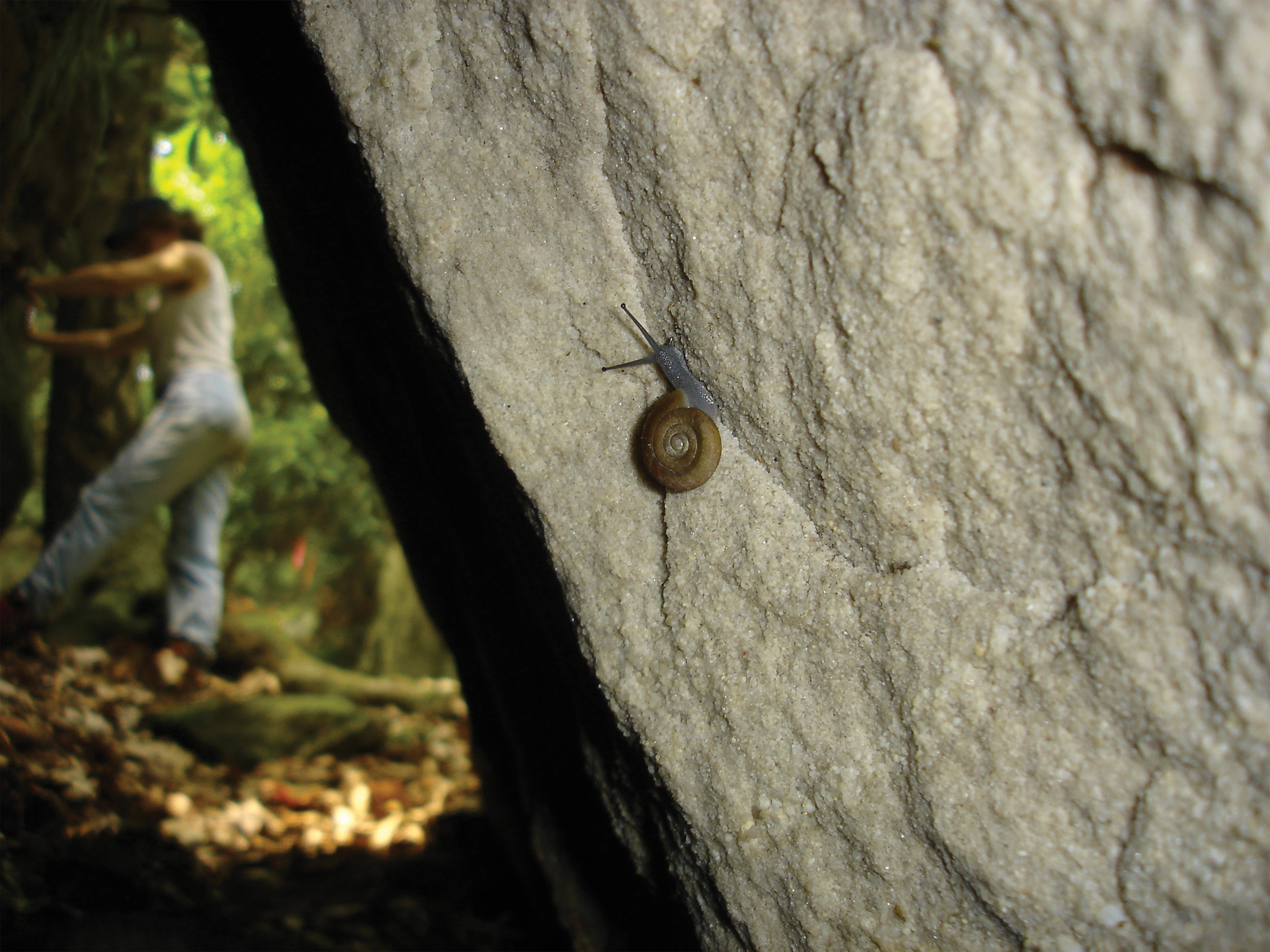
Nestled within small rock crevices in the Cheat River Canyon lives a snail that occurs nowhere else in the world. The flat-spired three-toothed snail, also referred to as the Cheat threetooth (Triodopsis platysayoides), is the size of a quarter. It has a flat, brown shell and a pearly gray body, and unlike many other West Virginia land snails, it only occurs on boulders in Preston and Monongalia counties. In 1978, the Cheat threetooth was listed as federally threatened—but this little snail has drawn admiration and curiosity from researchers and snail enthusiasts since at least the 1940s.

“This is probably one of the most studied snails in North America, maybe anywhere,” says Daniel Dourson, a retired endangered species biologist who’s authored eight books on land snails. Dourson and his wife, Judy, spent two summers venturing out on warm, rainy nights to learn about the Cheat threetooth’s habitat and diet. They discovered that this snail eats at least 27 different items, from rotting rhododendron flowers to dead cave crickets to a specific fungus that grows on woodrat scat and looks like cotton candy.

Since then, the Doursons have dedicated decades to learning about the land snails of West Virginia, the broader Appalachian region, and Central America. “It just felt like a natural fit for me to work on the underdogs of the world,” says Dourson, who has a soft spot for creatures he calls “the lesser majority.” Bats, salamanders, freshwater mussels, land snails, and many other taxa may be smaller-statured and less charismatic than birds of prey and large mammals, but they comprise the vast majority of Earth’s biodiversity and play critical roles in shaping ecosystems.

Daniel and Judy Dourson have dedicated their time to studying West Virginian and Appalachian land snails, including the federally threatened Cheat threetooth, which lives only in the Cheat River Canyon.

“It’s kind of like the game Jenga,” he says, likening the top blocks to larger animals and the bottom blocks to smaller ones. “You can take blocks off the top, and it doesn’t collapse, but if you start to pull blocks from the bottom, it falls quickly.”

As detritivores, land snails break down nutrients in decaying matter and return them to the soil. They also disperse seeds and fungal spores. Land snails and their empty shells are critical sources of food and calcium for a wide variety of animals, including firefly larvae, salamanders, snakes, birds, and small mammals. Their discarded shells also serve as refuges for ants, millipedes, and tardigrades.

Land snails’ ubiquity makes them accessible to amateur observers, too. “When I think about ecology on the whole, that trifecta of structural complexity, diversity, and resiliency—that’s something Appalachia has in spades, and it’s highlighted by our weirdo land snail friends,” says Kyle Rooke, a fungi enthusiast based in Tucker County, who became interested in land snails a few years ago.

West Virginia hosts an immense diversity of land snails. The Mountain State is home to 186 native species, including 11 endemic species. Land snails generally live in forests, rocky outcrops, and calcium-rich environments, although some live in caves. A few species, like the Cheat threetooth, have highly specific habitat requirements. Most of the snails in West Virginia live for three to four years and consume mushrooms, detritus, wood, bark, and green vegetation.

Because they’re quite small—some tinier than a grain of salt—and live in decaying matter below the soil, land snails are particularly easy to overlook. If you were to go out and collect all the snails you can see with the naked eye, you’d likely miss out on 40% to 50% of the snail fauna in West Virginia, Dourson says. “It’s this amazing world under our feet.”  

Instead of overlooking these small creatures, the Doursons collect samples of leaf litter and detritus and sift through it in search of tiny creatures. They’ll often find pseudoscorpions, millipedes, and ants, all of which can spend their entire lives within the discarded shell of a snail. Along with soil samples, they identify snail shells that they and other scientists collect in the wild. “You’re not damaging the live population,” says Judy Dourson. “And because there are some snails that are very specific to certain habitats, we feel like they could be used as an inexpensive way to determine the health of a forest, just like mussels can indicate water quality.”

From 2006 to 2015, the Doursons worked with colleagues from the West Virginia Division of Natural Resources (WVDNR) to compile information for the book Land Snails of West Virginia. During that time, they identified 17,130 collected snail specimens based on their shell size and shape. Some shells are conical, while others are flat, round, or domed. Shells can also have teeth, hairs, or distinct fringes. “Some of the small ones have the most interesting microsculptures of any animal on the planet,” says Dourson.

Along with confirming the total number of native land snail species in West Virginia, the Doursons discovered seven species that were new to science. One of these was the Greenbrier tigersnail (Anguispira stihleri), which is endemic to the Greenbrier River watershed. Its flat, white shell has five to six tight whorls that are boldly banded with rust-orange stripes. Craig Stihler, who worked for the WVDNR, actually found a specimen of it in 1993. For 21 years, he kept a gorgeous tiger-striped shell on his desk, but he had no idea what species it was until the Doursons found the snail in the wild and realized it was new to science. They decided to name the snail after Stihler, in part because he’d played a critical role in supporting their snail surveying project. “The reason we know so much about snails in West Virginia stems from the enthusiasm of one person,” Judy Dourson says.

While the survey provides a solid foundation for which land snails occur in West Virginia, there’s still an immense amount to learn about their biology and ecology. “We’ve got a whole world in front of us. It just takes getting off the phone a little bit and crawling on your hands and knees and staring at strange life forms,” says Rooke. “I think anyone can be the most knowledgeable person in their backyard.” 

Get Your Newts in a Row

Get Your Newts in a Row

Photo Courtesy of Kevin Oxenrider

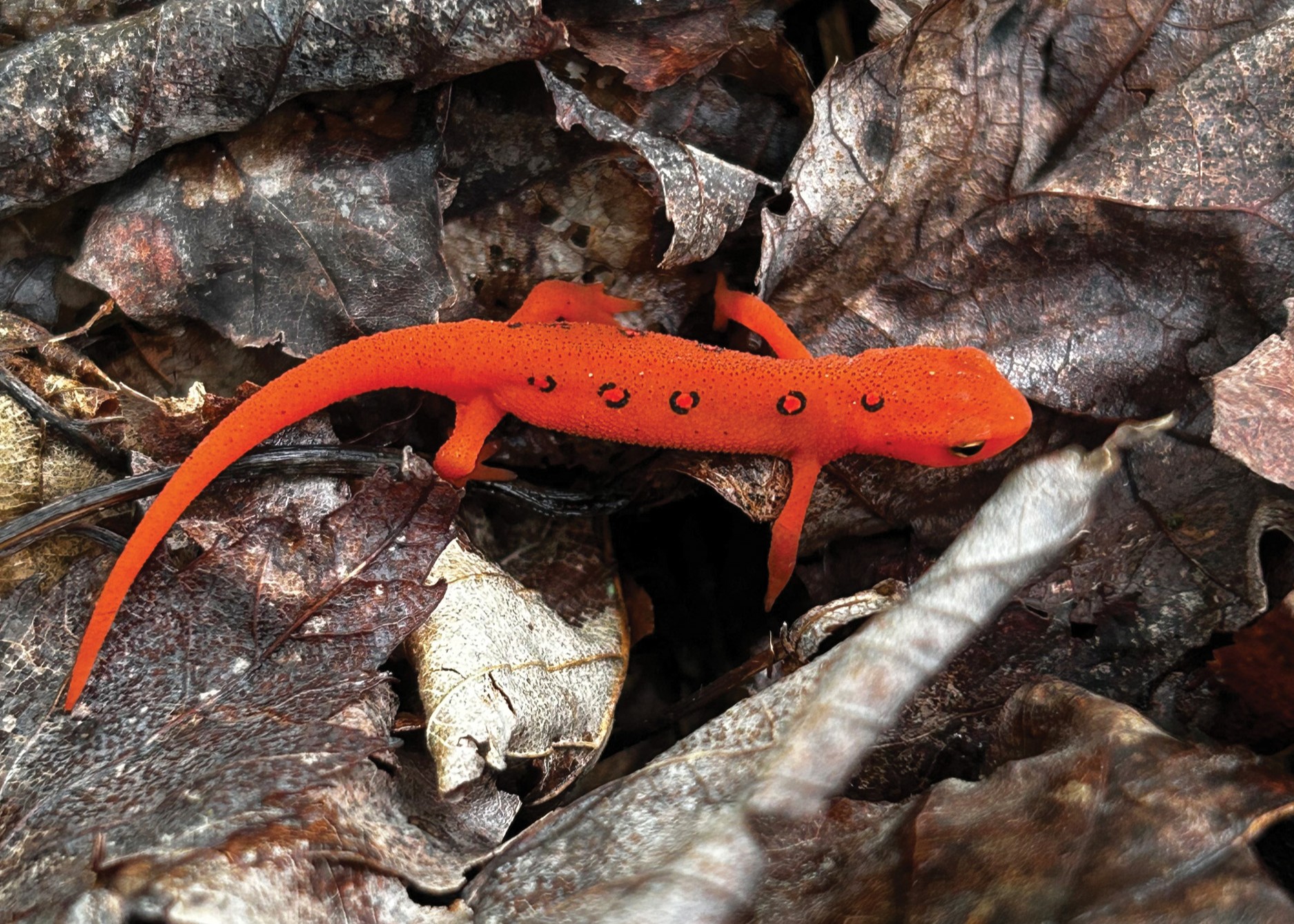
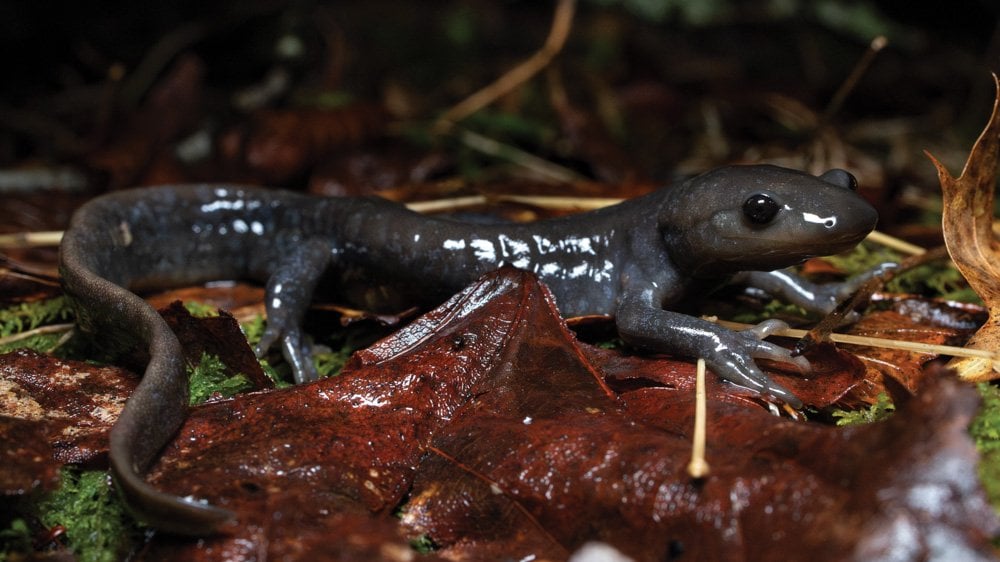
Appalachia has a lot of unique wildlife, but some of the region’s most quintessential critters are the many salamander species that frequent our rivers, creeks, springs, and moist—yes, we said moist—forests. Some are a more coveted find, like the elusive snot otter (AKA eastern hellbender, for folks who aren’t on a nickname basis with them), but they’re all iconic. Most people have stumbled upon the common, yet no less beloved eastern newt. Its juvenile stage is the most recognizable, with its striking orange coloration, fittingly known as a red eft.

Those sightings might not have felt like something to write home about. But they are something to write to the West Virginia Division of Natural Resources about, so put on your amateur herpetologist hat for an Eastern Newt Citizen Science Survey. You might be thinking, “If they’re so common, why does the WVDNR need us to count them?” Well, right now they’re a familiar sight in West Virginia and beyond—but that might not always be the case, thanks to a looming threat by the name of Batrachochytrium salamandrivorans, or Bsal.

Bsal is a species of chytrid fungus that causes chytridiomycosis, an amphibian fungal disease. The effects are like a zombie movie designed to scare baby salamanders into eating their vegetables. Parasitization of epidermal cells leads to skin lesions, weakening skin functions and causing death within just a few weeks. It’s yet to be documented in the United States, but scientists fear it’s only a matter of time before it arrives through avenues like the pet trade. And susceptibility trials show that eastern newts are especially vulnerable to the fungus.

Salamandrivorans means ‘salamander devourer’ in Latin,” says Kevin Oxenrider, the WVDNR’s amphibian and reptile program leader. “It actually eats away at the skin, causing crazy water loss, which is a huge deal for amphibians. If they don’t have water, their skin isn’t permeable, which means they’re not breathing properly. It’s a really horrid way to go.”

So, how do we combat this Lovecraftian enemy? With good old-fashioned data, of course. It’s not as boring as it sounds, we promise. The more dramatic defensive measures—like ongoing trials of vaccines disseminated via waterways or other antifungal water treatments—will come later. But for now, scientists are ready to get ahead of the game by taking a snapshot of eastern newt distribution, pre-Bsal.

“Trying to restore a population is difficult when there is no baseline,” says Oxenrider, referencing the information gap of regional bat populations before the spread of white-nose syndrome. “We want to make sure that we have our ducks in a row to prepare for this disease.”

That’s where you come in. Until the survey ends in 2028, take the following steps:

  • Stop the spread of disease by cleaning your gear—like shoes and boats—between outdoor expeditions.
  • Spot an eastern newt anywhere in West Virginia, in any of its life stages.
  • Snap a photo.
  • Submit your findings at wvdnr.gov/plants-animals/surveys/eastern-newt-survey/.
  • Sleep easy knowing you’re supporting the preservation of the Mountain State’s spectacular salamanders.