

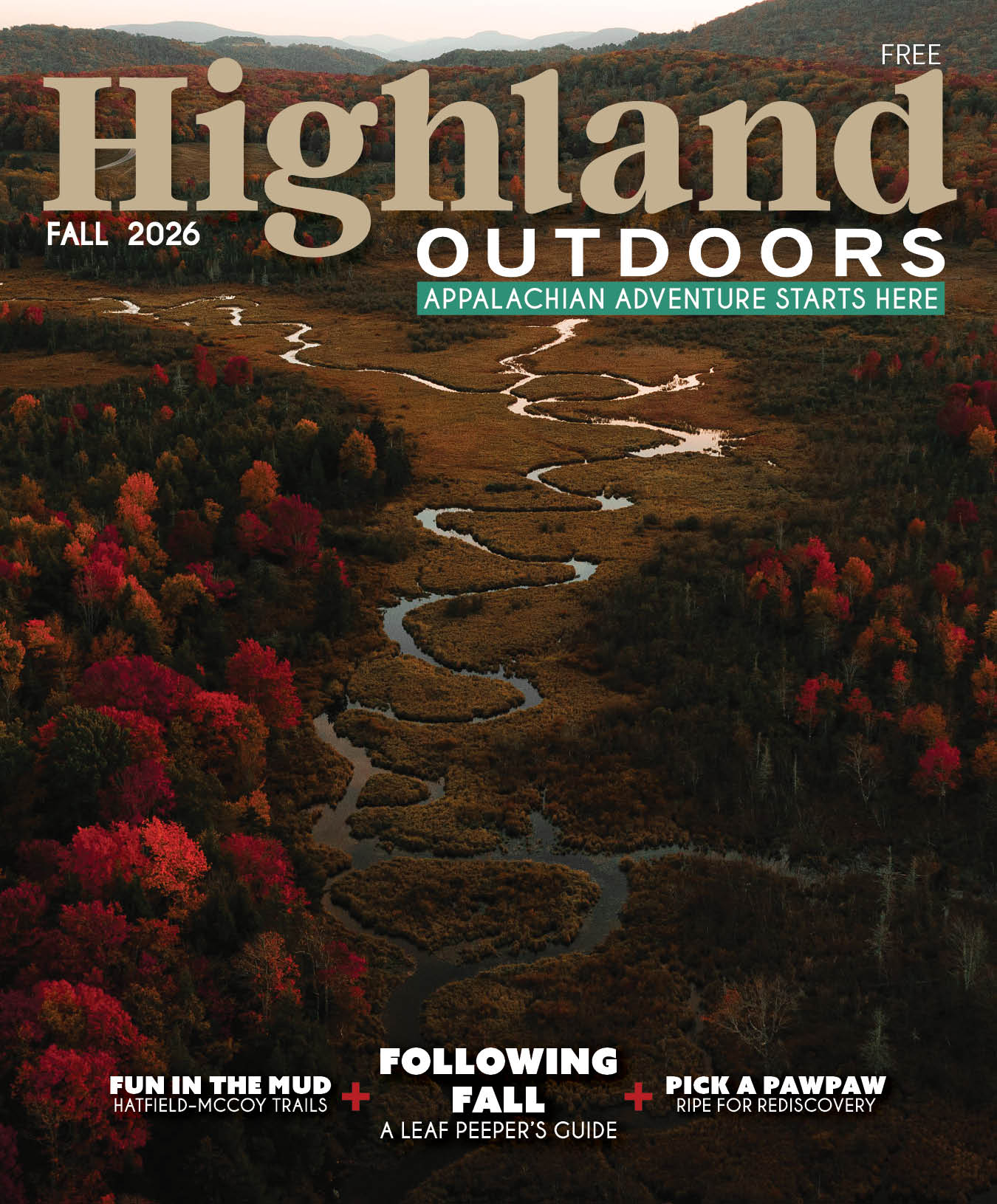

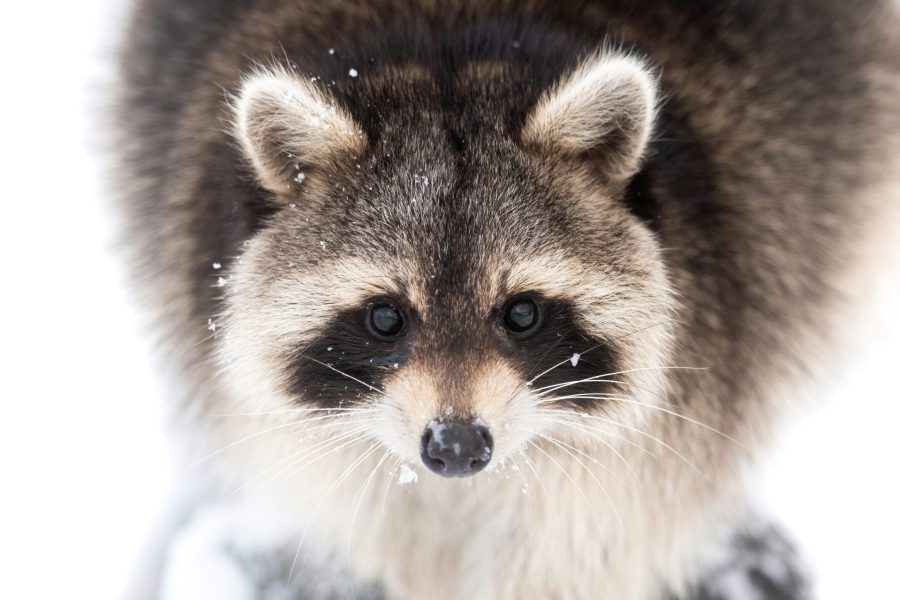
FEATURE PHOTO: Raccoons also don thick fur to stay warm
during winter, but they spend most of their winter in underground dens.
Photo by Nathaniel Peck
Standing at the bottom of the slope at the White Grass Ski Touring Center on a windy winter day, I feel my nose tingle and my fingers start to go numb. No matter how many times I’m encouraged to “be bold, start cold,” I can’t bring myself to shed a layer before ascending the mountain. As I make my way up the slope, warmth begins to fill my chest, then my legs, and eventually my fingertips and toes. By the top of the climb, I’m on the verge of sweating and have to take off a layer before continuing my journey to Bald Knob.
As a somewhat petite human, I’m always cold. My friend likes to call it a “small mammal problem,” in which my body can’t generate enough heat to stay comfortable on winter days unless I’m in a constant state of motion. When I finally reach the top of Bald Knob, I seek refuge among the snow-covered spruce trees. Looking around, I spot black-capped chickadees, nuthatches, and tufted titmouses flitting among the branches in search of food. Despite being a mere fraction of my size, these birds seem to be doing just fine in the freezing temps.
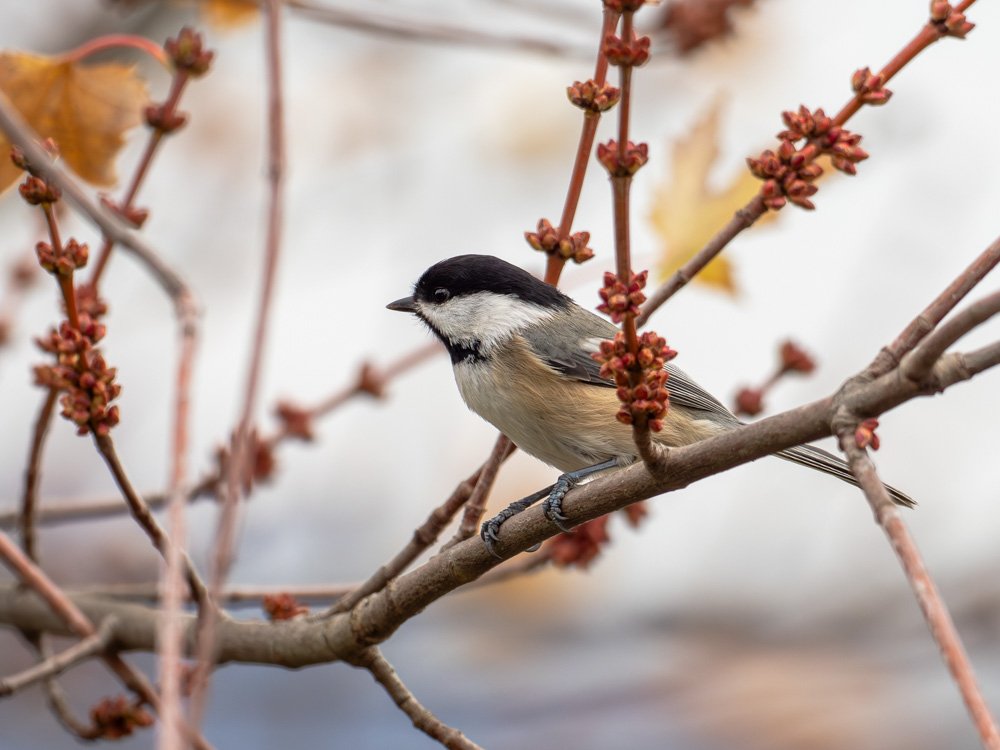
The brains of black-capped chickadees grow 30 percent in the winter so they can remember where they stashed seeds. Photo by Mollee Brown
That’s not to say the winter doesn’t pose challenges to creatures big and small. Cold temperatures mean animals have to exert more energy to keep their bodies warm. And because food sources are scarce, it’s hard to find the nutrient-rich resources animals need to maintain steady body temperatures. Even plants can struggle to access enough sunlight and water to photosynthesize during the short, cloudy days of winter. Cold weather can also externally damage tissues and cells, leaving many mammals susceptible to hypothermia and frostbite. Internally, cold weather causes water to crystallize and expand, potentially rupturing the cells of animals, plants, and fungi. Another issue is that fluids, including blood, get thicker when the temperature drops, making it more difficult to transport oxygen and other nutrients throughout the body. Despite the many challenges, animals and plants have devised some remarkable strategies to not just outlast the cold, but to thrive in it.
Slowing down
One of the most well-known winter strategies is hibernation, a physiological state in which an animal’s metabolic rate slows down by 90 to 98 percent. Animals that truly hibernate have body temperatures that plummet to around the level of their surrounding environment. Their breathing slows and their heart rate decreases to just a few beats per minute. Groundhogs, as well as some bat and rodent species, are considered true hibernators that stay dormant for weeks or months during the winter.
Although we often think of bears as hibernating animals, they don’t experience dramatic drops in body temperature, metabolism, breathing, or heart rate. Instead, bears, along with raccoons and skunks, are considered deep sleepers that stay dormant for weeks or months, but arouse fairly easily when the weather warms up. Torpor is another dormancy strategy that falls between true hibernation and deep sleep. Animals that go into torpor, like hummingbirds and shrews, experience moderate reductions in body temperature, metabolism, and heart rate, but only for a few hours to days at a time.
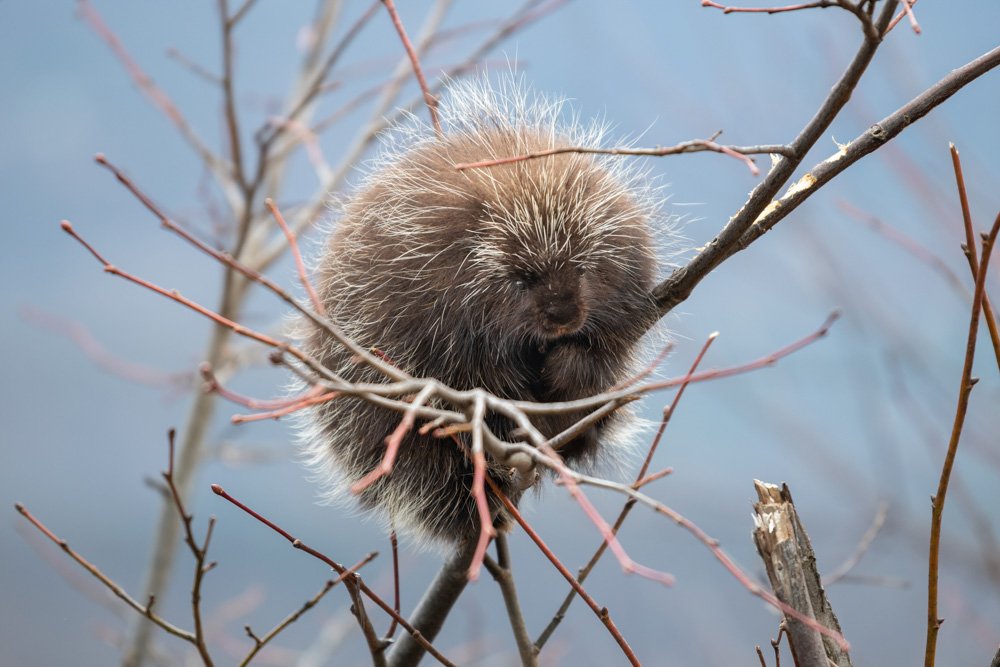
During winter, porcupines hang out in trees, eating bark and conifer needles. Their extra fluffy fur keeps them warm. Photo by Nathaniel Peck
To prepare for winter, many animals consume high-calorie and high-fat foods in the fall. Raccoons can increase their body weight by up to 50 percent, building up a thick layer of subcutaneous fat that serves as both a fuel source and a layer of insulation. To keep warm, raccoons develop thick, dense fur and den in hollow trees, rock crevices, abandoned burrows, and under buildings to keep warm. In particularly cold places, raccoons huddle together in dens, sharing their body heat.
Porcupines use many similar strategies to those of raccoons: they build up fat reserves, grow thick fur coats, and huddle together in dens. But instead of hiding belowground, they spend ample time in the treetops during winter, munching on bark and conifer needles. To process the massive amounts of fiber in their winter diet, porcupines have expansive stomachs and intestines that comprise about 75 percent of their body cavity. To preserve energy, porcupines eat from the same tree for days at a time and select den locations close to their preferred munching spots. Porcupines even retrace their steps through the snow so they don’t have to waste energy moving through thick, fluffy powder.
Hiding out
All of West Virginia’s amphibian and reptile species stick around during the winter. “The name of the game is to get below the frost line,” says Kevin Oxenrider, amphibian and reptile program leader for the West Virginia Division of Natural Resources. “Although it’s still cold for us, it’s stable and above freezing for them. That’s all they need.”
Many of West Virginia’s salamanders, frogs, toads, and snakes seek refuge in rock crevices, interstitial spaces in the soil, or old rodent burrows. Like other animals that go into hibernation or torpor, amphibians and reptiles go into brumation, a physiological state defined by slow metabolism, reduced activity, and minimal food intake. Before winter sets in, reptiles and amphibians stock up on hearty meals that provide them with the fat reserves they need to survive.
One species that bucks this trend is the wood frog. Instead of getting under the frost line, wood frogs nestle into fallen leaves on the surface and freeze during the winter. “They just embrace the frost,” says Oxenrider. Wood frogs in the Great Lakes region can survive temperatures down to 22 degrees F. In Alaska, they can survive down to 0 degrees F, with some wood frog populations spending more than seven months of the year in below-freezing conditions.
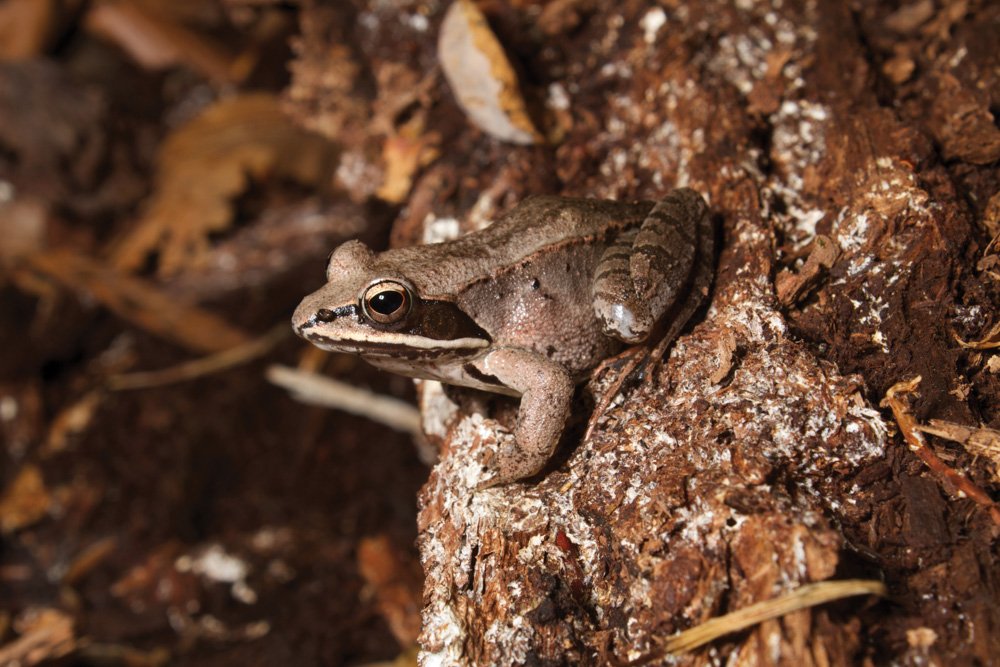
During the fall, wood frogs produce anti-freeze compounds in the fall to prevent their blood from freezing during the winter. Photo by Brian Gratwicke
To handle the brutal cold, wood frogs employ some remarkable cryoprotective strategies. In the fall, they produce large amounts of urea and glucose, forming a sugary solution that prevents their blood from freezing. They also move water from inside to outside their cells, allowing them to freeze up to two-thirds of their body water while protecting their cells and tissues from being damaged by ice crystals.
Because wood frogs spend the winter above the frost line, they can quickly take advantage of any warm spells that occur. “They thaw out and just hop away. That’s why wood frogs are one of our earliest breeding amphibians. We’ll hear them in late February or early March if there’s a nice warm, rainy night,” Oxenrider says.
While many amphibians and reptiles seek refuge beneath the soil, others, like wood turtles and painted turtles, camp out in deep pools of unfrozen water during the winter. When the water surface freezes, these turtles face new challenges: they don’t have very much oxygen and they can’t surface to breathe. “People hear about them breathing through their butts, and that’s basically what they’re doing,” says Oxenrider. “They are able to breathe through their cloaca at a very minimal amount that enables them to absorb oxygen out of the water.”
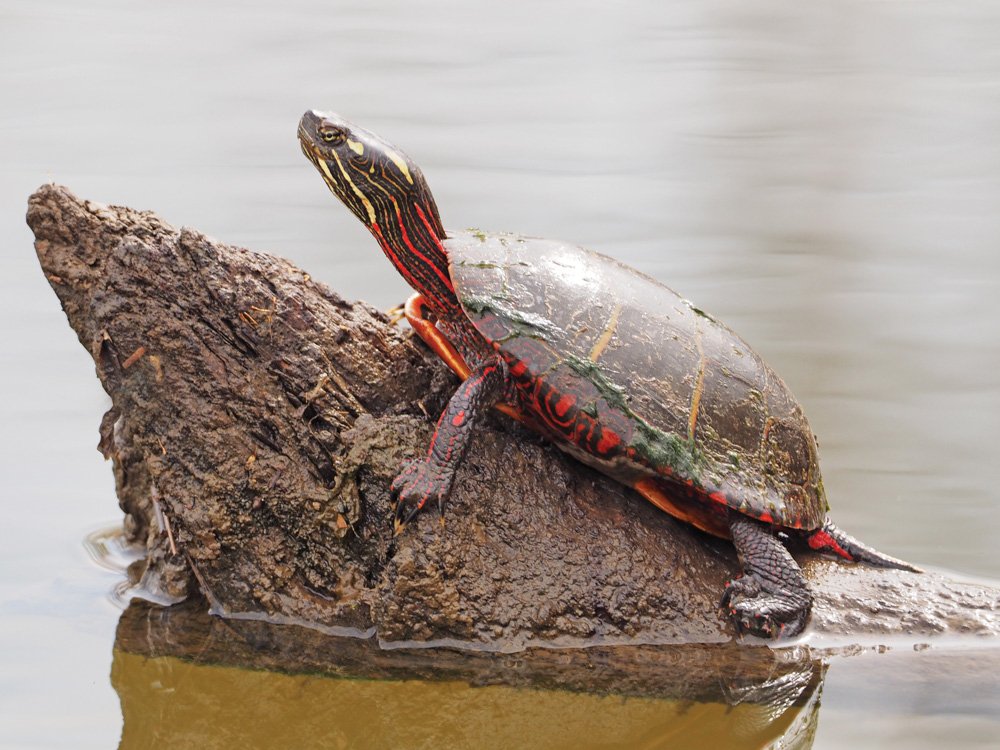
Painted turtles spend their winters in deep pools of water beneath the frozen surface. Photo by Judy Gallagher
Snapping turtles and painted turtles also handle low oxygen levels by switching their metabolism to a method that doesn’t require oxygen, allowing them to survive for up to five months in low- or no-oxygen environments. While altering their metabolism is a highly effective approach, it leads to a build-up of lactic acid, the same type of acid that makes our muscles sore after exercising, which can cause damage over time. To neutralize these acids, turtles use calcium from their shells in essentially the same way people take antacids to neutralize heartburn. When snapping and painted turtles emerge in the spring, they bask in the sunshine, ramp up their metabolism, and eliminate more lactic acid.
For the large, fully aquatic mudpuppy salamander, winter is the most active time of the year. These salamanders live in large, fast-flowing river systems that have relatively stable water temperatures and oxygen levels. As a result, they can move around, eat, and even mate throughout the coldest months of the year. “Predation is going to be lower,” says Oxenrider. “And they’re not competing against the other critters that are trying to overwinter.”
On the prowl
Along with mudpuppies, birds can regularly be seen out and about during the winter. The Mountain State is home to numerous year-round bird residents, including hawks, owls, northern cardinals, blue jays, and black-capped chickadees. During the winter, there’s also an influx of birds that migrate here from more northern latitudes, such as the white-throated sparrow, black duck, gadwall, and green-winged teal. “West Virginia is the tropics for some of these guys,” says Chris Rota, an associate professor of wildlife biology at West Virginia University.
Sticking around for the winter can be a huge advantage for birds. “Mortality is higher during migration than at any other time of the year,” says Rota. “Birds that migrate expend a lot of energy to put on extra fat. Some of them have to fly thousands of miles. It’s super risky.” While some individuals of species like the golden-crowned kinglet, dark-eyed junco, and hermit thrush migrate long distances, others stay within the Mountain State’s borders and simply migrate to lower elevations during the colder months. Birds that don’t migrate also have the benefit of breeding and laying eggs earlier in the spring.
While it’s quite advantageous to avoid travel during the winter, birds still need to survive the freezing temperatures and harsh winter conditions. Like raccoons and porcupines, they often huddle together in tree cavities and conifer branches to stay warm. Golden-crowned kinglets even rotate who’s on the outside of their roosting group and thus more exposed to the elements.
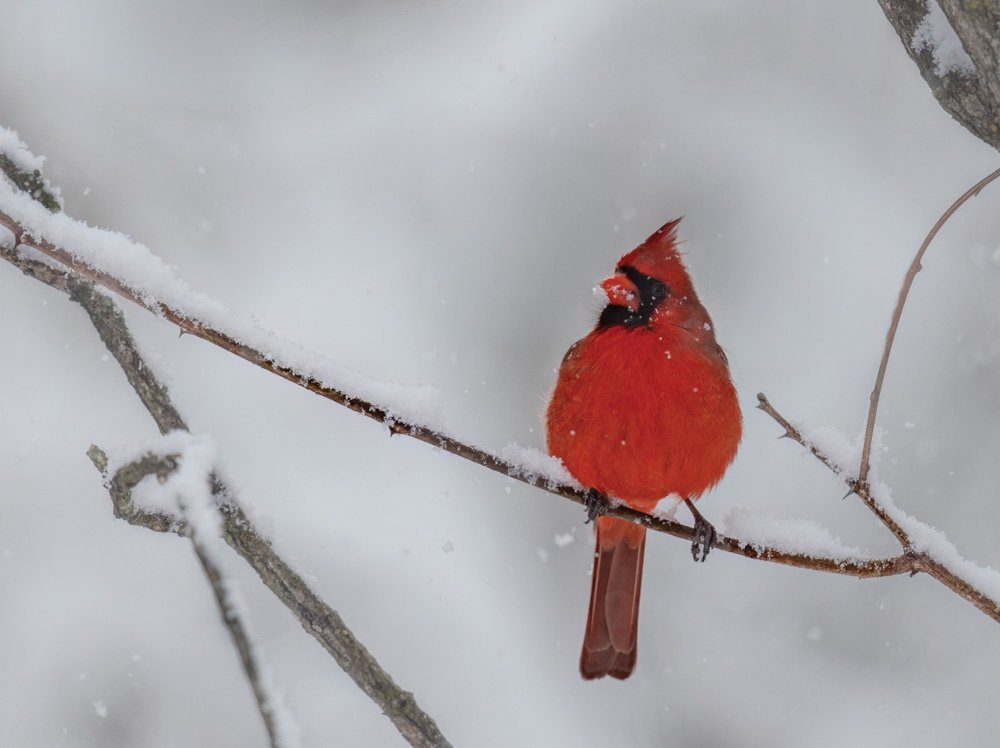
The bright red coloration of male cardinals is a stunning sight to see in the monotone days of winter. Photo by Kim Ayers
During the day, birds are constantly searching for food. “I remember reading once that when it’s super cold, chickadees are within hours of starvation all the time,” Rota says. But finding food isn’t easy when there’s heavy snowfall and less abundant seeds and fruits. During the winter, chickadees, kinglets, woodpeckers, and nuthatches form multi-species foraging flocks, where they travel through the forest in search of insect pupae, larvae, seeds, and other treats.
Black-capped chickadees have some particularly impressive adaptations for finding food during the dark days of winter. In the fall, they cache food in thousands of locations. As winter approaches, the hippocampus region of their brain, which is involved in learning and memory, grows by 30 percent. This expanded brain region is essential for remembering where they buried all their treasure. When food is more abundant in the spring, their hippocampus shrinks back down again.
Along with bigger brains, chickadees grow a thousand extra feathers before winter to beef up their insulation. During cold nights, they can go into regulated hypothermia where they drop their body temperature. “They emerge from it during the daytime, but it allows them to save quite a bit of energy,” says Rota. In the Eastern United States, chickadees can survive down to -40 degrees F. Their cousin, the boreal chickadee in Alaska, can survive temperatures down to -76 degrees F. “They can tolerate almost anything that West Virginia can throw at them,” Rota adds.
Heating up
Despite the harsh conditions, winter is a wonderful time to be a plant. When deciduous trees drop their leaves, the canopy opens up, letting sunlight reach the forest floor. There also tends to be ample moisture. “Our mosses and bryophytes are doing great right now,” says John Burkhart, a botanist with the West Virginia Division of Natural Resources and the West Virginia Natural Heritage Program. “This is their time of the year because they’re less prone to desiccating and the trees aren’t sucking up all the moisture.”
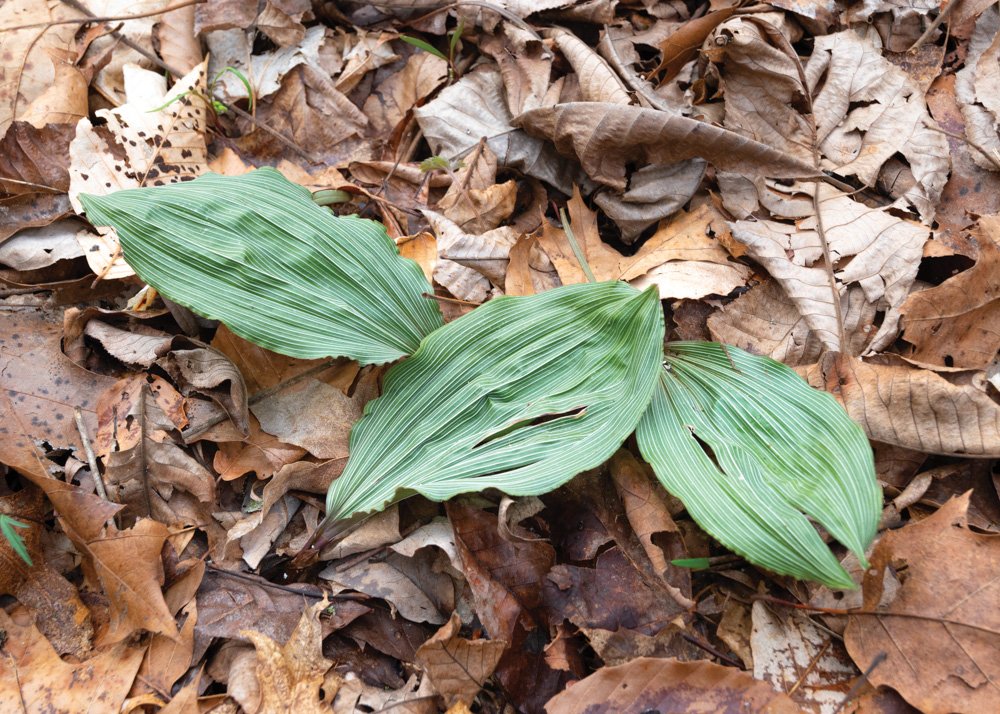
Puttyroot orchids are winter ephemerals that each produce a single leaf in November for photosynthesis. Photo by Kyle Brooks
Along with mosses and bryophytes, other plant species take advantage of the winter weather. Puttyroot orchids and crane fly orchids are winter ephemerals that, just like spring ephemerals, only grow for brief periods of time. In November, puttyroot orchids send up a single leaf that persists until March. “They’re actively photosynthesizing right now, because there’s less competition for light from trees,” Burkhart says.
Other species flower and fruit during the winter. In late autumn, witch-hazel produces squiggly, electric yellow flowers. Sumac and winterberry holly make stunning, bright red flowers and fruits. Cedar trees are coated in juniper berries and Joe Pye weed is ripe with seeds. Finches, chickadees, and migratory birds eat these fruits and seeds throughout the winter, making it an important time of year for plant dispersal.
One of West Virginia’s rarest winter plants is the snow trillium. This trillium species has white flowers that emerge in late winter and early spring, often while snow is still on the ground. It’s quite small, rarely reaching more than four inches tall. “A couple years ago, we had a really weak winter and I found it blooming on February 20,” says Burkhart. “It’s a fun game to try to find it with snow.”
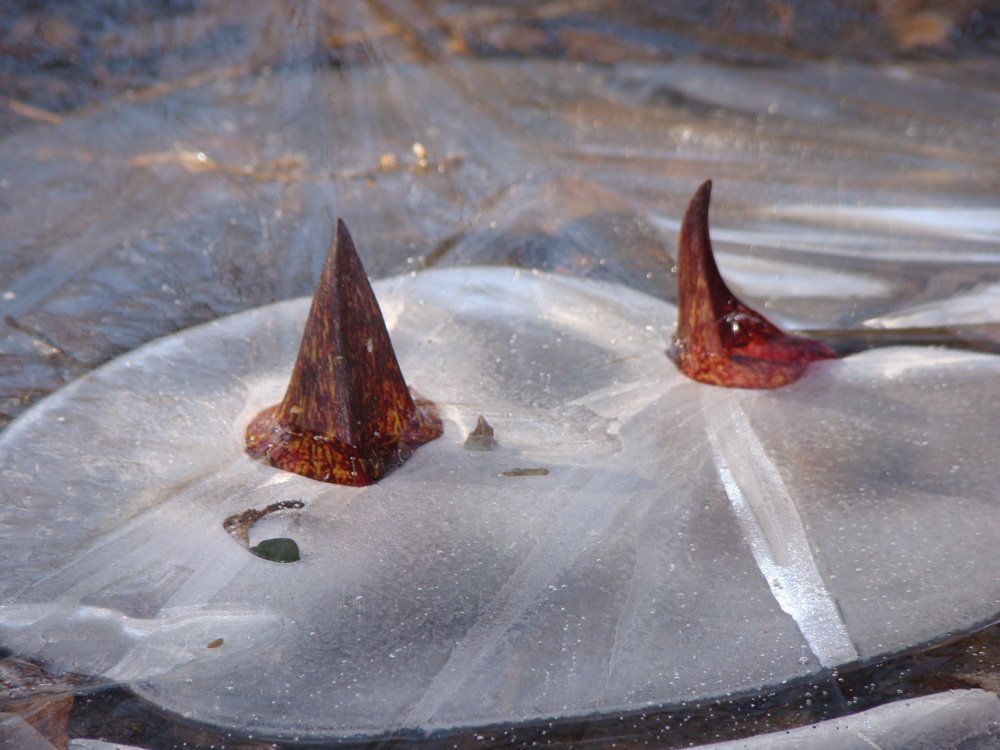
Skunk cabbages generate their own heat, causing their flowers to burst through ice and melt snow in the late winter and early spring. Photo by Vasenka Photography
Skunk cabbage, a wetland plant that produces a pungent odor, also flowers in late winter. As a thermogenic plant, it produces heat and melts the ice and snow around it. The flowering stalk of skunk cabbage, called the spadix, maintains toasty temperatures up to 70 degrees F, which are often 27 to 63 degrees warmer than the ambient air temperature. Researchers think skunk cabbage’s ability to self-heat helps it thrive in cold environments and disperse its pungent odors to attract pollinating insects. “Beetles go into skunk cabbage blossoms and are like, ‘Ooh it’s nice and cozy,’” Burkhart says.
Winters in West Virginia are harsh, fickle, and never predictable. There are bouts of extreme cold, punctuated by odd 70-degree days. Sometimes it doesn’t snow a single inch in March, but it snows two feet in May. While these variable conditions can present some unexpected twists and turns for the Mountain State’s plants and animals, they are extremely well adapted to handle whatever conditions they encounter. Whether they warm themselves up, hide underground, produce anti-freeze compounds in their blood, or put on dense layers of fur, these clever creatures have a wide array of tactics to tackle it all.