by Dylan Jones | May 15, 2026 | People, Spring 2026
Photographs Courtesy of Andrew Leich

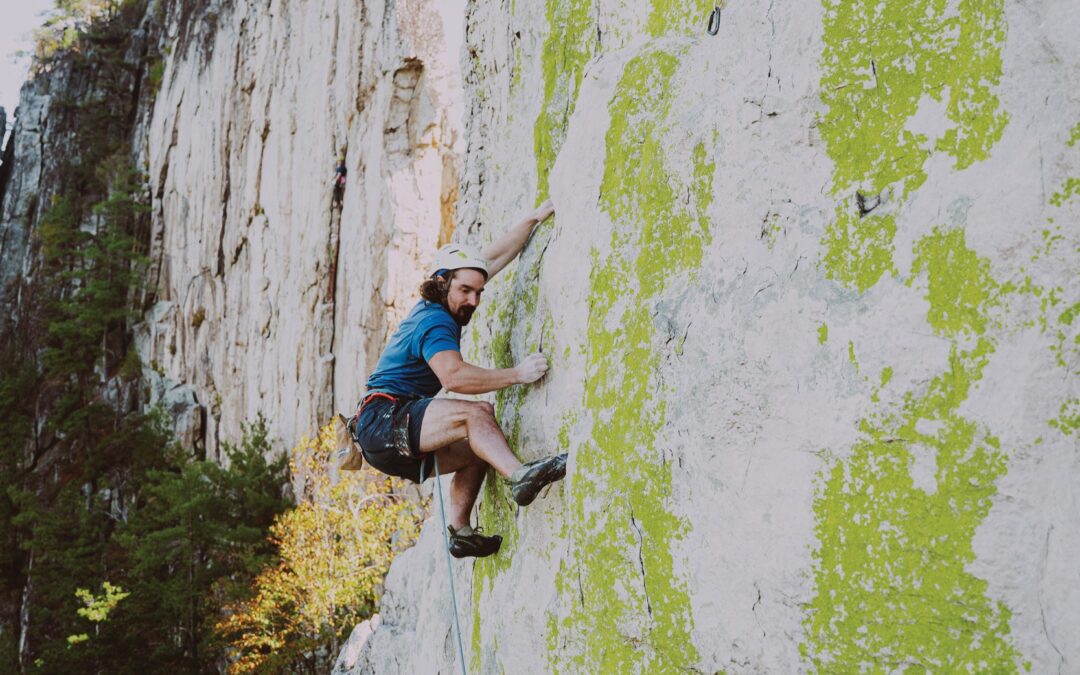
Andrew Leich was an avid rock climber who established a difficult climbing route on Seneca Rocks, and then his encounter there with a timber rattlesnake changed his life. Leich faced a long road to recovery after the bite and spent two years finding his way back to climbing again.
In July 2023, Andrew Leich, of Morgantown, was hiking in the Snake Hill Wildlife Management Area. As the avid rock climber and guidebook author was picking blueberries, he felt a sharp prick on his ankle and heard a rattle. A timber rattlesnake—one of two venomous snakes in the Mountain State—lay quietly curled in the brush. “There was absolutely no way anyone could have seen it,” he says.
Leich had written his college thesis on timber rattlesnakes and knew most bites don’t inject venom, so he remained calm. But when his lips and tongue started to tingle, he knew something was wrong. In just six-tenths of a mile, he was dragging his numb leg as he slowly hobbled uphill. “I was trying to keep my heart rate down to prevent the venom from spreading faster,” he says. “I thought I was going to get the antivenom shot and be just fine.”
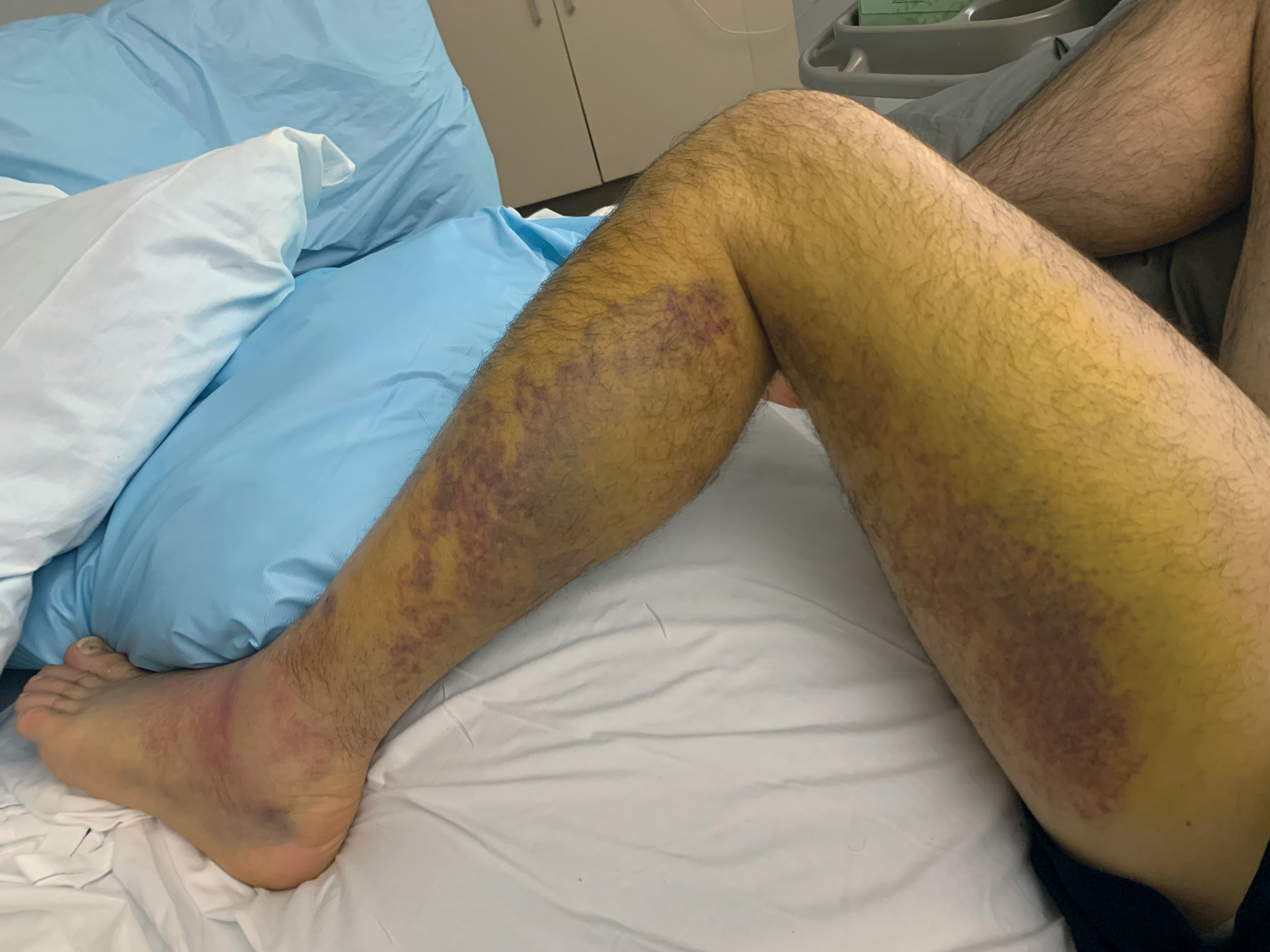
By the time the ambulance arrived, the neurotoxins had triggered full-body paralysis, and Leich had to be carried to the ambulance. “The most alarming moment was when the EMTs smacked me in the face really hard,” he says. “I had closed my eyes, and they said I had to stay with them. I thought, ‘They think I’m going to die!’ ”
A few hours later, Leich lay completely paralyzed in the ICU, waiting for the antivenom to start working. He remained conscious but unable to communicate due to facial paralysis. “I was trapped in my body,” he says. “Nothing worked.” He received two vials of antivenom every six hours over a 36-hour period and knew he was going to be OK when he was able to wiggle his fingers again.
After three days in the ICU, he was discharged, but his journey was just beginning. Initially, Leich wasn’t able to move without a walker, and going from his bedroom to the kitchen exhausted him. “I would need to rest for a full day—I was wiped from hobbling around the house.”
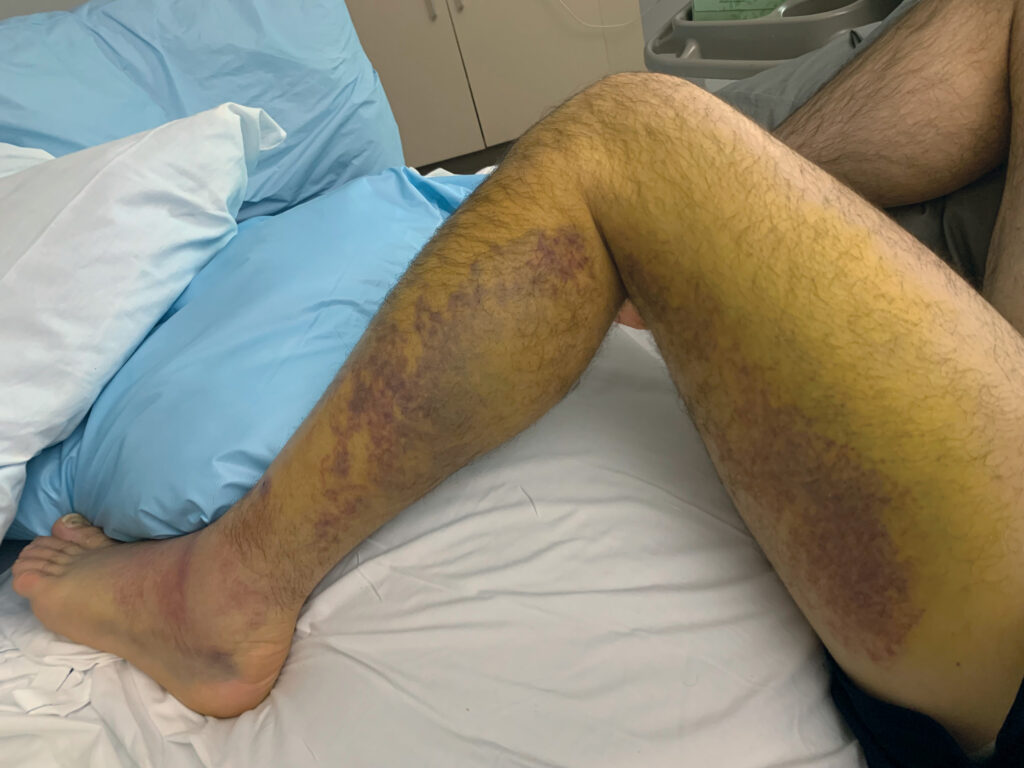
The venom damaged nerve endings and dissolved muscle mass throughout his body. Leich—a climber who once trained steadily and climbed extreme routes—was now unable to walk more than a few hundred feet without complete exhaustion.
But his walks to the kitchen slowly became walks to the mailbox. He graduated to a cane as he added weight to his damaged leg. In a few months, he was walking on wooded trails to the boulders he used to effortlessly climb, but simply grabbing on to a handhold without even leaving the ground would tire him for hours.
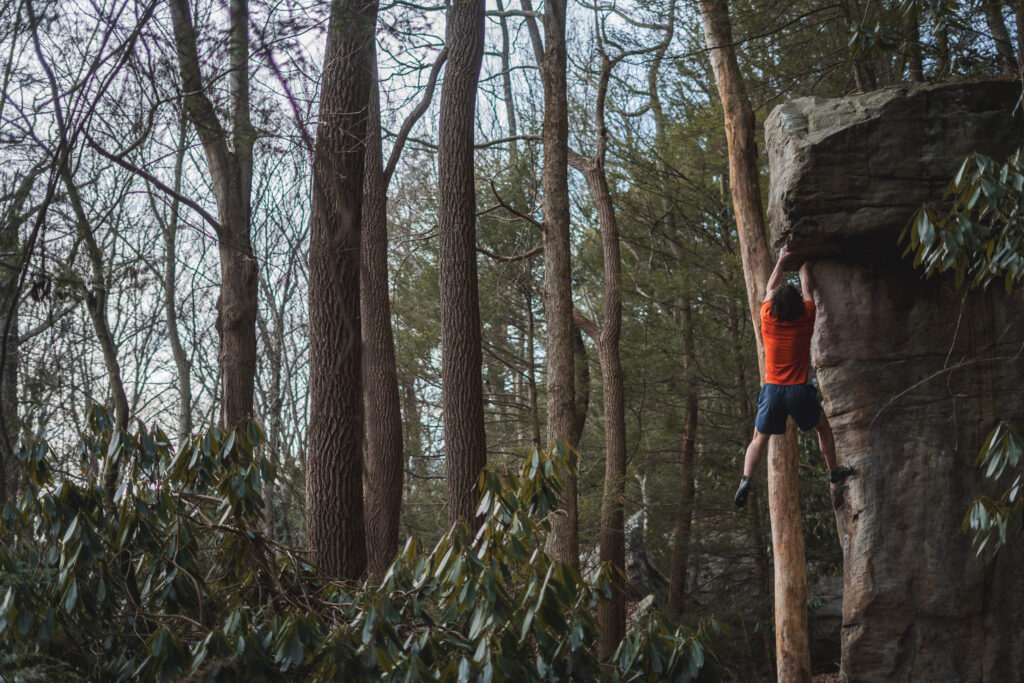
Nevertheless, Leich was grateful for every step.
“I was just happy to breathe,” he says.
Almost a year after the bite, Leich made it to Coopers Rock State Forest and needed all his strength to climb a beginner boulder route. Two years after nearly dying, he found himself at the base of Green Magic in the Hills, an extremely difficult climbing route that he and a fellow climber established in 2022 at Seneca Rocks. On his fourth attempt of the day, he completed his mission of free-climbing the route—an unfinished goal he’d been attempting since before the snakebite.
Despite his life-changing trial by venom, Leich still admires rattlesnakes as he did while studying them in college, and he encourages people to let them be if spotted in the wild. “Rattlesnake bites are extremely rare,” Leich says. “Statistically, you have a greater chance of being struck by lightning.”
Other perspectives, however, have changed.
“A lot of stuff doesn’t matter as much,” he says. “It’s a lot harder for me to get upset about certain things now. When I was in the ambulance, I wasn’t thinking about the routes I had climbed or the places I had been—I was thinking about the people I love and want to spend more time with.”

by Pam Kasey | May 15, 2026 | Conservation, Forest, Spring 2026
When the B&O Railroad crossed the Appalachian Mountains in Maryland and West Virginia in the mid-1800s, it opened the breezy, beautiful highlands to vacationing Easterners. Brookside Resort in Aurora, West Virginia, not far from the B&O station at Oakland, Maryland, was one of their summer retreats.
The railroad made other things possible, too—like clear-cut timbering. Brookside had a big, peaceful stand of hemlock where guests hiked and rode horseback. When the rich started driving cars in the 1910s and resort attendance dropped off, longtime resort caretaker Branson Haas bought Brookside Woods to keep it intact. And 20 years later, he sold it to the state of West Virginia on the condition that it never be cut—to protect it from the “galdarned timberman,” as one chronicler documented.
Today, it’s the 133-acre Cathedral State Park: the state’s largest stand of old-growth forest, with trees 350 and even 400 years old. Its 3 miles of hiking trails wind among 100-foot giants, and a riot of ferns, mosses, and wildflowers thrives in their shade, 170 plant species in all. Haas died in 1955. But he gave all who came after the chance to experience this one spot on the planet in a relatively undisturbed state. In 1966, it was designated a National Natural Landmark, a rare example of pre-colonial mixed eastern hemlock–hardwood forest.
People who lived through that age of clear-cutting saw a singular, fast-moving threat to wild places, and a rare few had the foresight and the means to draw hard boundaries against it. Today, the threats are slow and diffuse: creeping development, mainly. But happily for all of us, the impulse to preserve lives on. Some of the most distinctive and restorative places we can visit were set aside for us by forward-thinking landowners.
Yankauer Nature Preserve
When Dr. Alfred Yankauer served as an adviser at the World Health Organization in Washington, D.C., in the early 1960s, he and his wife, Marian, bought a 104-acre getaway on a high bluff overlooking the Potomac River in Berkeley County, West Virginia.

The mile-long Kingfisher Loop trail in the Yankauer Nature Preserve is known for abundant wildflowers, excellent birding, and stunning views of the Potomac River.
Courtesy of West Virginia Land Trust
The land once grazed cattle but, by the 1960s, it was reverting to nature. The Yankauers camped there as often as they could, and it became a real refuge for them. So when they moved to Boston in 1966, they donated it to The Nature Conservancy (TNC) to preserve it in its natural state.

Preserves like the ones managed by the Potomac Valley Audubon Society are increasingly important as development diminishes safe refuge for migrating species like the monarch butterfly.
Courtesy of West Virginia Land Trust
TNC is a giant conservation organization today, protecting more than 125 million acres on six continents. But in the 1960s, it was just getting started. It protected its first 60 acres, at the Mianus River Gorge in New York, in 1954, and only hired its first full-time president in 1965. The Yankauer donation was an early one.
The property wasn’t fully open to the public until the Potomac Valley Audubon Society (PVAS) agreed in the mid-1980s to co-manage it. It’s matured since the Yankauers camped there. “The Yankauer Nature Preserve has been allowed to regenerate,” says PVAS Executive Director Kristin Alexander. “So what was a cedar grove, those are getting older, and it’s now an interesting mix of older cedar forest and oak–hickory forest, with gigantic sycamores along the river.” There are a couple miles of hiking trails, with more than 100 bird species and almost 200 species of flora. “We do wildflower walks—they’re spectacular there in mid-April.”
PVAS has since taken on other properties in West Virginia’s Eastern Panhandle. In 2006, the organization became co-manager of the ridgetop Eidolon Nature Preserve, donated to TNC by longtime owner Marguerite Zapoleon. In 2011, Stauffer and Elinor Miller donated their wetland directly to PVAS. Stauffer’s Marsh, once filled in as farmland, was placed under a conservation easement in the 1990s—that’s a legal agreement that permanently limits the uses of the land—and restored by the U.S. Department of Agriculture.
And in 2016, Linda Case and her arts and sustainability nonprofit CraftWorks donated 13 acres to PVAS. That became the nucleus, through Case’s ongoing generosity, of what is now 74 acres. In an area that’s under intense development pressure, it’s all soon to be protected under conservation easement by the West Virginia Land Trust—more on the WVLT below.
A couple miles of trails there pass through a variety of habitats. “Cool Spring Preserve is everything from a pollinator meadow to big oak trees to an old orchard,” Alexander says. There’s also Cool Spring Marsh, the only example in West Virginia of rare Shenandoah Wet Prairie. And in the former CraftWorks studio, PVAS operates the Case Nature Center, which hosts guided walks, natural history workshops with animal ambassadors, and summer camps.
Thanks to Case, the Millers, Zapoleon, and the Yankauers, PVAS now manages nearly 600 acres of distinctive protected lands for public enjoyment. Alexander mentions a young summer camper who later became a camp counselor, then camp director, and he’s now a geology major in college—just one of many such stories. “The generosity of these landowners has allowed thousands of summer campers, school children, families, and just community members every year to learn about and appreciate the natural world and hopefully gain some sense of the value of preserving green spaces.”
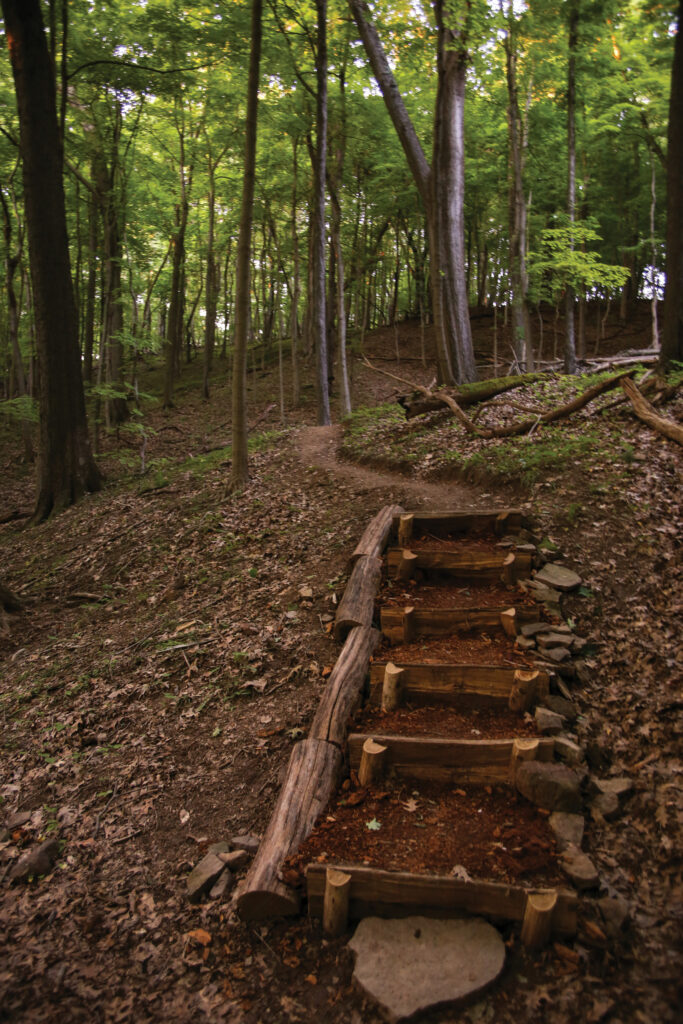
The high canopy and clear understory of Elizabeth‘s Woods at the West Virginia Land Trust‘s Toms Run Preserve has the serene, sacred feel that is distinctive to old-growth forests. Volunteers have created trails and trail structures at Toms Run that are in harmony with the surroundings.
Courtesy of Forks of Coal Foundation
Elizabeth’s Woods / Toms Run Preserve
In the mid-1990s, Elizabeth Zimmermann donated 84 wooded acres just south of Morgantown, West Virginia, to the West Virginia Land Trust. The WVLT is known today for its hand in conserving more than 60,000 acres of extraordinary properties in every part of the Mountain State. But in 1994, there was no WVLT. Zimmermann’s bequest was the founding property—the catalyst for the organization’s formation.
Zimmermann’s vision was for her mature woods to serve as a nature preserve and a place for recreation and education. The WVLT held Elizabeth’s Woods passively until about a decade ago. Two adjacent tracts came available, and the organization enlarged its holdings and created public access.
The WVLT calls its now-320-acre oasis beside the Monongahela River Toms Run Preserve. It’s mostly mature forest on gentle slopes, with sharper drop-offs closer to the river. In one steep and bouldery reach, Toms Run cascades as Little Falls. Rhododendrons grow tall there, alongside beech trees and maples. On the ridges, oaks and hickories dominate.
Migratory birds in great numbers stop at the preserve in spring and fall. The forest is part of the national Old Growth Forest Network, highlighting its impressive closed-canopy stands. Its slopes filter rainwater that flows into Toms Run, a tributary of the Mon River, sending cleaner water to Morgantown’s drinking water intake.
Toms Run Preserve is big enough that shy creatures feel at home. Black bears raid neighbors’ bird feeders from there. Fishers, a weasel relative the size of a house cat, live there, too. The preserve is also big enough that its 2-plus miles of trails feel far from the sights and sounds of civilization.
Not all land trusts develop public access—their core function is often to hold development rights to preserve properties in a natural or undeveloped state in perpetuity. But the WVLT goes beyond that. “When people talk about moving to Morgantown, they want to know, ‘What can you do there?’” says Executive Director Brent Bailey. “We play a really important role here, as in other communities around West Virginia, in preserving places that protect the outdoors and give people recreational opportunities.”
Forks of Coal State Natural Area
It’s still possible to go the Branson Haas route and work directly with a state agency. Jack Workman did it a decade ago, and we have the Forks of Coal State Natural Area to show for it.

he Forks of Coal State Natural Area preserves a large swath of wilderness at the place where the Little Coal and Big Coal rivers meet to form the Coal River. Courtesy of Forks of Coal Foundation
Jack and Claudia Workman were chemical engineers. The success of plastics they engineered for the mining industry allowed them to buy a large tract in Boone County, West Virginia, between the Little Coal and Big Coal rivers: the Forks of Coal.
“Jack and Claudia never had children, but they loved children and wanted them to learn about nature,” says Forks of Coal Foundation President Kathy Hill, who knew the Workmans. When his wife passed on in 2014, Jack Workman negotiated an agreement with the West Virginia Division of Natural Resources: About 100 acres of their land would be transferred to the WVDNR to become the Forks of Coal State Natural Area. And on it, the agency would create the Claudia L. Workman Wildlife Education Center.
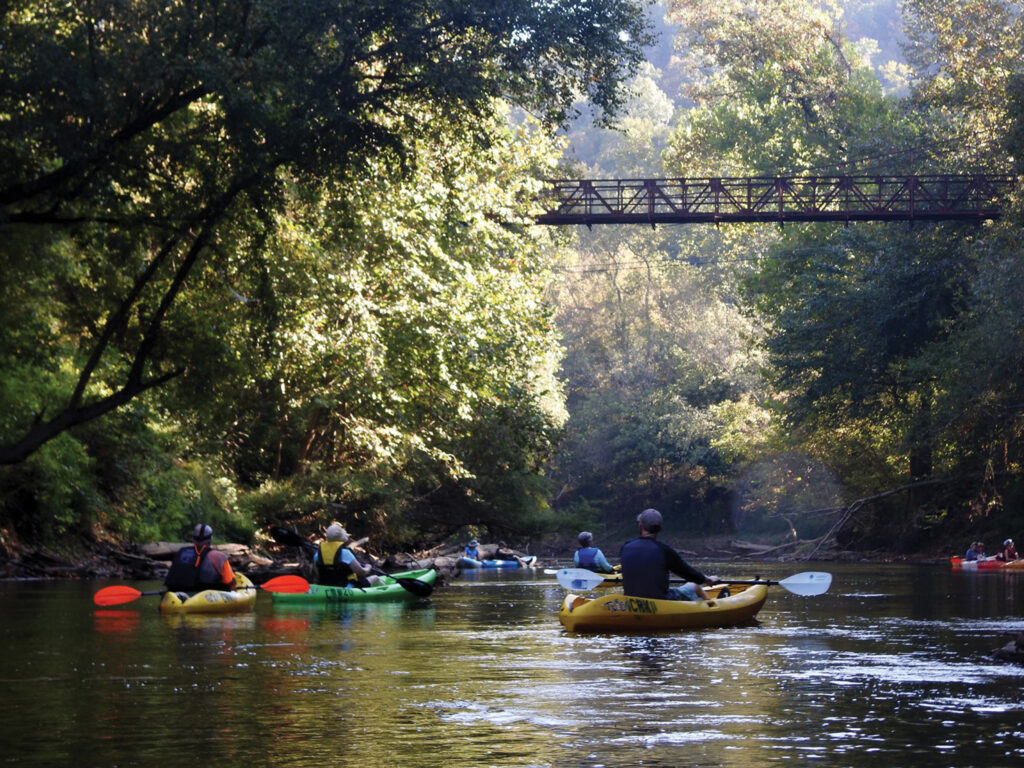
The Coal rivers are popular paddling destinations, and the Forks of Coal Foundation leads an occasional nature tour on the water. Courtesy of Forks of Coal Foundation
Opened in 2022, the education center holds engaging displays about local wildlife. There’s a 1,500-gallon freshwater aquarium, an indoor beehive with a pipe to the outdoors, and pull-out drawers where kids can touch animal furs. Center staff offer nature workshops year ’round.
And surrounding the center is 100 acres right at the confluence of the rivers, with 6 miles of hiking trails through forest and meadow. It’s full of wildlife—owls and eagles, fish and beavers, snakes and the occasional bear. Interpretive signs highlight features like old punch coal mines and a cliff formation known as Roof Rock.
About 3,000 people visit Forks of Coal State Natural Area each year. Following a provision in Workman’s will, once the education center became operational, an additional tract of about 200 acres transferred to the WVDNR. “Jack was a very smart businessman,” Hill laughs. She expects trails in the new section to open in 2027.
“The Workmans could have sold this property and made some big housing development, but they didn’t,” she says. “They really wanted it to be used in the best way it could be used, in their minds: to conserve nature and for education. I personally have a very strong commitment to seeing it done the way they wanted it.”
by Nikki Forrester | May 15, 2026 | Conservation, Spring 2026, Wildlife
Photographed by Judy Dourson
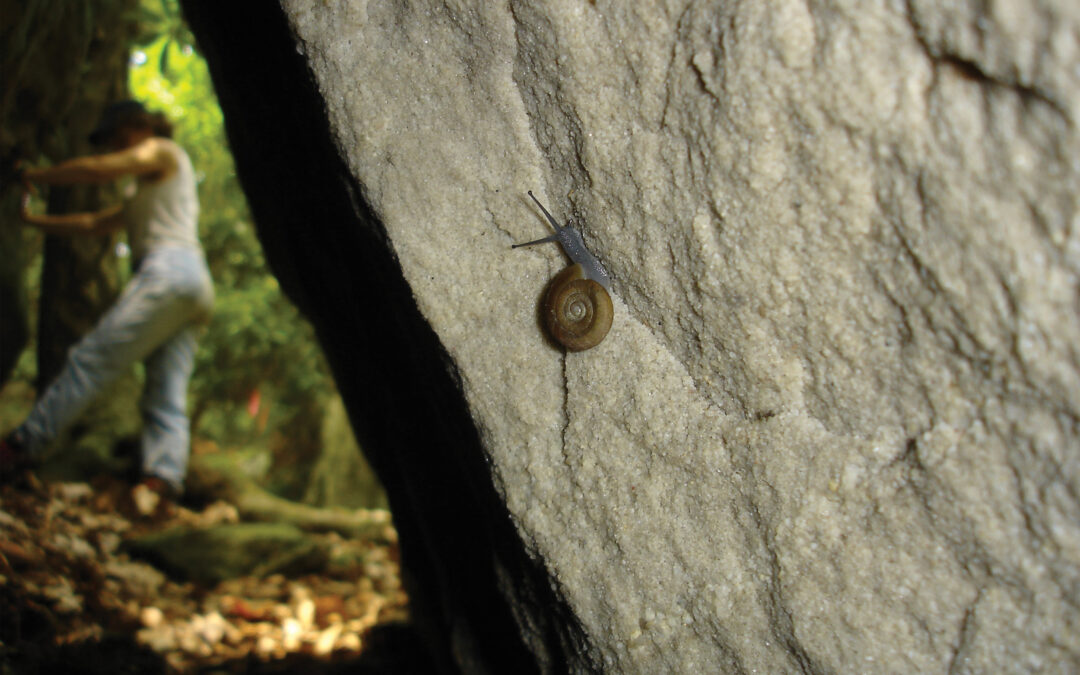
Nestled within small rock crevices in the Cheat River Canyon lives a snail that occurs nowhere else in the world. The flat-spired three-toothed snail, also referred to as the Cheat threetooth (Triodopsis platysayoides), is the size of a quarter. It has a flat, brown shell and a pearly gray body, and unlike many other West Virginia land snails, it only occurs on boulders in Preston and Monongalia counties. In 1978, the Cheat threetooth was listed as federally threatened—but this little snail has drawn admiration and curiosity from researchers and snail enthusiasts since at least the 1940s.
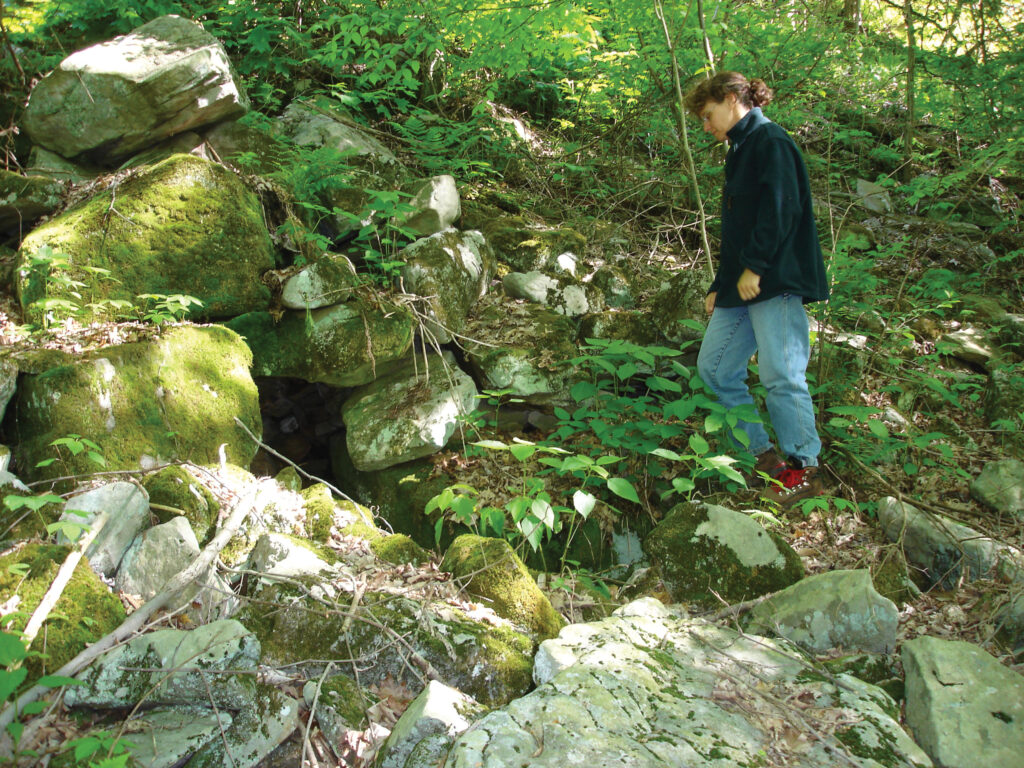
“This is probably one of the most studied snails in North America, maybe anywhere,” says Daniel Dourson, a retired endangered species biologist who’s authored eight books on land snails. Dourson and his wife, Judy, spent two summers venturing out on warm, rainy nights to learn about the Cheat threetooth’s habitat and diet. They discovered that this snail eats at least 27 different items, from rotting rhododendron flowers to dead cave crickets to a specific fungus that grows on woodrat scat and looks like cotton candy.
Since then, the Doursons have dedicated decades to learning about the land snails of West Virginia, the broader Appalachian region, and Central America. “It just felt like a natural fit for me to work on the underdogs of the world,” says Dourson, who has a soft spot for creatures he calls “the lesser majority.” Bats, salamanders, freshwater mussels, land snails, and many other taxa may be smaller-statured and less charismatic than birds of prey and large mammals, but they comprise the vast majority of Earth’s biodiversity and play critical roles in shaping ecosystems.
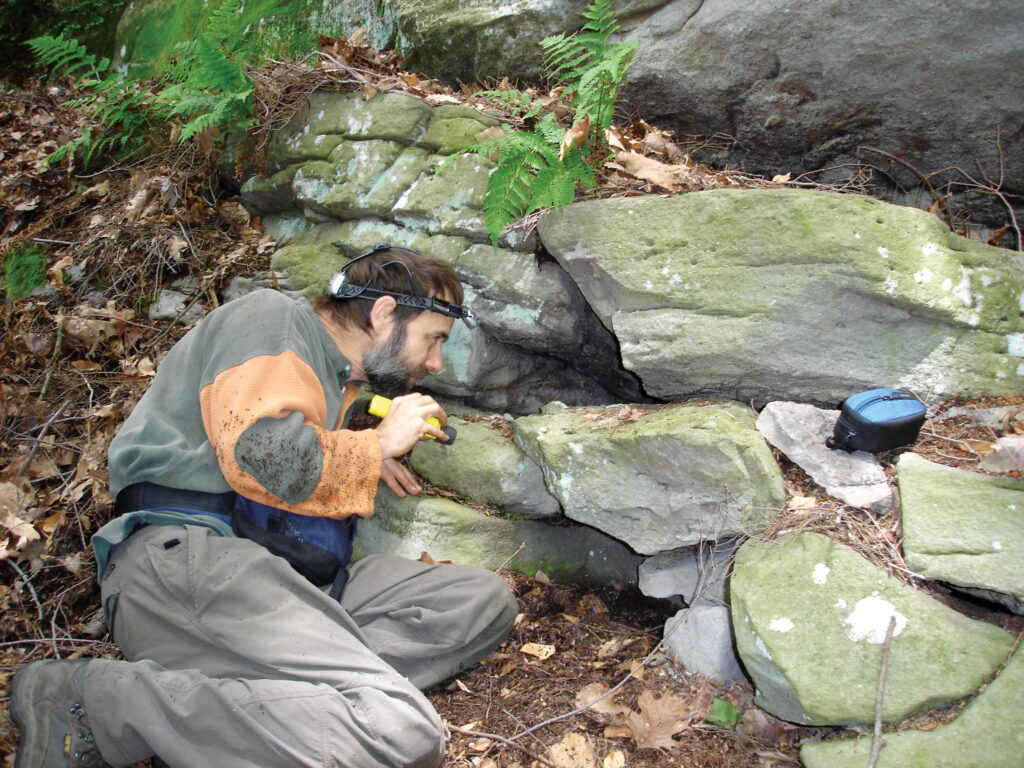
Daniel and Judy Dourson have dedicated their time to studying West Virginian and Appalachian land snails, including the federally threatened Cheat threetooth, which lives only in the Cheat River Canyon.
“It’s kind of like the game Jenga,” he says, likening the top blocks to larger animals and the bottom blocks to smaller ones. “You can take blocks off the top, and it doesn’t collapse, but if you start to pull blocks from the bottom, it falls quickly.”
As detritivores, land snails break down nutrients in decaying matter and return them to the soil. They also disperse seeds and fungal spores. Land snails and their empty shells are critical sources of food and calcium for a wide variety of animals, including firefly larvae, salamanders, snakes, birds, and small mammals. Their discarded shells also serve as refuges for ants, millipedes, and tardigrades.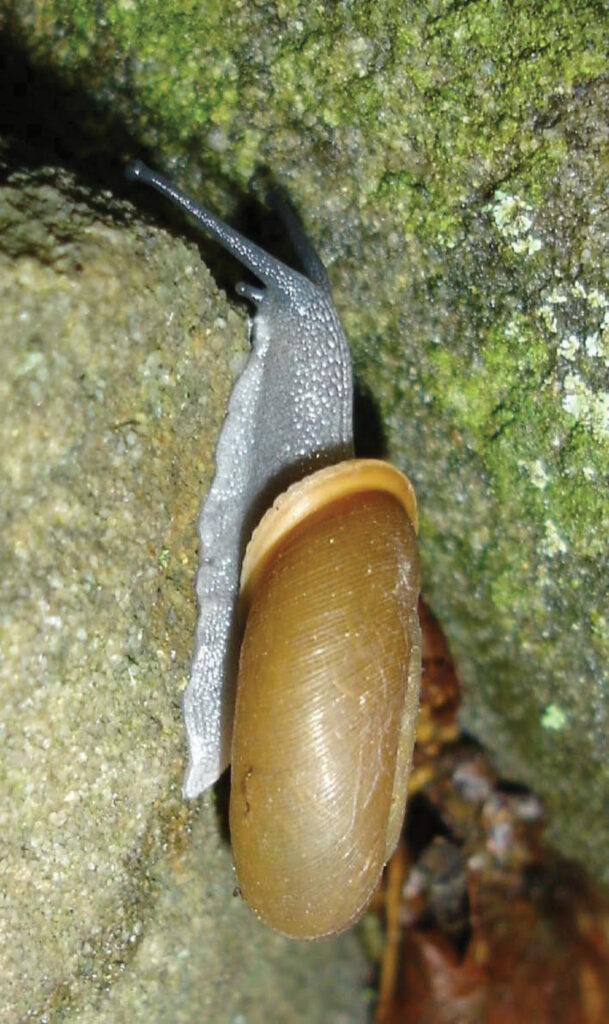
Land snails’ ubiquity makes them accessible to amateur observers, too. “When I think about ecology on the whole, that trifecta of structural complexity, diversity, and resiliency—that’s something Appalachia has in spades, and it’s highlighted by our weirdo land snail friends,” says Kyle Rooke, a fungi enthusiast based in Tucker County, who became interested in land snails a few years ago.
West Virginia hosts an immense diversity of land snails. The Mountain State is home to 186 native species, including 11 endemic species. Land snails generally live in forests, rocky outcrops, and calcium-rich environments, although some live in caves. A few species, like the Cheat threetooth, have highly specific habitat requirements. Most of the snails in West Virginia live for three to four years and consume mushrooms, detritus, wood, bark, and green vegetation.
Because they’re quite small—some tinier than a grain of salt—and live in decaying matter below the soil, land snails are particularly easy to overlook. If you were to go out and collect all the snails you can see with the naked eye, you’d likely miss out on 40% to 50% of the snail fauna in West Virginia, Dourson says. “It’s this amazing world under our feet.”
Instead of overlooking these small creatures, the Doursons collect samples of leaf litter and detritus and sift through it in search of tiny creatures. They’ll often find pseudoscorpions, millipedes, and ants, all of which can spend their entire lives within the discarded shell of a snail. Along with soil samples, they identify snail shells that they and other scientists collect in the wild. “You’re not damaging the live population,” says Judy Dourson. “And because there are some snails that are very specific to certain habitats, we feel like they could be used as an inexpensive way to determine the health of a forest, just like mussels can indicate water quality.”
From 2006 to 2015, the Doursons worked with colleagues from the West Virginia Division of Natural Resources (WVDNR) to compile information for the book Land Snails of West Virginia. During that time, they identified 17,130 collected snail specimens based on their shell size and shape. Some shells are conical, while others are flat, round, or domed. Shells can also have teeth, hairs, or distinct fringes. “Some of the small ones have the most interesting microsculptures of any animal on the planet,” says Dourson.
Along with confirming the total number of native land snail species in West Virginia, the Doursons discovered seven species that were new to science. One of these was the Greenbrier tigersnail (Anguispira stihleri), which is endemic to the Greenbrier River watershed. Its flat, white shell has five to six tight whorls that are boldly banded with rust-orange stripes. Craig Stihler, who worked for the WVDNR, actually found a specimen of it in 1993. For 21 years, he kept a gorgeous tiger-striped shell on his desk, but he had no idea what species it was until the Doursons found the snail in the wild and realized it was new to science. They decided to name the snail after Stihler, in part because he’d played a critical role in supporting their snail surveying project. “The reason we know so much about snails in West Virginia stems from the enthusiasm of one person,” Judy Dourson says.
While the survey provides a solid foundation for which land snails occur in West Virginia, there’s still an immense amount to learn about their biology and ecology. “We’ve got a whole world in front of us. It just takes getting off the phone a little bit and crawling on your hands and knees and staring at strange life forms,” says Rooke. “I think anyone can be the most knowledgeable person in their backyard.”

by Laura Jackson | May 15, 2026 | Mountain Communities, Spring 2026, West Virginia
Richwood, West Virginia, is no secret—it’s simply a journey to get there. The trip to Nicholas County is worth it, though, because you’ll find good eats, classy drinks, and a walkable atmosphere. Don’t let its size fool you. This is one cool little town.
Richwood’s vibrancy has ebbed and flowed, but as new and fresh businesses open their doors, people are making it a home—choosing the beauty of nature, the affordability of the area, and the strength of community. Consider Rosewood Coffee and Florist, brewing locally roasted beans, blending smoothies, and offering baked goods. Owners Christy Lackey Rose and Jeromy Rose also create beautiful flower arrangements and sell gifts, art, and antiques.

Photographed by Michelle Rose Studio
Oddfellers’ Fine Foods, owned by Eric Sebert, is a self-described “small and scrappy restaurant.” The fare—which runs the gamut from chicken pad thai and crab cakes to fresh pasta, breakfast bowls, and flat iron steak—is the best surprise. Nearby Bloomfield Richwood Art Gallery might easily be in Tribeca—a hip, artsy area of New York City—but its Main Street location brings a modern flair to Nicholas County. Owner Cecil Ybanez established the gallery in 2021 to highlight contemporary Appalachian art. New shows open every seven weeks.
Get out there
Richwood sits on the edge of the Cranberry Wilderness, a nearly 58,000-acre section of the Monongahela National Forest. This rugged area is popular with backpackers, but day hikers and road trippers will enjoy a boardwalk through Cranberry Glades Botanical Area, a unique boreal bog ecosystem in Pocahontas County.
Fishermen have miles of streams to wade. The forks of the beautiful Cherry River come together in town, while the nearby Cranberry and Williams rivers are known as two of the finest trout streams in the state—gear up for rainbow, golden, brown, and brook trout as well as bass. Flatwater fishermen can head up to Summit Lake with a kayak or rowboat.
If you’d rather pedal than paddle, the Mon forest is criss-crossed by an array of mountain biking trails for all skill levels. And the Monongahela Outdoor Volunteers are a great resource for bikers looking for trails near Richwood.
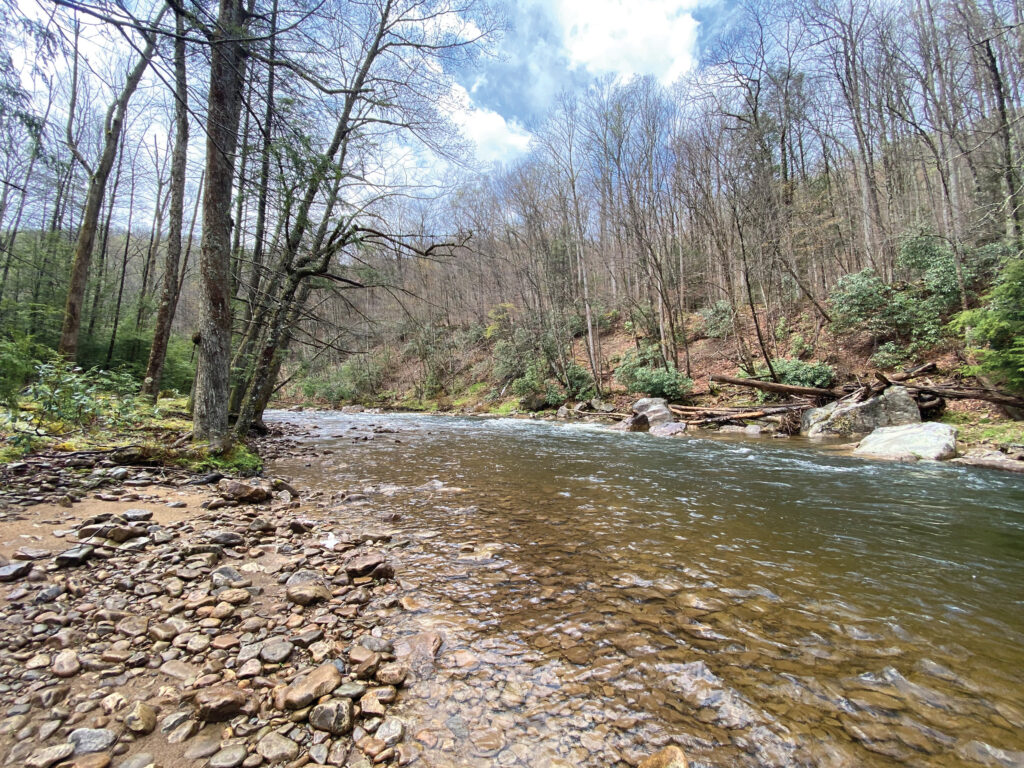
Richwood offers access to some of the finest trout streams in West Virginia, including the Cranberry River and the Williams River. Fishermen will find rainbow, golden, brown, and brook trout. Photographed by Nikki Bowman Mills
Rich with tradition
Richwood celebrates The Feast of the Ramson annually. The “grandaddy of ramp feeds” honors and serves this green allium—a wild leek that’s

Photographed by Carla Witt Ford
become a delicacy. Ramps are known and respected for their pungency. While eating them raw earns bragging rights—and the “winner” a solo table—the ramp’s intensity melts into richness when cooked, often in bacon grease with beans and fried potatoes.
Jim Comstock, beloved newspaperman and founder of The West Virginia Hillbilly, a satirical celebration of Appalachian culture and history, declared the ramp “an onion that hasn’t been civilized or had the fear of the Lord driven into it.” Comstock once received a tongue-lashing from the postmaster general when he mixed ramp juice into the ink for the Richwood News Leader, thereby befouling all the news that was fit to print.
The feast is sacred. Richwood photographer Michelle Rose recalls, “I remember being in grade school, and the older boys were allowed to get out of school, hop in the back of pickup trucks, and head to the woods to dig them for the event.”
Richwood will celebrate the 87th Feast of the Ramson on April 18 at the Richwood Academic Center 10 a.m.–3 p.m. or until the food runs out.
Ramps in trouble
In many states, ramp populations have been decimated by irresponsible and unsustainable foraging. Surveys reveal an alarming decline. Plants can take seven years to reach reproductive maturity, and ramps are protected in many states. In 2021, the National Park Service disallowed ramp harvesting in West Virginia’s New River Gorge National Park and Preserve.
To hunt sustainably, use scissors to cut only one leaf and leave the bulbs and roots. If harvesting bulbs, leave the roots behind. And never take more than 5–10% of a patch. Check regulations and harvest sustainably—or just let ’em grow for future generations!
by Laura Jackson | May 15, 2026 | Spring 2026, Water sports
You can scuba dive in West Virginia! When I got my certification, we went into the mountains of Tucker County, but instead of donning sunblock and bikinis, half a dozen awkward trainees and I fumbled our way into wetsuits, fins, and tanks and slipped beneath the waters of Mount Storm Lake. The goal was to emerge as certified open water divers. And we did.
Why would anyone do such a thing? Why drive inland when you can go somewhere blue and tropical? The answer: West Virginia is a unique place to dive. It’s weird and cool and one-of-a-kind, and you’ll have unforgettable underwater experiences here. And that’s exactly why people love it. So pack your dive booties and consider these two very different Mountain State dive spots.
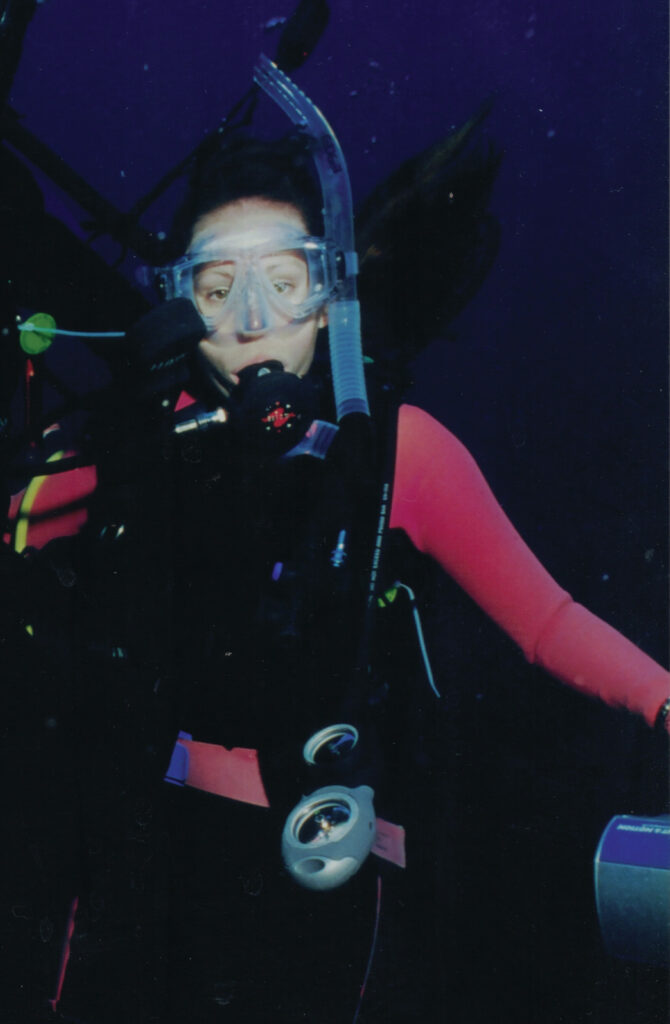
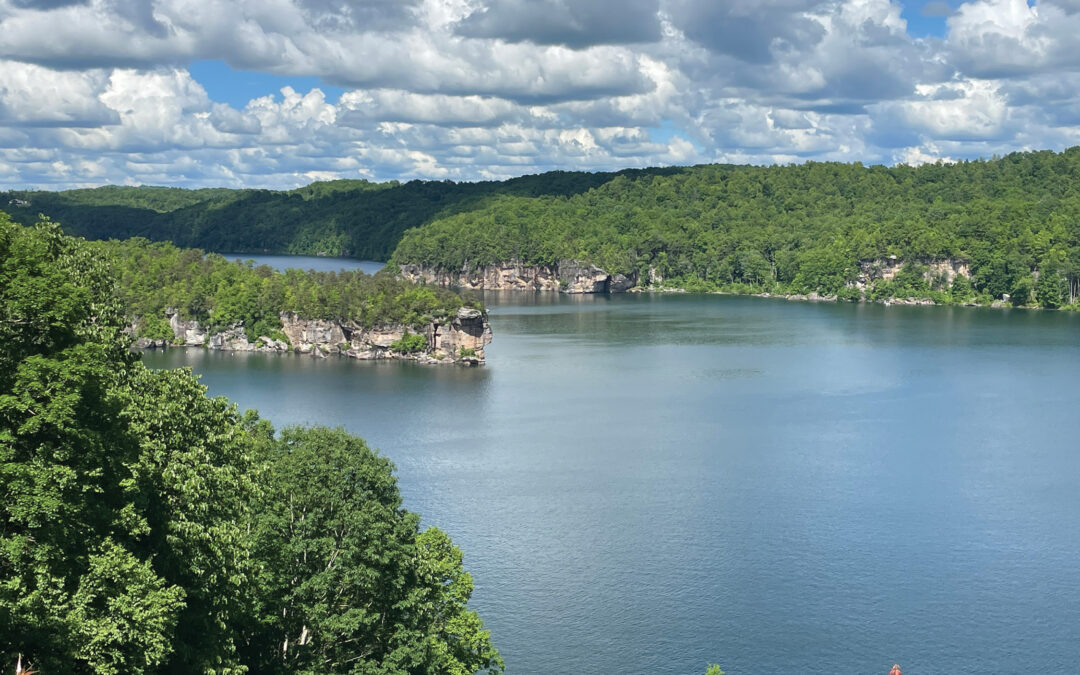
The clarity of Summersville Lake has given it the nickname “Little Bahamas of the East,” as visibility may be 20 to 40 feet.
Managing editor Laura Jackson has never met a shark in West Virginia waters but did share her breakfast sausage with a catfish.
Photographed by Laura Jackson
Off-season adventure
Mount Storm Lake might never win awards for visibility. It will, however, win one for warmth, because this 1,200-acre lake is heated year ’round by the Mount Storm power plant and rarely drops below 60 degrees. You’ll want a wet suit, but expect to be comfortable down there. I got certified in November and was warmer underwater than the people waiting on the shoreline.
Mount Storm is a popular spot with divers of all levels, not just newbies. Dive platforms are set up at various depths for practicing skills. So while the beginners are learning to clear their masks at 30 feet, more experienced divers may be at 90 feet practicing something more technical. Or perhaps they’re simply meeting the wildlife.
The lake is well-stocked with fish, so boat traffic is busy and swimming isn’t allowed. There’s no dive access from shore—only boats. Before your trip, check regulations and talk to your dive shop and instructors about appropriate gear. And if you’re not a newbie, expect to see them down there—and give them an OK sign!
See it all
If off-season diving sounds a bit extreme, I’d recommend heading south to Summersville Lake when the temps climb. It’s one of the clearest lakes this side of the Mississippi, earning it the nickname Little Bahamas of the East. Typical visibility is 20–40 feet but can be more in ideal conditions. And while there are other clear lakes in the east, Summersville temperatures range from 78 to 85 degrees in the summer, so a shorty wetsuit can be enough. I’ve dipped a toe into Florida springs and New England lakes—Summersville feels like bathwater!
This 2,700-acre manmade lake is 327 feet deep. Steep, rocky cliffs sink down 100 feet below the surface. You’ll see overhangs, boulders, rock walls, and swim-throughs. Prepare for encounters with bass, walleye, catfish, and muskie, too.
Visit Sarge’s Dive Shop for general info, air, sales, and rentals. They offer tours, a pet-friendly dinner cruise, and certification classes for many levels of diving. Non-divers can rent snorkel gear, kayaks, and paddleboards.
Okay—it’s true that Summersville isn’t the real Bahamas, but it’s pretty close. And unless you’re into sharks, I think it’s a pretty great way to spend a tank of air.
by Laney Eichelberger | May 15, 2026 | Bird, Spring 2026
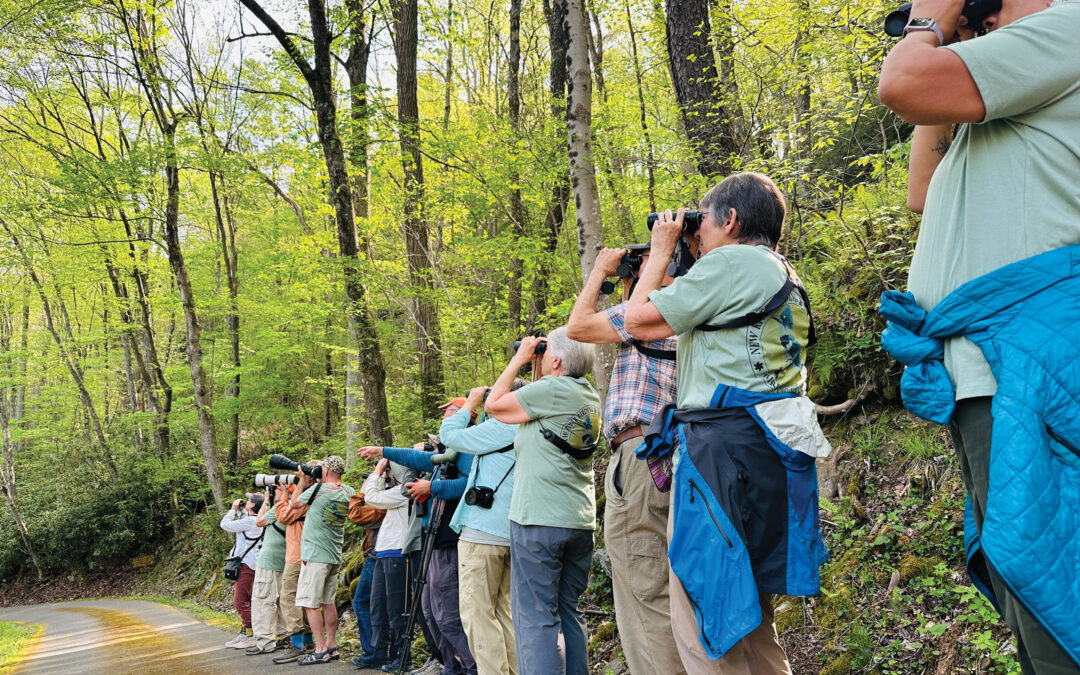
There’s no sweeter sign of approaching spring days than the mourning dove’s melancholic tune or the cheerful twittering of the black-capped chickadee. While every season is a great one for birdwatching, there’s something special about spring. It’s a time of great changes. Hundreds of bird species are making their way north from their winter vacation digs in time with greening grass and budding trees, and Appalachia is a great place to be for this high-flying spectacle—after all, it’s one of the most important migratory flyways on the continent.
Birding can be as easy as cozying up next to a window, or you can fly in formation with the seasoned professionals and gear up with binoculars, a regional guidebook, and identification apps like iNaturalist. Be sure to note these Appalachian birding events worth singing about.
Spring Bird Walks
WVU Core Arboretum, Morgantown, WV
April 14, 21, and 28 and May 5 and 12, 2026
Join Mountaineer Audubon for a series of spring bird walks through the WVU Core Arboretum’s old growth forest. They start bright and early at 7:30 a.m. After all, the early bird gets the worm. Maybe you’ll even spot the arboretum’s resident barred owl, Owldo.
New River Birding & Nature Festival
New River Gorge, Fayette County, WV
April 27–May 2, 2026
Take a vacay in the Gorge with your fellow bird lovers and enjoy daily expert-led birding tours, seminars bursting with fun facts, and great food. These folks seriously know their stuff—this festival has been celebrating the Mountain State’s winged wonders since 2002.
Birds in the Hills Festival
Camp Oty’Okwa, South Bloomingville, OH
May 1–3, 2026
Hop state lines to Hocking County for this southeastern Ohio spring migration celebration. Between hemlock gorges and mature hardwood uplands, this campground is the pinnacle of uniquely Appalachian biodiversity—making it a great spot to spot some seriously special species, like vireos and warblers.
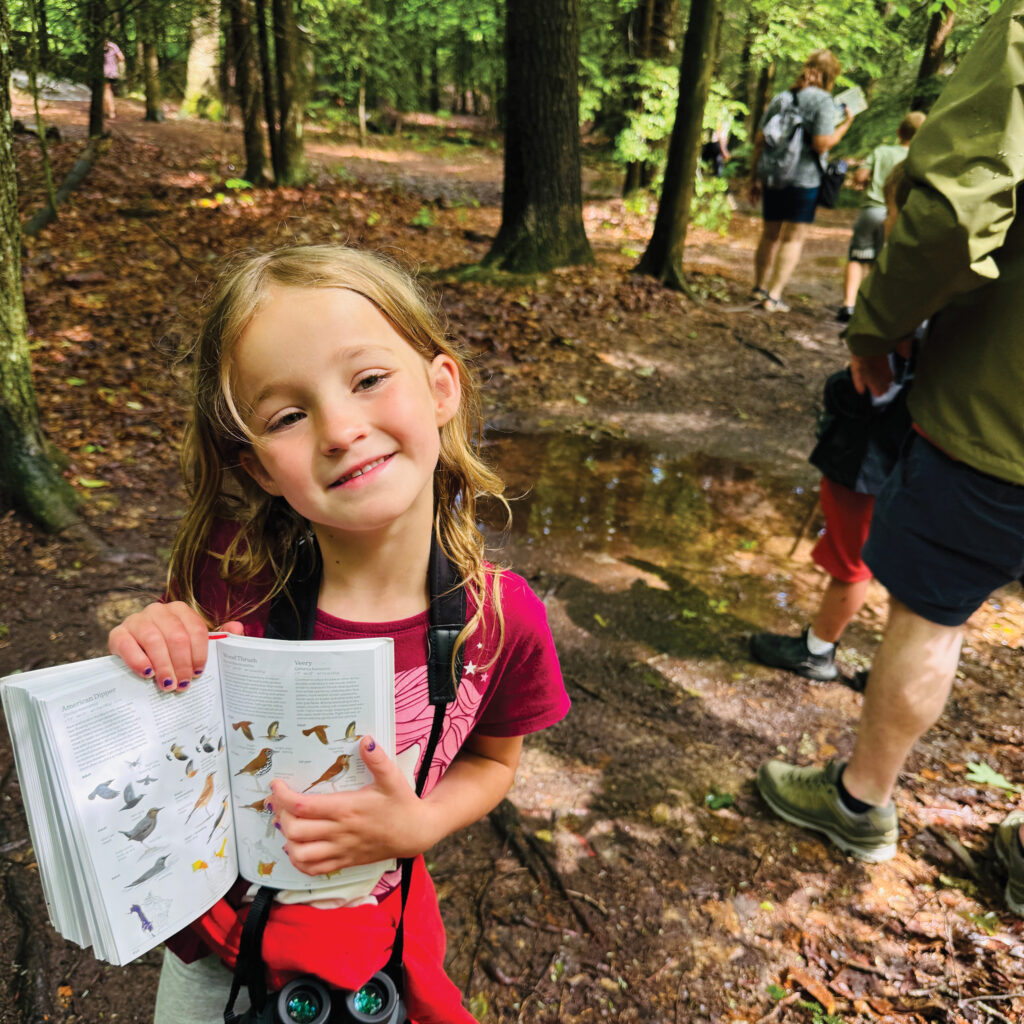
Birding is for all ages! A young birder identifies feathered friends at Morgantown Migratory Bird Day. Photos Courtesy of Katie Fallon.
Migration Celebration
Pipestem Resort State Park, Pipestem, WV
May 9, 2026
Pipestem Resort State Park might be known for its adrenaline-rush activities like zipline tours, but it’s also been a hub for birders for more than 20 years. Every year, scientists and hobbyists alike gather to celebrate the epic journey of migrating species. Take a nature walk, learn to shoot snappy photos, meet live ambassador birds of prey, and more.
Morgantown Migratory Bird Day
Coopers Rock State Forest, Bruceton Mills, WV
May 9, 2026
Led by the regionally beloved Avian Conservation Center of Appalachia, this celebration of migratory species features a guided bird walk, owl pellet dissections, arts and crafts, and educational presentations—some of which will feature the center’s charming ambassador birds. Contribute to citizen science by challenging your pals to count and record the most birds.
Potomac Eagle Scenic Railroad
Romney, WV
Year ’round
Reserve your seat on the Potomac Eagle’s 3-hour Trough Canyon expedition and try your hand at birding from a new perspective—cozied up in a vintage railcar with dining and drink services and, most importantly, a front-seat view of Trough Canyon, a popular nesting location for bald eagles.